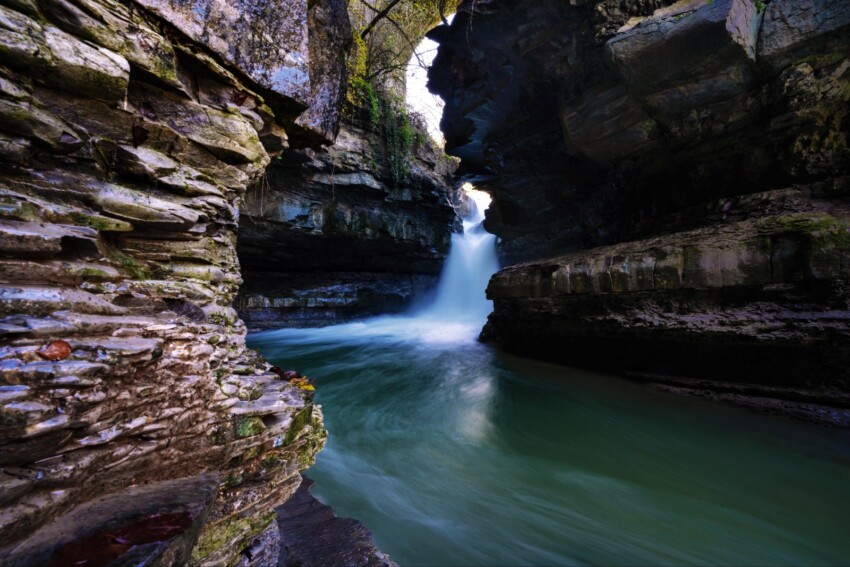
Renowned for its seaside resorts, vibrant nightlife, cities steeped in history and gastronomic heritage, Emilia-Romagna is also a region blessed with extraordinary natural landscapes. Within its territory, it’s easy to find yourself captivated by the majesty of mountains as much as by the gentle beauty of verdant hills dotted with small villages and hamlets. The region harbours, in fact, an extraordinary variety of natural landscapes and parks that constitute a paradise for nature lovers, hikers and outdoor enthusiasts.
Emilia-Romagna is home to several nature parks (both national and regional) that not only offer routes for hiking, cycling or horse-riding excursions, but also the opportunity to admire the tremendous diversity of flora and fauna and to sample local produce. In addition to the parks, there are also more than thirty nature reserves, many of which are protected areas under the Natura 2000 network because they are considered exceptional habitats for various species of fauna and flora. Thanks to its diverse terrain, Emilia-Romagna attracts visitors even in winter, particularly with its 15 ski resorts located in the Apennines. The most popular destinations for winter sports enthusiasts are Sestola, Monte Cimone—the region’s highest peak—Corno alle Scale and Cerreto Laghi.
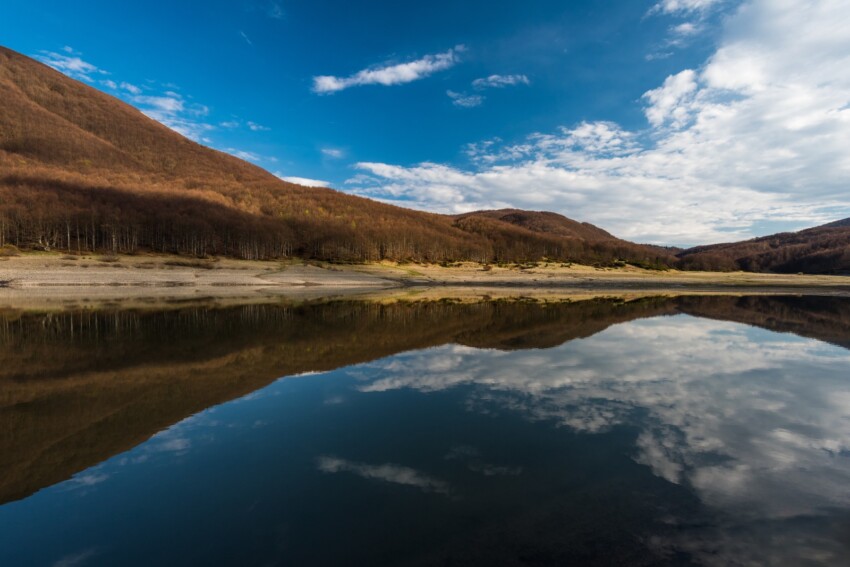
Emilia-Romagna boasts two national parks, both shared with the Tuscany region: the Appennino Tosco-Emiliano National Park and the Foreste Casentinesi, Monte Falterona and Campigna National Park.
The Appennino Tosco-Emiliano National Park is considered one of Emilia-Romagna’s finest jewels and features not only imposing peaks and verdant valleys but also charming small villages and hamlets. The park offers a wide range of activities for nature lovers, from trekking to skiing, from birdwatching to mountain biking excursions. The site has also been recognised as a UNESCO Biosphere Reserve for its rich flora and fauna heritage and truly unique biodiversity, which includes rare and endangered species. Its territory extends across a vast mountainous area rich in forests, pastures, lakes and meadows, and from certain vantage points on the clearest days, you can admire the Adriatic Sea on one side and the peaks of the Alps on the other. For centuries, this area has been a transit point for merchants and pilgrims, and historic routes such as the Via Francigena and the Via del Sale bear witness to this.
Less well known but nevertheless of considerable historical and cultural interest is the Foreste Casentinesi, Monte Falterona and Campigna National Park, which lies between Florence and Forlì. Regarded as a true paradise for mountain and nature lovers, this area offers an extraordinary variety of landscapes that, over the centuries, have captivated important figures such as Dante Alighieri, Ludovico Ariosto and St Francis of Assisi. Within its boundaries lies a network of over 600 km of trails winding through dense forests and green valleys, leading to truly wonderful sites such as the Acquacheta waterfalls near San Benedetto in Alpe. Another must-visit destination in the area is the Sasso Fratino Integral Reserve, with its beech forests designated as a UNESCO World Heritage Site, given that some of the trees are over 500 years old.
Emilia-Romagna is home to 14 regional parks that not only offer extraordinary landscapes but also serve as a refuge for rich biodiversity and represent a key point of reference for environmental conservation. In these parks, visitors can explore trails, undertake trekking and hiking excursions or simply relax in unspoilt surroundings.
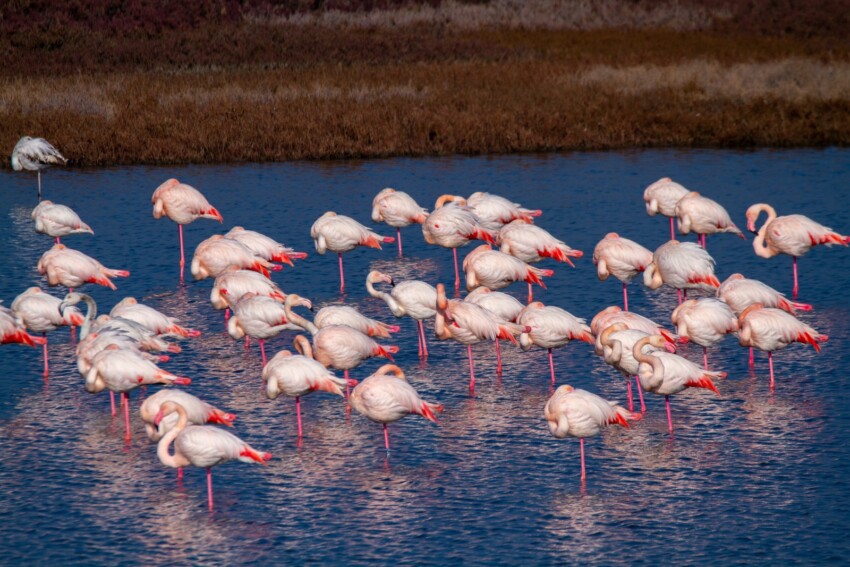
Among the most renowned regional parks is certainly the Po Delta, an area of approximately 54,000 hectares that stretches across the provinces of Ferrara and Ravenna, and which has been inscribed as a UNESCO World Heritage Site for its rich natural, landscape and historical heritage. This park boasts a unique variety of landscapes characterised by canals, lagoons, dunes and marshes, and is known, thanks to the variety of habitats it supports, as one of Europe’s most significant wetland zones. From a flora and fauna perspective, the park is a reserve of biodiversity, as it hosts a wide array of flowers, plants and animal species. Numerous fish, amphibians and mammals are found here, but particularly birds such as greater flamingos, herons and the Black-winged Stilt, which has been designated as the park’s symbol.
Another area of great interest is the Corno alle Scale Regional Park, which harbours several peaks including Monte Corno alle Scale (1,945 metres), Monte Grande and Monte Belvedere, as well as splendid waterfalls such as those of the Dardagna and Lake Scaffaiolo. The Park is located just over an hour’s drive from Bologna and is perfect for a trip in both summer and winter. Within its territory, there are important ski stations with 36 km of slopes, cross-country skiing routes and areas equipped for snowboarding. In summer, the area attracts outdoor enthusiasts thanks to numerous trails for hiking, cycling or horse-riding. In particular, the Alta Via dei Parchi (High Path of the Parks), a long-distance hiking route that develops along the Appennino Tosco-Emiliano and touches locations of great scenic beauty, also passes through here.
Another park of considerable natural and historical interest is undoubtedly the Vena del Gesso Romagnola Regional Park, located between Imola and Faenza, which is a protected area composed almost entirely of gypsum. Its territory consists of selenite massifs that have long been quarried by the local population and served as an economic engine for many towns in the area. Among the most beautiful villages within the Park is certainly Brisighella, which at its Rocca Manfrediana fortress houses the Museum of Man and Gypsum, dedicated to the relationship with this precious material.
Within the Alto Appennino Modenese Regional Park lies Monte Cimone, which at 2,165 metres is the region’s highest peak and one of the most popular ski resort destinations. Finally, it is also worth mentioning the Sasso Simone and Simoncello Inter-regional Park, which extends between the Marche and Emilia-Romagna regions, specifically between the provinces of Pesaro-Urbino and Rimini. Within it are both hilly and mountainous zones with numerous scenic trails of varying length and difficulty levels.
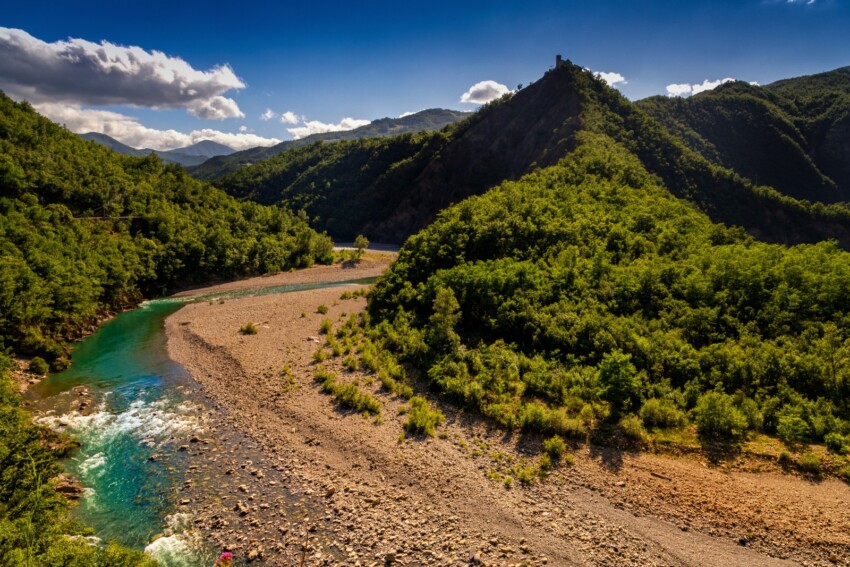
The hills of Emilia-Romagna represent a gentle, rolling landscape where vineyards, medieval villages and imposing fortresses alternate with olive groves and cultivated fields. These areas offer a tranquil and relaxing atmosphere, ideal for those seeking a holiday in touch with the territory and with the opportunity to sample local produce.
Just a few kilometres from Bologna rise the famous Colli Bolognesi (Bologna Hills), celebrated in a well-known song by Cesare Cremonini, which offer the perfect refuge from the hustle and bustle of the city. Here, amidst vineyards producing the renowned Pignoletto wine, visitors can enjoy pleasant walks, cycling excursions or motorcycle tours whilst stopping to sample products such as PGI mortadella and white truffle. On the clearest days, moreover, from the Bologna hills you can enjoy a breathtaking view that stretches all the way to the Adriatic Sea. Not to be missed are visits to places of great interest such as Dozza, renowned for its murals, and Casalecchio di Reno with its lock, considered the world’s oldest hydraulic structure.
The hills surrounding the cities of Ravenna, Forlì, Cesena and Rimini, meanwhile, offer a varied and fascinating landscape, characterised by historic villages and nature trails winding through olive groves that produce the PDO extra virgin olive oil “Colline di Romagna”. These areas are also renowned for wine production, such as Sangiovese and Albana, made particularly along the Via Emilia. Do not miss the opportunity to visit some villages with a long history such as San Giovanni in Marignano, Montefiore Conca, with its fine Rocca, and the enchanting village of San Leo.
Finally, in the western part of Emilia-Romagna are the Piacenza hills, which offer a landscape rich in fortresses, medieval castles and fascinating villages such as Bobbio and Castell’Arquato. The area, in fact, develops across four valleys—Val Trebbia, Val Nure, Val Tidone and Val d’Arda—which are ideal for stays focused on nature, history and gastronomy. In particular, the Val Trebbia is strategically located south-west of Piacenza province and at the foot of the Ligurian Apennines, and is easily accessible in under an hour even from Milan. Many famous figures have stayed here, among whom Ernest Hemingway stands out, having described it as “the most beautiful valley in the world”.
Emilia-Romagna also boasts 17 state nature reserves and 14 regional nature reserves that have been established to protect areas of extraordinary interest; these often lesser-known places offer unique activities for those seeking authentic contact with nature. Among the reserves already mentioned is that of Sasso Fratino in the Forlì Apennines, which extends across the municipalities of Bagno di Romagna and Santa Sofia in the Province of Forlì-Cesena and was the first integral nature reserve in Italy. Furthermore, UNESCO has included it in the World Heritage List among Europe’s old-growth beech forests within the site Primary Beech Forests of the Carpathians and Other Regions of Europe.
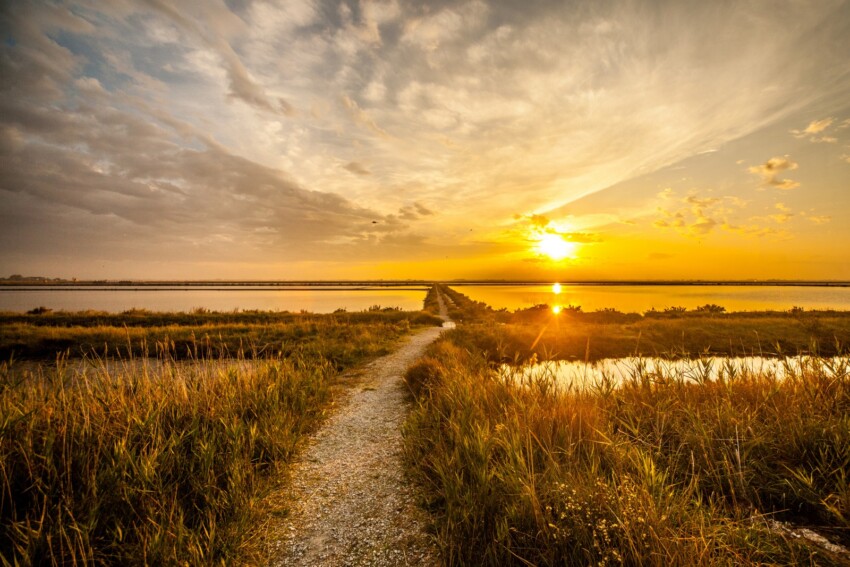
Another reserve of considerable interest is the Cervia Salt Reserve at Cervia, which is one of the most fascinating and evocative places on the Romagna Riviera, located on the outskirts of the city of Cervia. This territory boasts a millennia-long history linked to salt production, as it has been produced here since antiquity and for a long time was the driving force of the local economy. Even today, the harvesting of Cervia salt remains a centuries-old tradition that continues, though in smaller quantities and using different, more environmentally respectful methods. The Cervia Salt Pond represents an extraordinary place for biodiversity and hosts various rare and protected species of flora and fauna. Here, not only can you admire greater flamingos but also other bird species such as herons, Black-winged Stilts, terns and avocets.
 Hotel
Hotel  Budget accommodations
  Apartments
  Family Hotel
  Luxury Hotel
  Resorts