
Royal Hotel Carlton
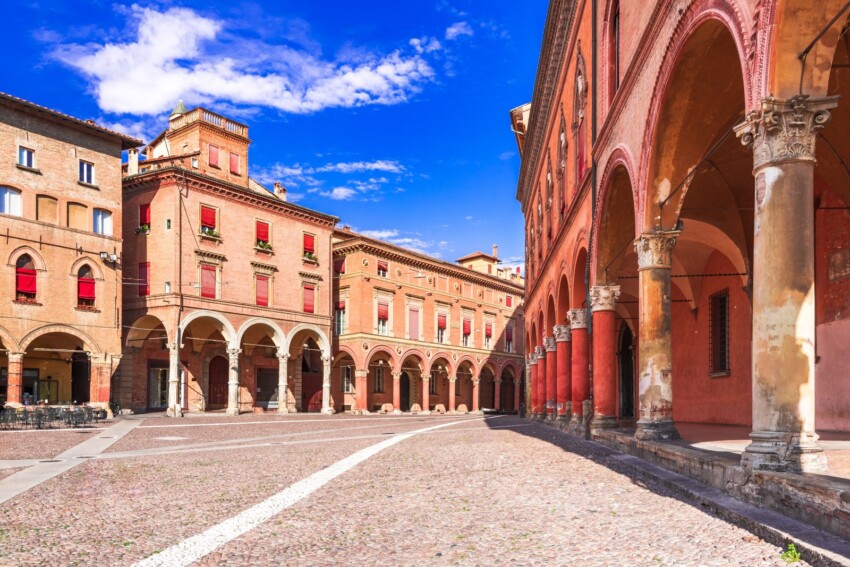
Emilia-Romagna is an Italian region that stands out for its extraordinary variety of landscapes, art cities, historic villages and gastronomic heritage renowned worldwide. Situated between the Po river to the north and the Tosco-Emilian Apennines to the south, the region is characterised by a unique combination of fertile plains, verdant hills and golden coastlines overlooking the Adriatic Sea. Emilia-Romagna is known for its rich and at times turbulent past, with towns that have frequently been at the centre of significant historical events. Its strategic position in the heart of Italy has always made it an easily accessible destination and, since Roman times, also a place of passage for merchants and travellers. Its cities preserve a wealth of historical and architectural heritage whilst the coastline offers some of the finest seaside resorts on the peninsula, not only for its splendid beaches but also for the quality of its services.
Over time, Emilia-Romagna has succeeded in preserving its traditions and customs, which can now be easily rediscovered in its medieval villages and small hamlets nestled among hills rich in olive groves and vineyards. It is a region that offers something for everyone: from history and art lovers to those who prefer nature or relaxation on the beaches of the Adriatic Riviera. Furthermore, this territory is a gastronomic hub of worldwide renown, offering products such as Bologna mortadella, Parmigiano Reggiano or Parma ham, as well as dishes like tortellini, Bolognese ragù and piadina.
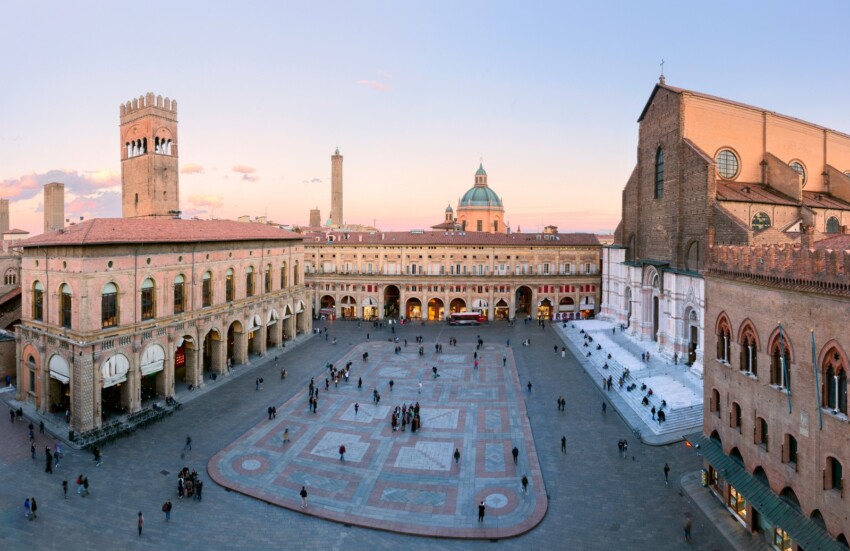
Bologna, the capital of Emilia-Romagna, is a city that enchants with its authentic and vibrant atmosphere as well as its long history and magnificent monuments. Known as “the learned, the fat and the red”, Bologna owes these epithets to its ancient university (founded in 1088 and considered the oldest in the Western world), its renowned cuisine and the terracotta roofs that colour the historic centre. Piazza Maggiore, the heart of the city, is surrounded by medieval buildings such as the Palazzo del Podestà and the Basilica of San Petronio, one of Europe’s largest churches. Not far away stand Bologna’s famous Two Towers, the Garisenda and the Asinelli, which are considered undisputed icons of the city and testament to its rich past.
Bologna’s city centre is also renowned for its arcades, which have been declared a UNESCO World Heritage Site and extend for over 38 kilometres, offering shelter to locals and visitors during their strolls. Walking along Bologna’s arcades from Porta Saragozza, you can reach Colle Guasco, where the magnificent Sanctuary of Madonna di San Luca stands, considered one of the region’s most important religious sites. This spiritually significant place has been a pilgrimage destination for centuries as it houses an icon of the Virgin created by the evangelist Luke.
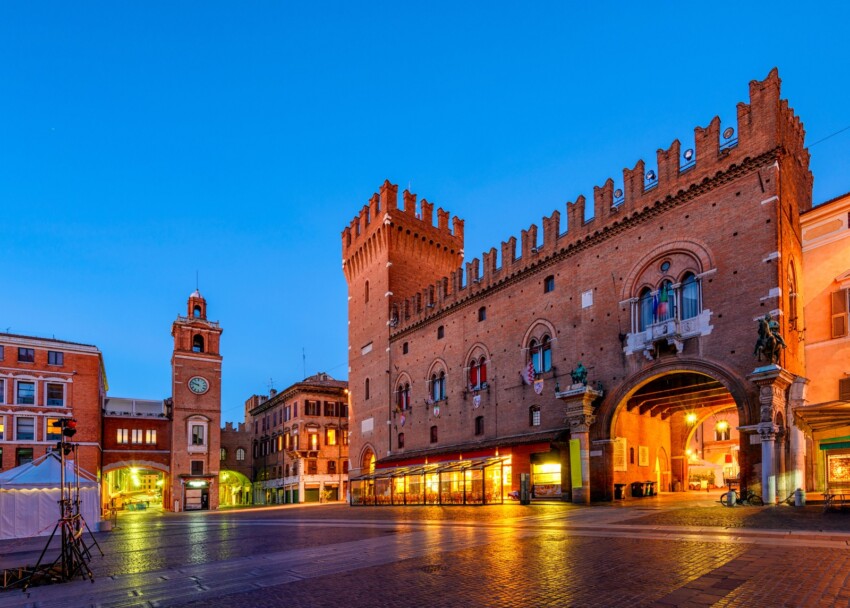
Truly a gem, Ferrara is a city designated as a UNESCO World Heritage Site and one of the finest examples of Renaissance urban planning in Europe. The city was governed by the Este family for over three centuries and under their rule became a centre of primary artistic and cultural importance.
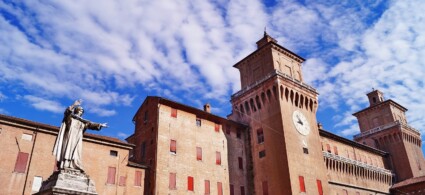
The symbol of Ferrara is undoubtedly the Este Castle, built in 1385 as an instrument of political and military control at the behest of Marquis Nicolò II d’Este. Visiting it allows you to discover part of the city’s history and that of the Este family. From the outside, you are immediately struck by its tall towers of red brick, whilst inside are finely frescoed and well-furnished rooms. Not far away stands the Cathedral of San Giorgio Martire, another important example of Gothic and Romanesque architecture built from the 12th century onwards; the Cathedral features three naves and houses works of considerable value as well as the tomb of Pope Urban III.
Ferrara is also famous for its ancient walls, which extend for approximately nine kilometres and offer the opportunity for relaxing walks or cycling tours. Among the city’s most important museums are the Cathedral Museum, which preserves works and objects created between the 14th and 19th centuries, and the Palazzo dei Diamanti, which hosts temporary exhibitions of modern and contemporary art.
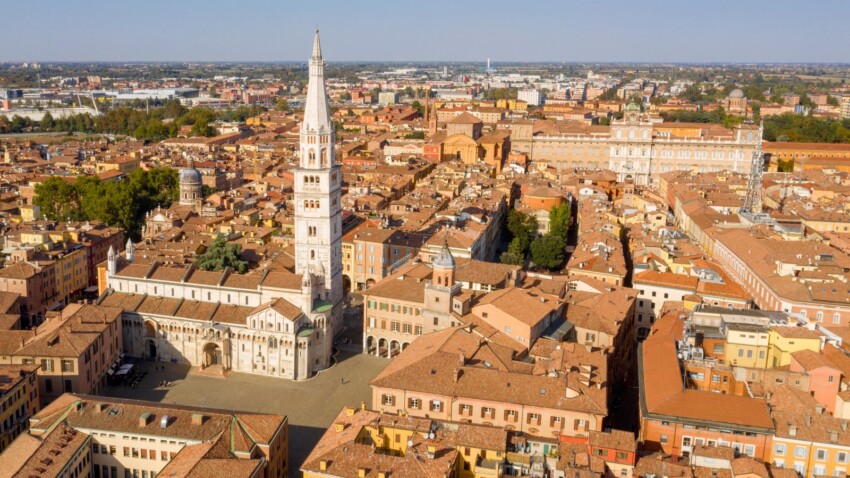
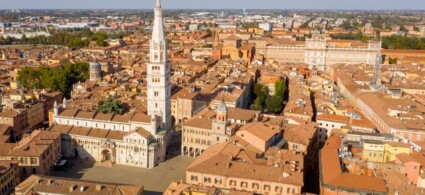
Famous worldwide as the home of Ferrari and traditional balsamic vinegar, Modena is a city that combines an extraordinary blend of history, art, flavours and motoring. Modena Cathedral, a masterpiece of Romanesque style, together with the bell tower known as Ghirlandina and Piazza Grande, has been declared a UNESCO World Heritage Site.
A visit to the Ducal Palace is also not to be missed; it was built by the Este family in the 17th century as a ducal residence and was finely decorated and furnished to the point of being considered equal to the most prestigious royal palaces in Europe. Today the building houses the Military Academy, though you can still visit the Cortile d’Onore, the apartments and the Academy’s Museum Room. Another site of great interest is the Este Gallery, which displays valuable works of art that belonged to the Dukes of Este, as well as acquisitions made over recent centuries.
For those passionate about motorsports, the area is home to numerous companies that have made the history of Italian motoring, such as Ferrari, Maserati and Pagani. You can thus plan a stop at the Enzo Ferrari Museum, who was born and lived in Modena, and a visit to the Ferrari Museum in Maranello, located just a few kilometres from the city centre. For gastronomy enthusiasts, you can discover the secrets of balsamic vinegar production by visiting one of the many local acetaia and sampling typical local products.
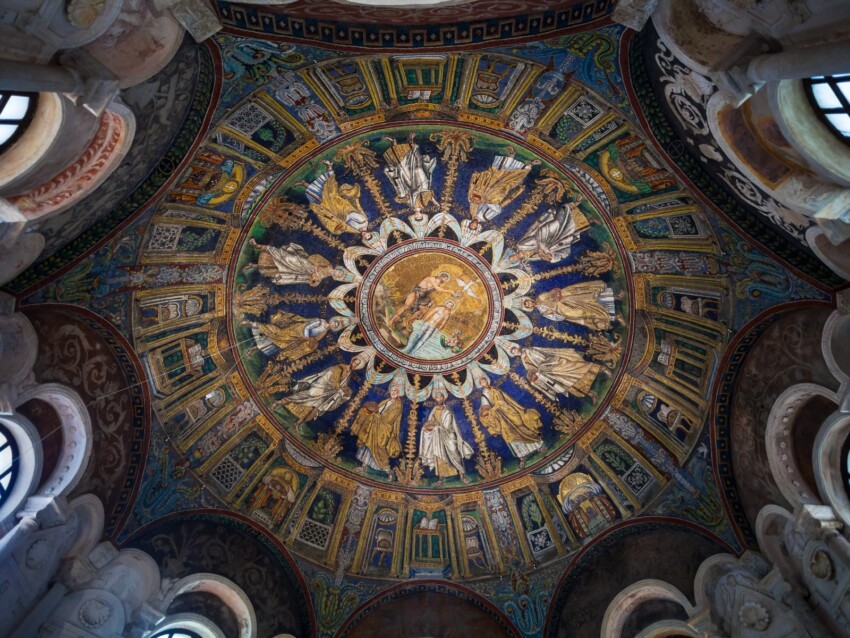
Ravenna is famous worldwide for its extraordinary Byzantine mosaics that ornament churches and baptisteries of rare beauty and for its beautiful 35 km coastline that allows you to spend days of pure relaxation. The city that served as capital of three empires hosts eight paleochristian and Byzantine monuments declared UNESCO World Heritage Sites. These are: the Basilica of San Vitale, the Mausoleum of Galla Placidia, the Neoniano Baptistry, the Chapel of Sant’Andrea, the Arian Baptistry, the Basilica of Sant’Apollinare Nuovo, the Mausoleum of Theodoric, the Basilica of Sant’Apollinare in Classe. All of these preserve decorations and spectacular mosaics and mosaic artworks that tell stories of religious life and historical events of the time.
Ravenna is also the city where Dante Alighieri was buried, and the remains of the famous poet are preserved within a neoclassical shrine designed by Camillo Morigia in 1780 in an area of great spirituality known as the Zone of Silence. Beyond monuments and mosaics of great interest, Ravenna is also an ideal destination for a trip focused on nature, as it is possible to take excursions to the Po Delta Park and admire a vast heritage of flora and fauna.
Finally, Ravenna also boasts a splendid coastline with nine seaside resorts that make this city a perfect destination for a trip combining art, culture and relaxation. The most famous beach and closest to the city centre is undoubtedly Marina di Ravenna, with high-quality hotel facilities and services that attract tourists from both Italy and abroad. The coastline is then famous for the high number of bars and nightclubs that appeal to nightlife enthusiasts and from dusk onwards they come alive allowing you to dance into the early hours.
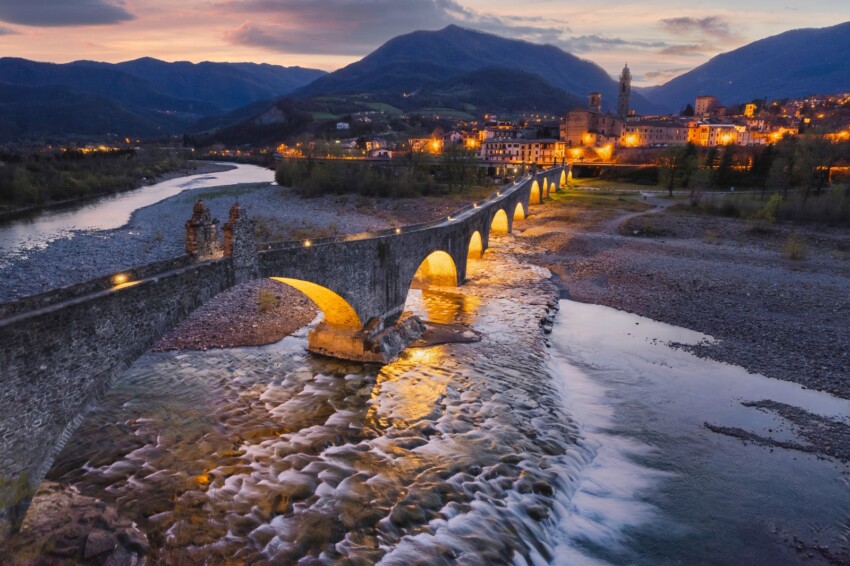
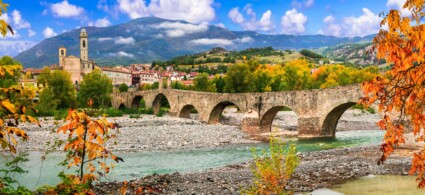
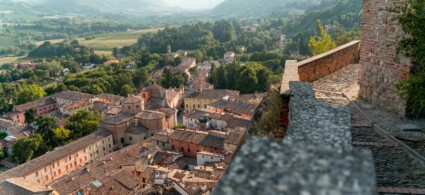
Nestled in the heart of the Piacenza Apennines lies the splendid village of Bobbio which, for its history and sites of interest, is one of the most fascinating in Emilia-Romagna, so much so that it has been included in the circuit of “Italy’s Most Beautiful Villages”. The town has been famous for centuries for the presence of the Abbey of San Colombano, an ancient monastery that in the Middle Ages was an important religious and cultural centre. Inside, you can now visit the Basilica of San Colombano, which in its crypt houses the sarcophagus of the saint and the Abbey Museum. The Museum of the City has also been set up here, allowing you to discover the history and development of Bobbio from the Middle Ages to the 20th century.
Another site of great interest linked to the town’s stories and legends is the Ponte Gobbo, an ancient bridge that crosses the Trebbia river with its irregular arches, allowing access to the town. The heart of Bobbio is undoubtedly Piazza Duomo, which hosts elegant ancient buildings as well as the Cathedral of Santa Maria Assunta, which appears to date from the 11th century. Dominating the landscape from above is the Malaspina dal Verme Castle, which was built in 1304 by Corradino Malaspina as a Ghibelline stronghold. The fortress has been remodelled several times over the centuries but still retains the original square-plan keep and numerous rooms with frescoes and decorations dating from the 16th century.
The village is an ideal place for those seeking tranquillity and scenic beauty and is particularly appreciated by lovers of hiking and nature walks as numerous trails and itineraries depart from here.
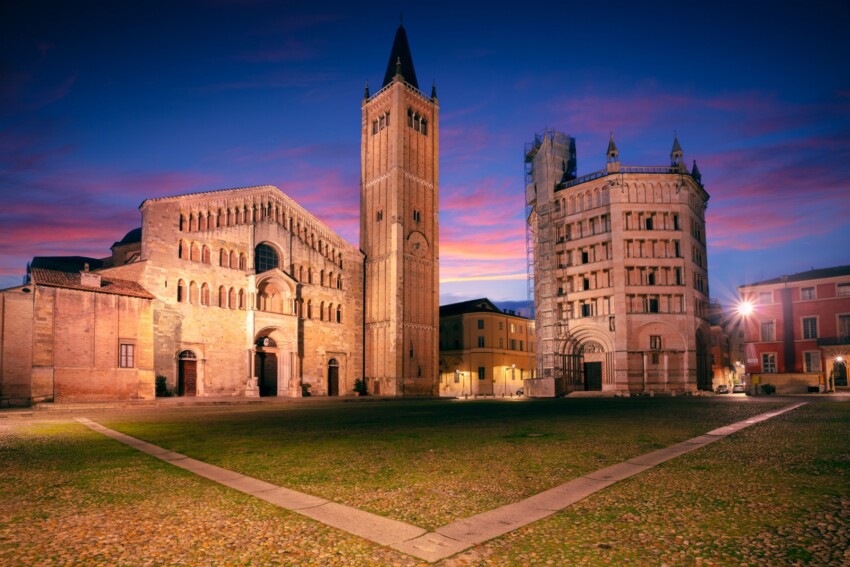
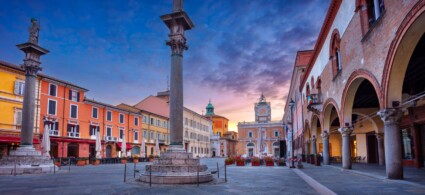
Parma is synonymous with gastronomic excellence but also art and music, as the city is famous worldwide for Parma Ham and for having been the birthplace of artists such as Arturo Toscanini and Francesco Mazzola, known as Parmigianino. Parma is a city best discovered on foot, wandering through its streets that connect three of the main squares: Piazza del Duomo, Piazza Garibaldi and Piazza della Pilotta, which host buildings of great historical importance and artistic value.
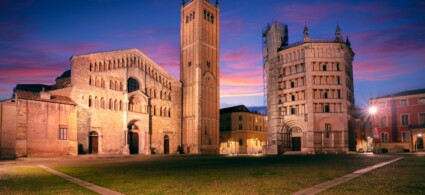
Piazza del Duomo hosts the city’s most important religious sites, such as the Cathedral of Santa Maria Assunta, consecrated in the 12th century and characterised by frescoes by Correggio, and the Baptistry of San Giovanni, faced with precious pink marble from Verona and completed in the 14th century. Another notable building in the square is the Bishop’s Palace, which now houses the Diocesan Museum with an exhibition on the spread of Christianity in this area.
At Piazza della Pilotta stands the Monumental Complex of La Pilotta, an ancient palace of the Farnese family which inside presents several sites such as the Farnese Theatre, the National Gallery and the Petitot Gallery of the Palatina Library. Finally, in Piazza Garibaldi, where the Roman forum once stood, is now the Governor’s Palace with the civic tower that houses inside a 17th-century bell.
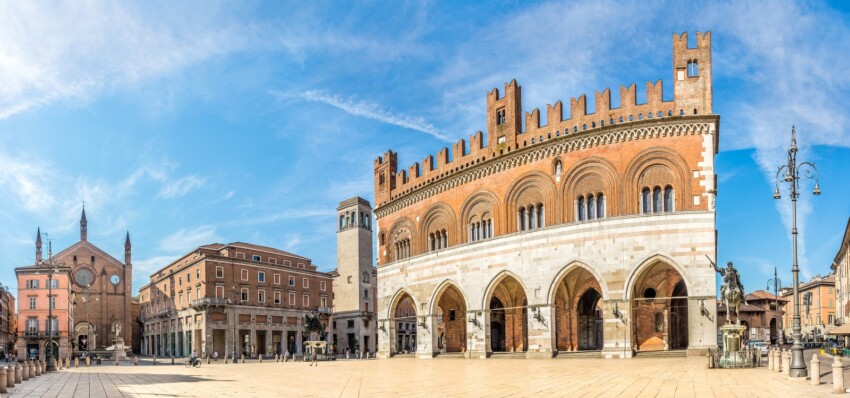
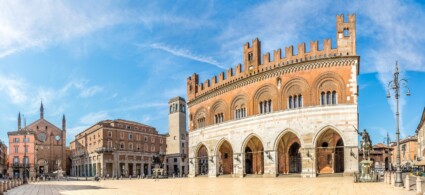
Another city that proves to be a perfect combination for a stay focused on culture and good food is undoubtedly Piacenza, which stands in the western part of Emilia-Romagna, near the border with Lombardy. The historic centre of Piacenza is dominated by Piazza Cavalli, where the Palazzo Gotico stands, built in the 13th century and considered a perfect example of medieval architecture. Another building of great historical and architectural importance is the Governor’s Palace, built in 1787 to a design by Piacenza architect Lotario Tomba, who also created the Municipal Theatre.
A visit to the Cathedral of Piacenza is a must, one of the region’s most fascinating Romanesque cathedrals, and to the Basilica of Sant’Antonio, which hosted the meeting between the delegates of the Lombard League and Emperor Frederick Barbarossa. Finally, you should also plan a visit to Palazzo Farnese, which now houses the Piacenza Civic Museums with works and testimonies spanning from prehistory to the modern age. The city is an ideal starting point for exploring the surrounding hills, dotted with vineyards and cellars where you can taste local products such as coppa piacentina and salami.
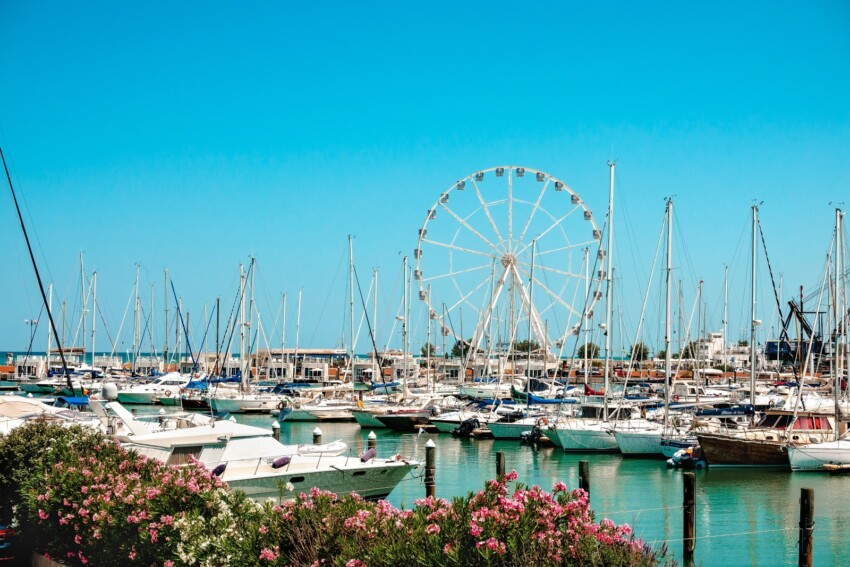
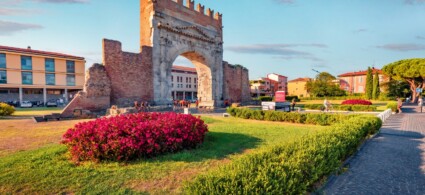
Rimini is one of Italy’s most famous seaside resorts, but beyond its long beaches and vibrant nightlife, it also boasts a rich artistic and cultural heritage. The historic centre preserves sites such as the Arch of Augustus and the Tiberius Bridge, which stand as testament to the city’s importance during the Roman period. The Tempio Malatestiano is a masterpiece of Renaissance art, designed by Leon Battista Alberti and featuring works by Piero della Francesca, Giotto and Agostino di Duccio. Among other notable historic buildings is the Rocca Malatestiana, erected in the 15th century as a fortified residence by Sigismondo Pandolfo Malatesta.
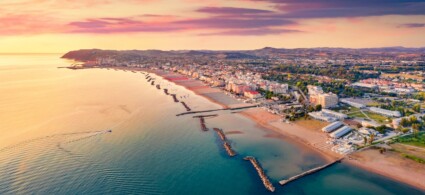
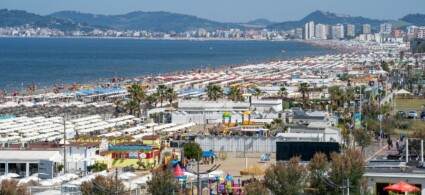
Rimini is also well known throughout Italy and abroad for its stunning seafront, regarded as a destination for relaxation and entertainment, thanks to its well-equipped beaches and proximity to theme parks such as Mirabilandia and Italia in Miniatura. The first bathing establishment opened here in 1843 and quickly made the city a celebrated summer holiday destination. Today, Marina Centro is the most famous and busiest beach, though along Rimini’s 15-km coastline you’ll find splendid sandy stretches with top-quality amenities suitable for families and children, as well as numerous nightclubs and discos.
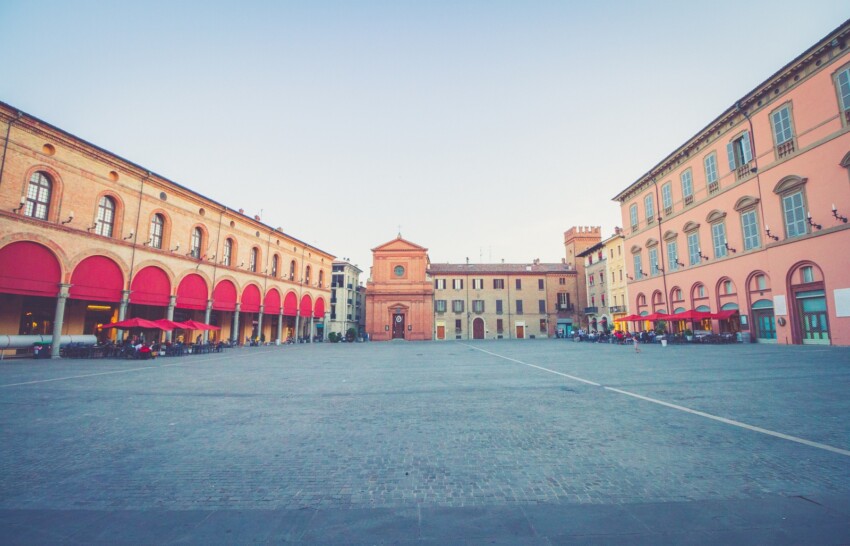
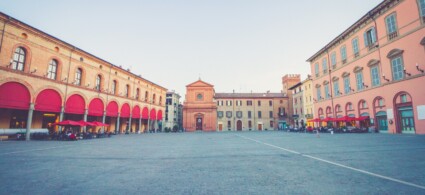
Situated along the Via Emilia, one of the most famous Roman consular roads, Imola is a town with a history spanning millennia and forms part, together with Cesena, Faenza, Forlì, Lugo, Ravenna and Rimini, of the so-called “Seven Sisters” – seven principal towns of Romagna. This is a city rich in history and culture, with a historic centre featuring monuments such as the Rocca Sforzesca, an imposing 13th-century fortress that now houses the Museum of City History.
A visit to Palazzo Tozzoni, an 18th-century aristocratic residence beautifully furnished and decorated, and to the Pharmacy of the Hospital Santa Maria della Scaletta, considered a place of great charm, are also not to be missed. However, Imola is particularly renowned for its Autodromo Enzo e Dino Ferrari, considered one of the world’s most famous racing circuits and host to major motorsport events.
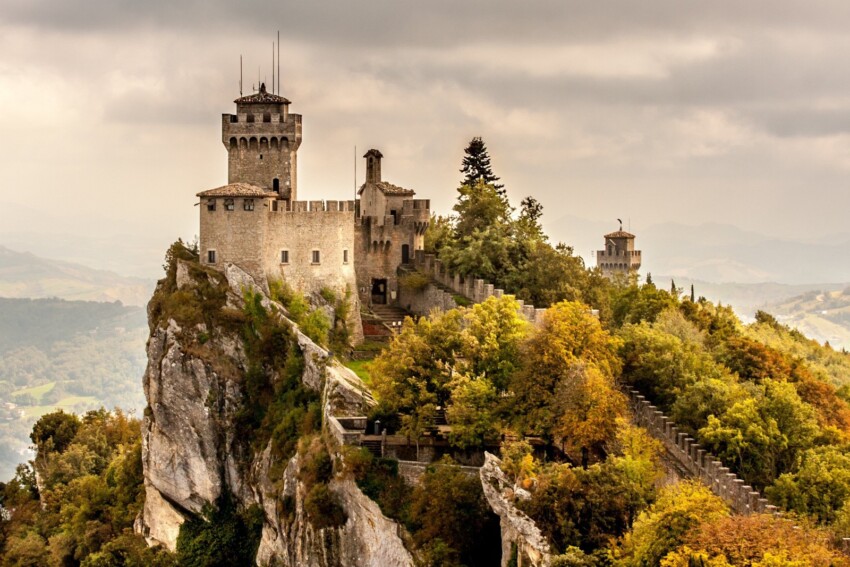
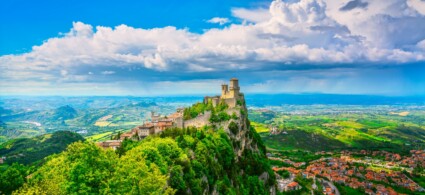
San Marino was founded around 300 AD by Marino, a devout Christian who sought refuge on Monte Titano to escape the religious persecutions ordered by the Emperor Diocletian. A small Christian community subsequently developed in the area, which over time became a true village bearing the name of its founder. Today, this tiny city-state has been declared a UNESCO World Heritage Site for its long history and charm.
San Marino has managed to preserve its independence throughout the centuries, in part thanks to the construction of a formidable defensive system comprising sturdy city walls and watchtowers. The Republic of San Marino now centres around Piazza della Libertà, where you’ll find the Statue of Liberty and the Palazzo Pubblico, which houses the main administrative offices. Close to the square stands the Basilica of San Marino, built in the 19th century and home to the relics of the city’s sainted founder.
A walk along the Passo delle Streghe is a must in the town centre – this path connects the three main city towers, Guaita, Cesta and Montale, constructed between the 11th and 14th centuries for defensive purposes. Finally, don’t miss a visit to the city’s museums, such as the State Museum, which houses some 5,000 historical and artistic works linked mainly to the city’s history, and the San Francesco Picture Gallery Museum, located adjacent to the church.









 Hotel
Hotel  Budget accommodations
  Apartments
  Family Hotel
  Luxury Hotel
  Resorts