La Grotta Hotel
San Marino - Contrada Santa Croce 17
Book now
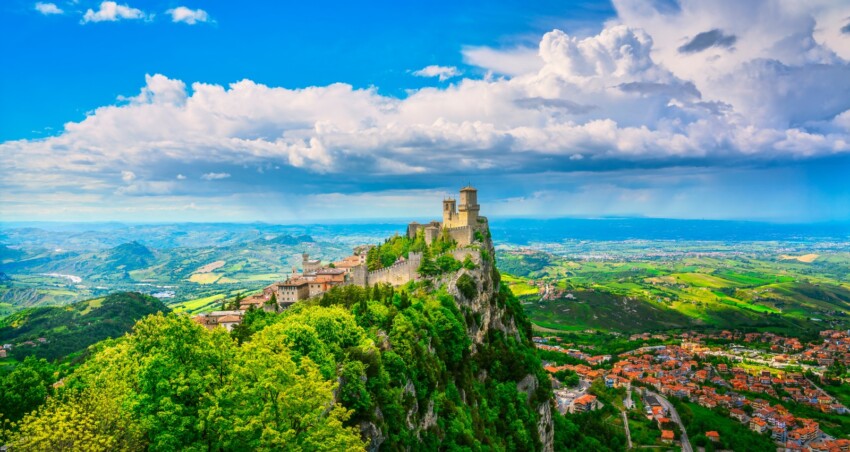
The Republic of San Marino, also known as the Most Serene Republic of San Marino, is one of the world’s oldest republics and a jewel nestled among the hills of central Italy, not far from the Adriatic coast. Located just a few kilometres from Rimini, this small enclave offers visitors a perfect combination of history, culture, traditions and breathtaking landscapes. With just 61 square kilometres, San Marino is a country with a long tradition of independence dating back to its foundation in the 4th century.
San Marino’s history begins around 300 AD, when Marino, a stonemason of Dalmatian origin, decided to take refuge on Monte Titano, the highest mountain in the area, to escape the religious persecution of Roman Emperor Diocletian. There, Marino first gathered a small Christian community and, over time, it grew to become a proper state. Over the centuries, San Marino managed to maintain its independence despite constant external threats. During the medieval period in particular, a defensive system was built consisting of a city wall and the famous three towers of San Marino that still dominate the city’s skyline today.
San Marino has always maintained close relations with neighbouring powers, particularly with the various Italian states and the Papal State, and has always managed to preserve its autonomy, to the point of being considered a symbol of independence. Even Napoleon Bonaparte, during his campaign in Italy, had to recognise the autonomy and sovereignty of the Republic. The Republic of San Marino was one of the few European nations not directly involved in the two world wars and still maintains internationally recognised neutrality today.
Today this city-state is famous throughout the world for its long history, its charming landscapes and its numerous sites of interest, so much so that its historic centre has been declared a UNESCO World Heritage Site. The Republic of San Marino is currently made up of nine local administrations called “castelli” (castles): the city of San Marino (considered the capital), Acquaviva, Borgo Maggiore, Chiesanuova, Domagnano, Faetano, Fiorentino, Montegiardino and Serravalle. Most of the attractions are concentrated in the capital area, which preserves the oldest heart of the Republic as well as most of the administrative bodies.
The historic centre of San Marino, where the capital stands, is a maze of cobbled streets surrounded by picturesque squares, ancient churches and historical monuments that tell much of the story of this territory. Once inside the walls, you enter a pedestrian area and walking through its paved alleyways feels like a real journey back in time. The tradition and history of the Republic of San Marino can be felt everywhere: from the monuments celebrating its independence, to the local and artisan products that represent the country’s identity.
Moreover, this location is also known for its duty-free shops where you can buy luxury items, clothing, perfumes and much more at really advantageous prices. For this reason, the main streets of the historic centre are full of boutiques and shops offering a wide range of products and are frequented by tourists from all over the world.
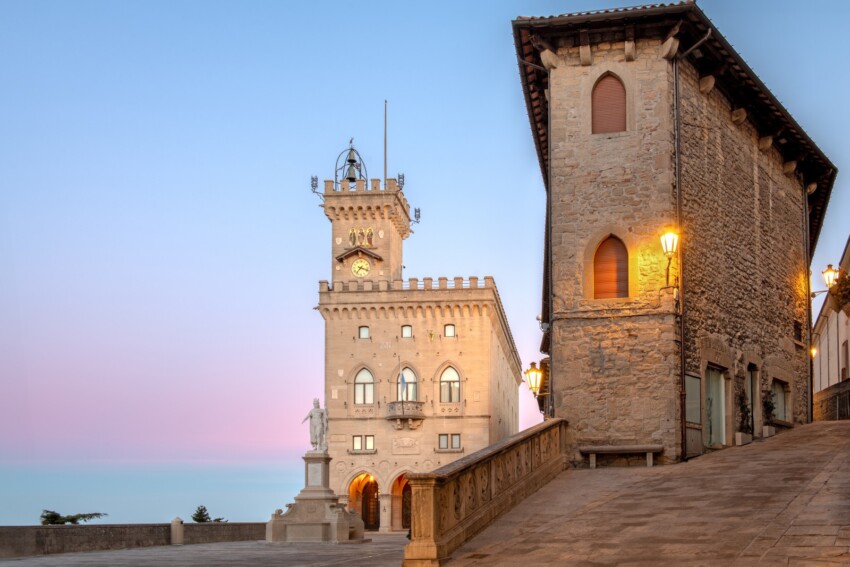
The heart of San Marino’s political life is undoubtedly Liberty Square, which features in its centre the Statue of Liberty made from Carrara marble by artist Stefano Galletti and a symbol of the country’s independence. Dominating this space, however, is the Palazzo Pubblico, which serves as the seat of the government of the Republic of San Marino and of major institutions such as the Grand Council and the Congress of State.
Built in the late 19th century to a design by architect Francesco Azzurri and constructed by local craftsmen, the building was renovated in the 1990s by the famous Italian designer and architect Gae Aulenti. The inauguration of the Palazzo Pubblico took place on 30 September 1894 in the presence of Giosuè Carducci, who delivered a speech “on perpetual freedom”.
In summer, in front of the Palace you can witness the solemn changing of the guard ceremony, which takes place approximately every thirty minutes. Inside the Palace, there are finely frescoed and decorated rooms by important artists such as Emilio Retrosi, Pietro Lolli, Giuseppe Rossi and Carlo Merlini. In particular, in the Hall of the Grand Council there is a work painted by Emilio Retrosi depicting the apparition of San Marino to his people.
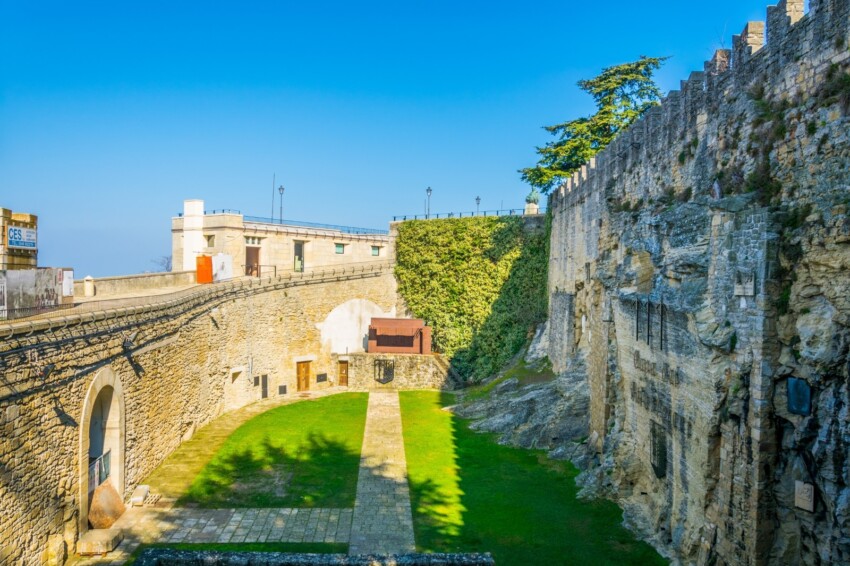
Behind Liberty Square is the Balestrieri Quarry, the site from which stone was extracted in the 19th century to build the Palazzo Pubblico. Now this large open area hosts events and shows, among which the Palio dei Balestrieri stands out, a popular celebration that takes place every year on 3 September, the date on which Saint Marino is celebrated. During the event, the nine teams representing the nine Castelli of San Marino compete in archery contests and the entire Republic becomes a place of great festivity and events.
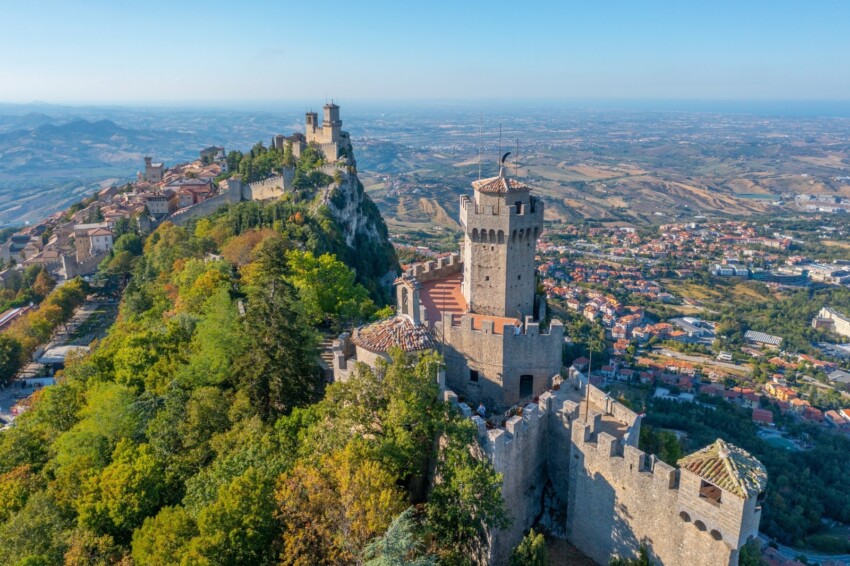
Among the undisputed symbols of San Marino are its three towers, Guaita, Cesta and Montale, which were built between the 11th and 14th centuries on the summit of Monte Titano to observe the surrounding territory and spot the arrival of enemies. The Rocca Guaita3, dating from the 11th century, is the oldest and most famous and includes a visitable fortress and a chapel erected in honour of Saint Barbara.
Located on the highest peak of Monte Titano is the Torre Cesta4, which now houses the Museum of Ancient Weapons with a collection of over 1,500 historical pieces. The third tower, known as Torre Montale5, is the least well-known and also the smallest and, although inaccessible inside, is worth a visit if only from the outside for its panoramic position.
Thanks to their strategic location, the three towers now offer a spectacular view over the surrounding valleys and the Adriatic Sea. Linking these towers together is the so-called Witches’ Pass (or Witches’ Passage), a path that owes its name to medieval popular legends that saw witches gathering in this area.
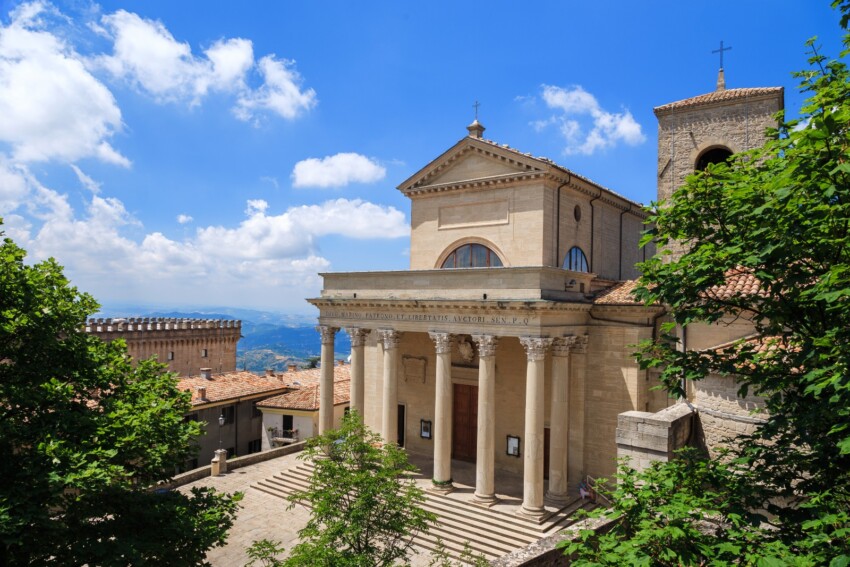
The Basilica of San Marino, located near the Palazzo Pubblico, is the main church of the Republic and plays an important religious, spiritual and cultural role. Built in the 19th century in neoclassical style, the Basilica is dedicated to San Marino, the founder of the city, whose relics are preserved inside beneath the main altar.
The religious building was constructed in neoclassical style to a design by Bolognese architect Antonio Serra in an area previously occupied by a small 16th-century chapel. Inside, the basilica boasts three naves, with the central one being the most majestic and housing seven altars as well as the throne of the Capitani Reggenti (Regent Captains) created in the 17th century.
Flanking the basilica stand the bell tower and the small Church of San Pietro, which was built in the 17th century and preserves a fine marble altar and a magnificent apse entirely carved out of the rock. It is said that San Marino and San Leo came here several times on retreat, and that Garibaldi and Anita also took refuge here in 1849 after the fall of the Roman Republic.
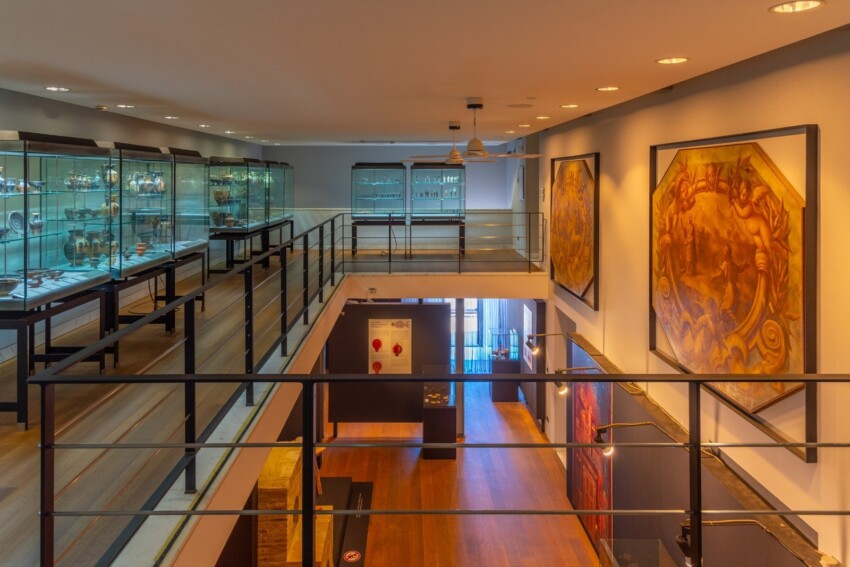
The State Museum of San Marino, located in Piazza Titano, is the most important museum in the Republic and an unmissable place for those wishing to learn more about this country’s history and culture. Opened in the 19th century, the museum’s collection includes archaeological finds, works of art and historical objects that were mainly donated by Italian or foreign figures.
Currently the route is divided into four main sections and comprises 5,000 historical and artistic works and testimonies mainly related to the history and legends of San Marino. In particular, the archaeological section displays finds ranging from the Neolithic to the Middle Ages, while the art gallery section boasts paintings created between the 14th and 19th centuries by important Italian artists.
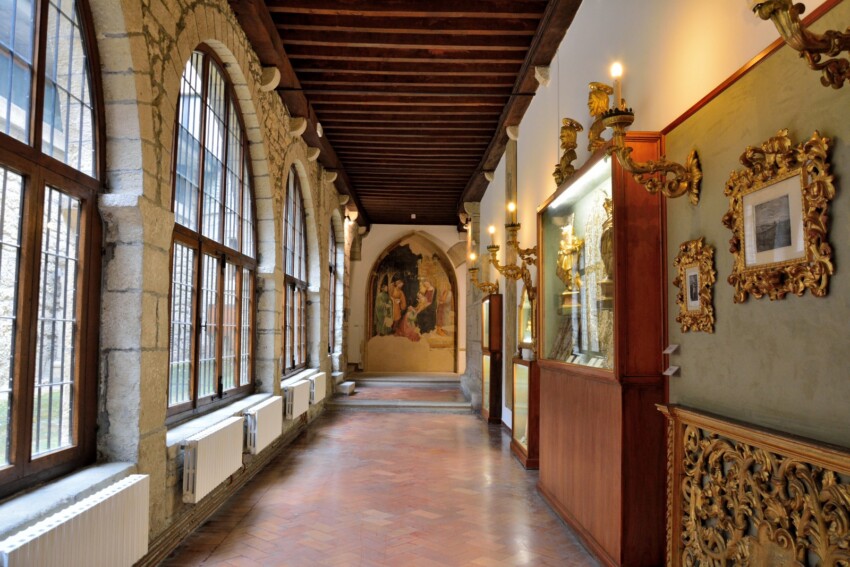
The San Francesco Museum and Art Gallery is housed in what was once the ancient Convent of San Francesco, near the corresponding Gate that provides access to the village. The museum site that can now be visited was inaugurated in 1966 and displays paintings and objects of sacred art that were part of the old convent and other Franciscan churches.
Preserved here is a wooden crucifix dating from the 14th century and believed to come from the former Church of Murata, while in the cloister loggias are the Museum and the San Marino Art Gallery hosting fine canvases. Among the most notable works are a depiction of San Francesco by Guercino and works by other 15th and 16th-century authors such as Gerolamo Marchesi da Cotignola and Niccolò Liberatore.
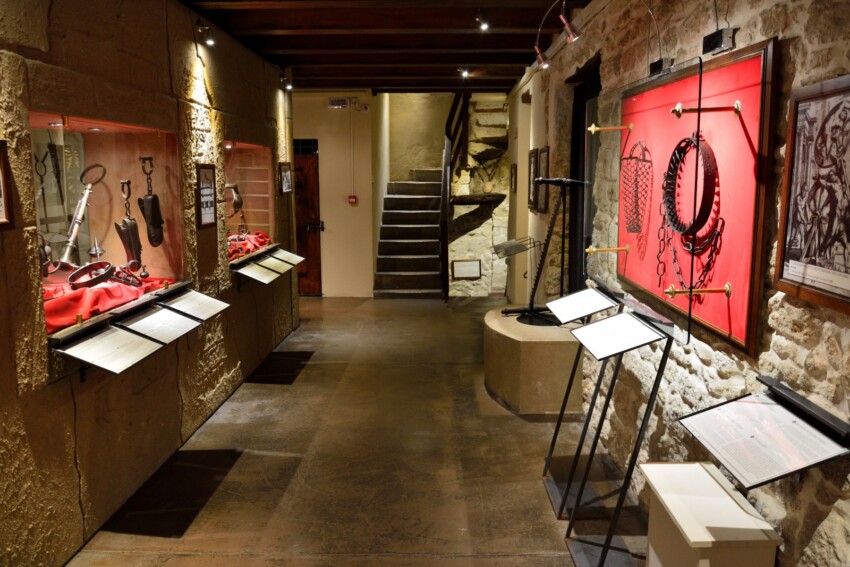
One of the most interesting yet equally impressive museums in San Marino is undoubtedly the Museum of Torture, where you can find tools and implements, some rare, dating from the 16th and 17th centuries and used to torture and torment prisoners.
Inside, the museum features a route that leads to the discovery of almost a hundred original instruments used over time and the various techniques employed to punish and inflict suffering on detainees.
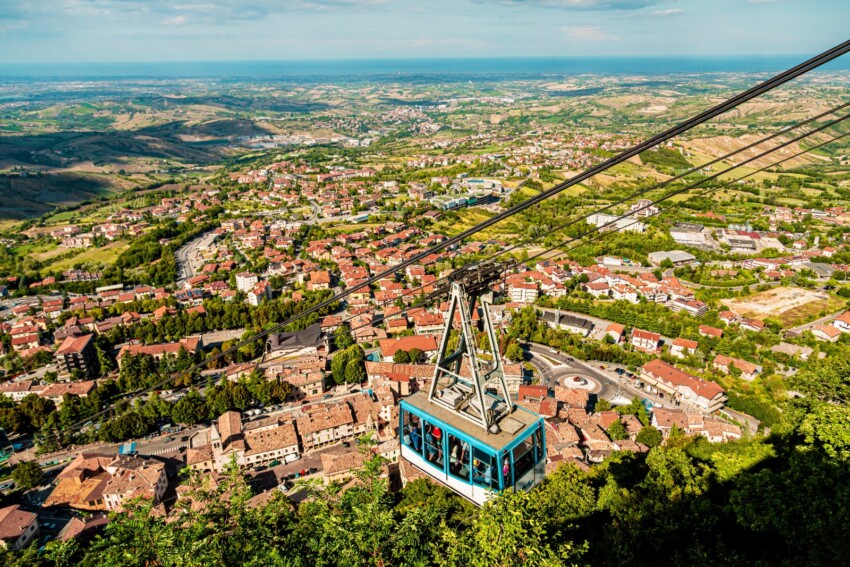
The most interesting attractions in San Marino are found within its historic centre, declared a UNESCO World Heritage Site in 2008, which extends over Monte Titano, the highest hill in the area. The best way to reach the pedestrian historic centre is by cable car departing from Borgo Maggiore, which covers a height difference of 166 metres in approximately 2 minutes while offering breathtaking views over the entire area.
In the following map you can see the location of the main places of interest mentioned in this article.
Despite its modest size, the Republic of San Marino offers various accommodation options for visitors, ranging from luxury hotels to intimate bed and breakfasts. The historic centre is undoubtedly the best area to stay if you want to fully experience the medieval atmosphere of the city and have not only the main sites of interest within reach but also shops and restaurants. Here you will find some historic buildings converted into hotels with rooms overlooking the city’s small streets and squares.
Another alternative is to stay in one of the Castelli, namely the small villages located around the historic centre that make up the Republic of San Marino; these villages offer more peaceful solutions and often more economical ones too, with many immersed in the green hills. Among the Castelli most popular for staying is certainly Borgo Maggiore, which boasts a wide choice of accommodation facilities and is well connected to the historic centre by cable car.


San Marino is easily reachable by car from the main Italian cities thanks to the motorway network. By taking the A14 motorway, you can exit at Rimini and from there take the SS72, which leads directly to San Marino in about 30 minutes. The nearest railway station is in Rimini, which is about 25 km from San Marino; from there, you can take a direct bus that goes to the historic centre of the Republic.
The nearest airport is Federico Fellini in Rimini, located about 30 km from San Marino, or alternatively, you can fly to Bologna airport, approximately 130 km away, or Ancona airport, 150 km away. There are also several bus services that connect Rimini to San Marino daily with a journey of about 45 minutes and represent an economical and convenient solution.
What's the weather at San Marino? Below are the temperatures and the weather forecast at San Marino for the next few days.
The Republic of San Marino is a landlocked enclave state situated in the central northern part of the Italian peninsula, on the border between the Italian regions of Emilia-Romagna and Marche. San Marino is specifically 25 km from Rimini, 80 km from Ravenna and 130 km from Bologna.
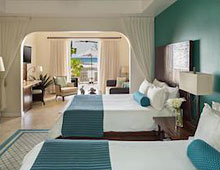 Hotel
Hotel 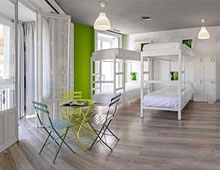 Budget accommodations
 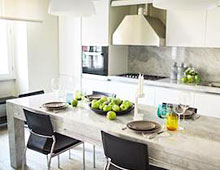 Apartments
  Family Hotel
 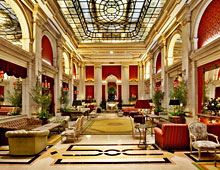 Luxury Hotel
  Resorts