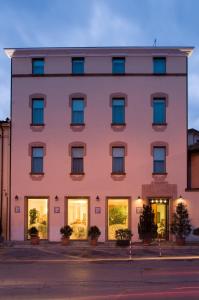
Collina dei Poeti
Santarcangelo di Romagna - Via Gavine 97
Book now
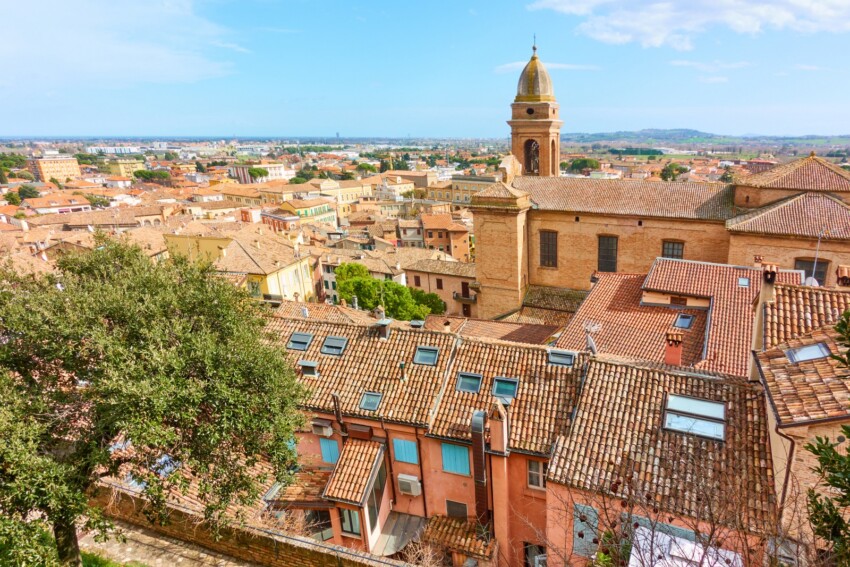
Nestled among the hills of the Valmarecchia, Santarcangelo di Romagna is a charming village renowned for its well-preserved historic centre, characterised by cobbled alleyways, ancient squares and captivating medieval architecture. Originally founded as a Roman settlement, the city grew rapidly thanks to its strategic position along the Via Emilia, one of the principal communication routes of ancient Rome.
During the Middle Ages, Santarcangelo became an important centre that saw the construction of defensive walls and a fortress commissioned by the Malatesta, one of the principal families to rule the city, to protect it from enemy raids. Over the centuries, Santarcangelo di Romagna became an important trading hub and not only managed to preserve its historical and cultural heritage intact but also kept alive the popular traditions that still characterise its identity today.
Santarcangelo is now famous for its vibrant artistic and cultural scene, with numerous festivals and events taking place throughout the year that attract visitors from across Italy and abroad. Among the most important is undoubtedly the International Festival of Theatre in the Square, one of the most famous theatre events held since 1971. Additionally, the city still maintains a thriving craft tradition of canvas printing that represents a deeply rooted tradition carried forward with dedication and passion.
The heart of Santarcangelo di Romagna is Piazza Ganganelli, surrounded by a portico that attests to the commercial vocation this area has enjoyed for centuries. The square is also home to several sites of interest including an arch dedicated to Pope Clement XIV, who was born in Santarcangelo in 1705, and the War Memorial for the First World War by Bernardino Boifava from 1925.
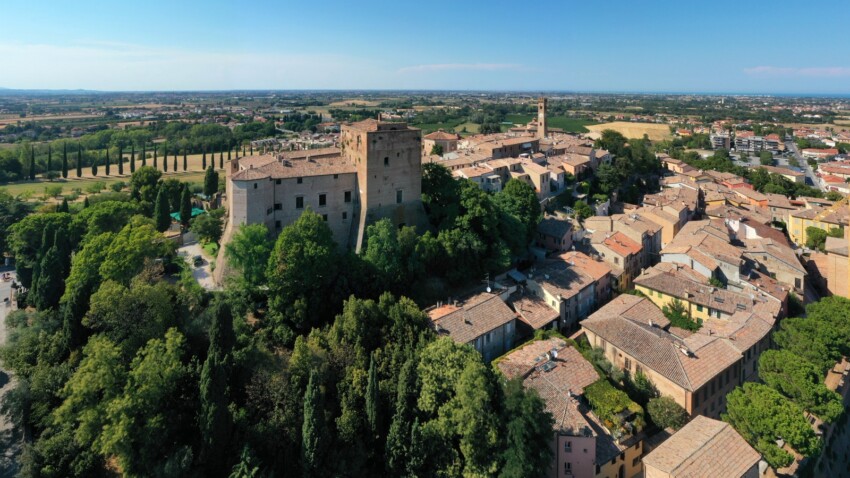
One of the symbols of Santarcangelo di Romagna is the majestic Rocca Malatestiana, an imposing medieval castle situated on the summit of Colle Giove that dominates the city and the surrounding valley. Built in the 14th century by the Malatesta family, the fortress represents one of the most fascinating examples of medieval architecture, although it has been extensively modified and enlarged over the centuries.
Its current appearance was achieved thanks to work commissioned by Sigismondo Pandolfo Malatesta in the mid-15th century. A visit to the Rocca Malatestiana today means stepping back into the past whilst also enjoying breathtaking panoramic views over the Romagna countryside with the possibility of glimpsing the Adriatic Sea in the distance.
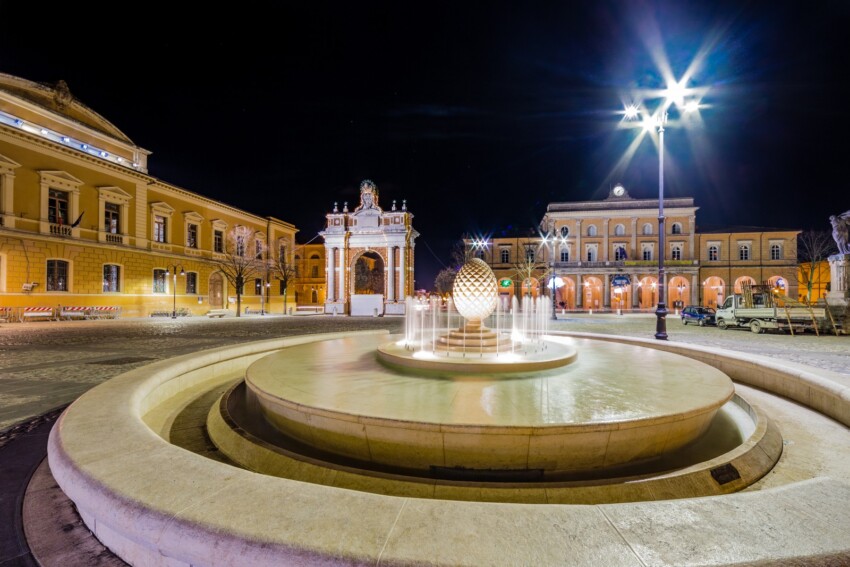
Access to Piazza Ganganelli is provided by the Arch of Pope Clement XIV, commissioned by local residents to celebrate their fellow citizen Lorenzo Ganganelli, who was elected pope as Clement XIV in 1769. The structure was designed by the Imola architect Cosimo Morelli, built with local stone and completed only in 1777, three years after the pontiff’s death.
The arch is an elegant example of neoclassical architecture and features a commemorative inscription on its upper section dedicated to Pope Clement XIV that emphasises the bond between the pontiff and his native city.
Another important symbol of the city and a landmark for the local community is undoubtedly the Campanone, or Clock Tower, which stands in the central Piazza delle Monache. This imposing 25-metre-high bell tower was built in 1893 in neo-Gothic style with crenellations and crowned at its summit by a wrought-iron figure of Saint Michael the Archangel that indicates wind direction.
One of the most fascinating attractions of Santarcangelo di Romagna is the Tufa Grottoes, which have been carved over the centuries into the tufa beneath the medieval village. The origin of these grottoes is still not entirely clear as they have been used since ancient times for various purposes, including wine and food storage as well as for religious rituals.
To date, more than 160 underground caverns connected to each other have been discovered, representing a true underground labyrinth extending 5-6 km beneath Colle Giove. During the Second World War, these underground spaces were used as shelters by the city’s inhabitants. A visit is recommended to discover the stories and mysteries connected to these evocative rock-carved chambers, which have played an important role in Santarcangelo’s history.
The Met, Museum of the Customs and Traditions of Romagna’s People, is an ethnographic museum that offers a fascinating journey through the discovery of the history and popular culture of Romagna. Housed in a former convent, the museum displays an extensive collection of artefacts, tools and testimonies related in particular to daily life, traditional crafts and the stories of rural life in the region. A visit to the Met means immersing yourself in the past and traditions of this territory, discovering its roots and evolution over time.
The Stamperia Artigiana Marchi is one of the few remaining traditional print workshops in Italy and represents an example of excellence in Santarcangelo di Romagna’s craftsmanship. Founded in 1633, the print shop decorated simple linen and hemp fabrics, materials easily found in the area, to create tablecloths, curtains, blankets and other household items. Today, this print shop still uses ancient printing methods, such as the Mangano, to create items decorated with traditional Romagna motifs.
The most celebrated technique in Santarcangelo is rust printing, which takes its name from the characteristic reddish-brown colour used as a dye for printing fabrics. A particular feature of rust printing is its resistance over time, not fading and maintaining the vibrancy of colours throughout. A visit to the Marchi Print Shop offers the opportunity to witness the printing process and purchase unique and original products.
Santarcangelo di Romagna is not as large a town as other locations in the region, but it nonetheless offers a decent range of accommodation options for a stay in the city. The historic centre is the ideal choice for those wishing to stay in an authentic and characterful setting, with the possibility of exploring the main attractions on foot. Here you will find hotels and B&Bs that offer not only hospitality and welcome but often also views over the picturesque alleyways and squares of the village.

Santarcangelo di Romagna is easily reached from the main cities in the region both by car and public transport. Santarcangelo di Romagna is located just a few kilometres from the Rimini Nord exit of the A14 motorway (Bologna-Taranto). From the motorway exit, follow the signs for Santarcangelo di Romagna, which is approximately 5 km away. Other infrastructure includes the SS 9 Via Emilia “Milan-Rimini” and the SS 258 Marecchiese “Rimini-Sansepolcro”.
Santarcangelo di Romagna also boasts a small railway station on the Bologna-Ancona line, served by several regional trains. From Bologna, the train journey takes approximately 1 hour and 20 minutes, with frequent services throughout the day. Connections to other locations are provided by long-distance coaches operating Santarcangelo’s services on bus routes managed by START Romagna and TPER.
The nearest airport is Rimini Federico Fellini, approximately 20 km from Santarcangelo di Romagna; alternatively, there is Bologna Guglielmo Marconi airport, situated approximately 100 km away.
What's the weather at Santarcangelo di Romagna? Below are the temperatures and the weather forecast at Santarcangelo di Romagna for the next few days.
Santarcangelo di Romagna is a peaceful town in Rimini province that sits around Giove hill. The town is 10 km from Rimini, 60 km from Ravenna and 120 km from Bologna.
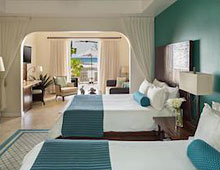 Hotel
Hotel 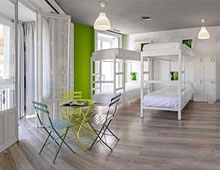 Budget accommodations
 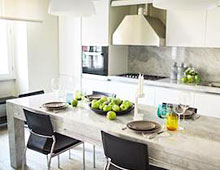 Apartments
  Family Hotel
 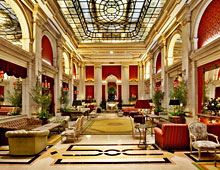 Luxury Hotel
  Resorts