Hotel Ambassador
Rimini - Viale Regina Elena 86
Hotel Ambassador is set a few steps from the beach on the picturesque promenade of Rimini, in the heart of Marina Centro.
Book now
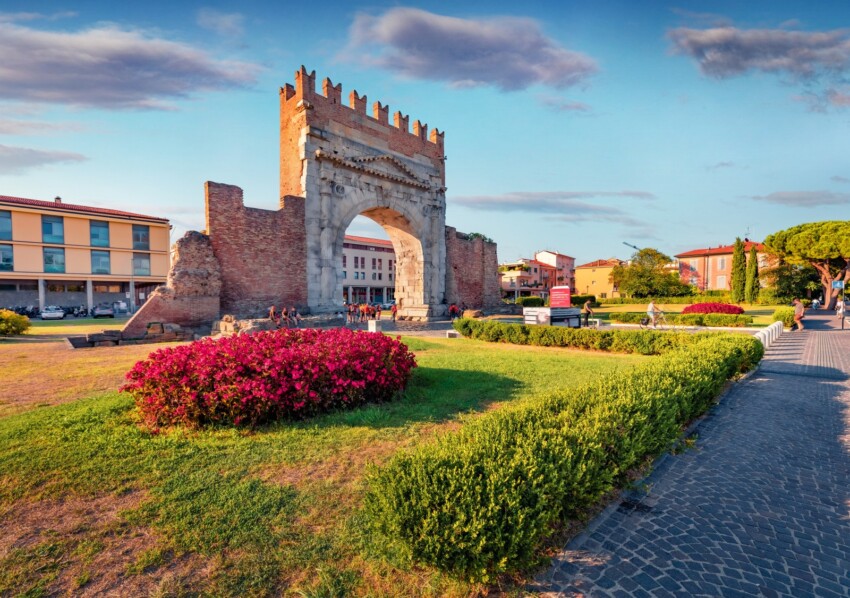
Rimini is one of the most famous cities on the Adriatic coast, celebrated for its rich history spanning two thousand years, magnificent golden beaches and vibrant nightlife. Founded by the Romans in 268 BC, Rimini was considered an important commercial hub thanks to its strategic location on the Via Flaminia, which connected Rome to northern Italy. Over the centuries, the city witnessed significant historical events, including Julius Caesar’s address in the Rimini forum after crossing the Rubicon, where he uttered the famous phrase “The die is cast” (Alea iacta est), marking the beginning of his war against Pompey.
After the Goths and Byzantines, Rimini became the fiefdom of the Malatesta family, who transformed the city into an important cultural centre, particularly during the Renaissance, hosting renowned figures. The city attracted artists such as Leon Battista Alberti, Piero della Francesca and Matteo de’ Pasti, as well as scientists and men of letters like Giovanni Bianchi and Giovanni Antonio Battarra.
Thanks to its lengthy seafront of nearly 15 km, Rimini became a hugely popular summer destination in the nineteenth century. In 1873, the first bathing establishment on the Adriatic coast was inaugurated here. From that moment onwards, the city developed its tourism vocation and continued to grow as a seaside destination, attracting visitors from abroad. Today, Rimini is renowned not only for its historical attractions but also for being one of Europe’s principal summer holiday destinations and the perfect place for those seeking a combination of relaxation, culture and entertainment.
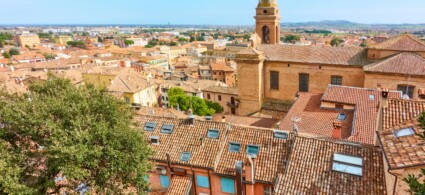
Rimini is a city with a lengthy history, and its historic centre still bears the marks of its ancient past and the various rulers who held sway over it. For many visitors, a tour of the city begins at Piazza Cavour, the heart of civic life in Rimini, where you’ll find important historic buildings such as Palazzo dell’Arengo, Palazzo del Podestà and Teatro Galli, as well as open-air cafés and shops.
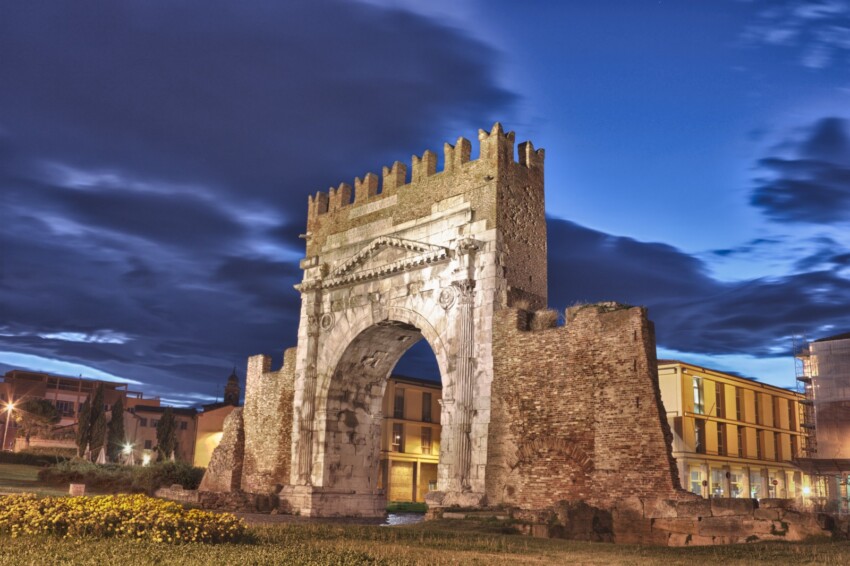
Built in 27 BC in honour of the emperor, the Arch of Augustus is not only one of Rimini’s most important monuments but also the oldest existing Roman arch, erected to mark the end of the Via Flaminia. Positioned along one of ancient Italy’s most travelled roads, the Arch of Augustus is, together with the Tiberius Bridge, one of Rimini’s symbols and features in the city’s coat of arms. At that time, it was built along the defensive walls that surrounded Rimini and represented the main entrance to the Roman city.
Unfortunately, due to earthquakes and wars, the arch has been rebuilt several times, but its majestic design has always been preserved, complete with relief decorations that tell the story of the era and exalt Rome’s power. At the top is an inscription that reads: “The Senate and People of Rome dedicate this monument to the Emperor Caesar Octavian, son of the deified Julius Caesar, seven times emperor, seven times consul and designated for the eighth consulship, on the occasion of the restoration of the Via Flaminia and the other most frequented roads of Italy, established and ordered by him.”
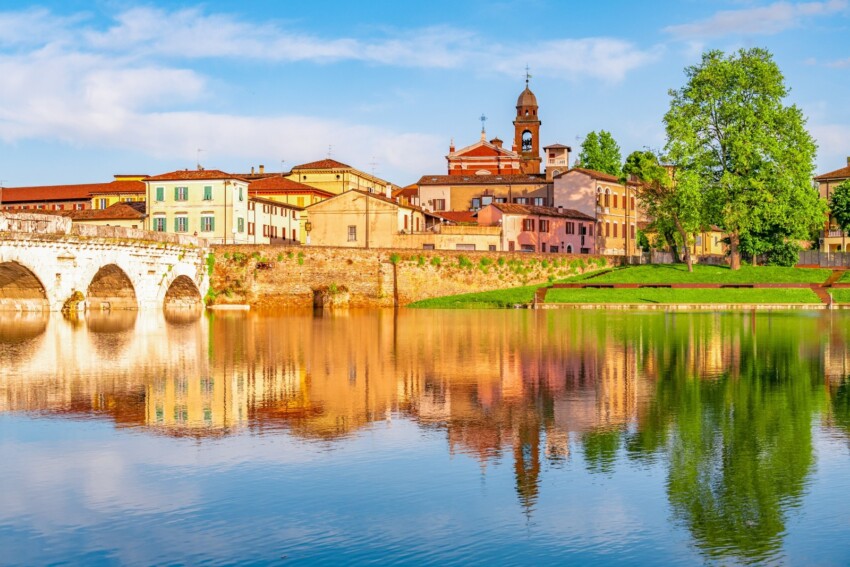
Completed in 21 AD and still in use today, the Tiberius Bridge is another testament to the Roman legacy and an essential piece of infrastructure, marking the beginning of the Aemilia and Popilia consular roads. The Tiberius Bridge spans the River Marecchia and remains in use for car and pedestrian traffic; those crossing it can enjoy a truly striking view of the city.
Built in Doric style, the Tiberius Bridge has five arches of varying sizes, with the central arch being the largest. For its construction, as with the Arch of Augustus, Istrian stone was used, and the bridge is considered a testament to the great technical knowledge and engineering prowess of the Romans.
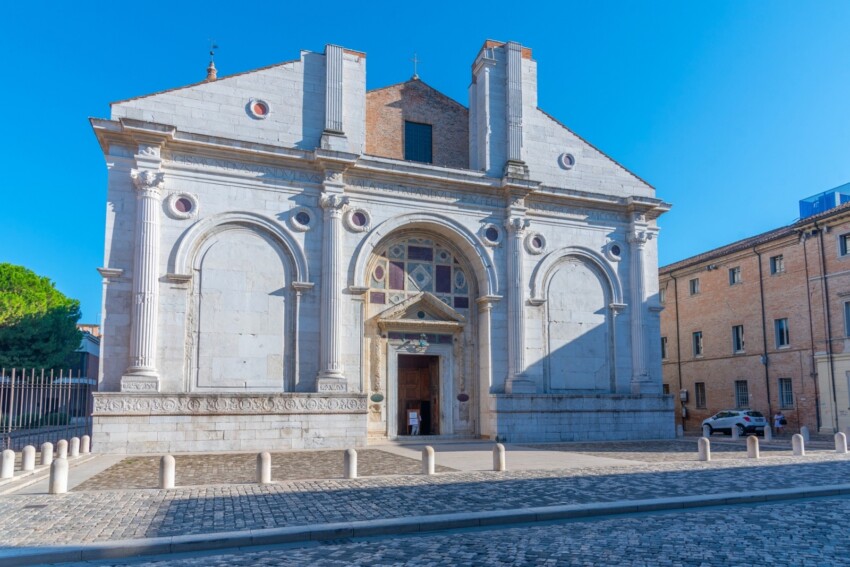
The Malatesta Temple, also known as Rimini’s Cathedral, was originally a Gothic church but in the fifteenth century was converted by the Malatesta family, who ruled the city for centuries, into an elegant mausoleum. Designed by Leon Battista Alberti, the temple boasts a truly imposing façade intended to be inspired by the style of Roman triumphal arches, although unfortunately it was never completed in the upper section.
The temple features a single nave with broad pointed-arch arcades and is distinguished by six elegant side chapels, among which stand out the “Chapel of the Planets”, the “Chapel of the Ancestors” and the “Chapel of Sigismund” for their elegant decorations. The interiors are indeed rich in sculptures and artworks created by important artists such as Piero della Francesca, Giotto and Agostino di Duccio.
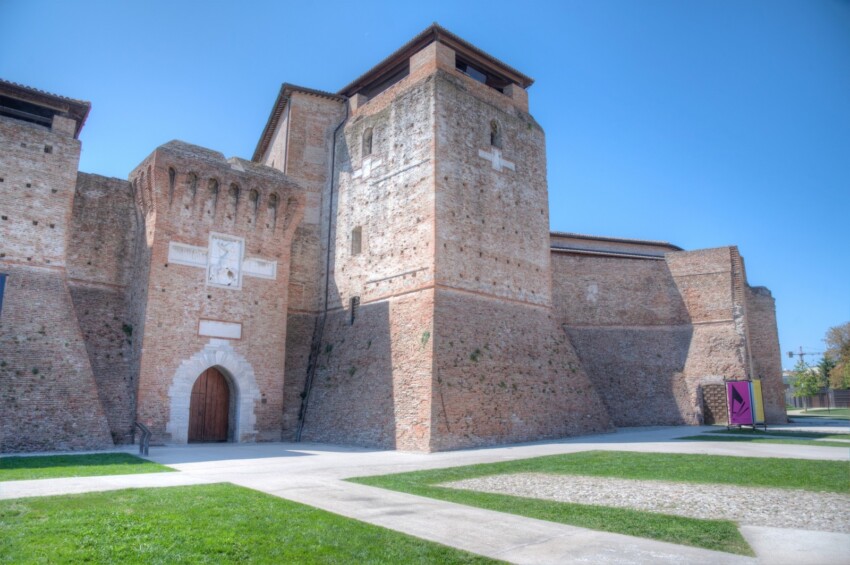
Castel Sismondo, also known as the Rocca Malatestiana, was built in the fifteenth century as a fortified residence by Sigismund Pandolfo Malatesta, lord of Rimini and Fano at the time. The castle was originally a magnificent structure surrounded by formidable walls and a moat, erected to protect the Malatesta family in case of enemy attack.
It is said that Sigismund himself designed the building, although his exact contribution is unclear; what is certain is that Filippo Brunelleschi, Cristoforo Foschi and Matteo Nuti worked on the project. For the time, the complex was considered highly innovative, but today only the central nucleus of the original building can be admired. Inside there is a pathway that tells the story of the building and the Malatesta family, as well as an overview of Rimini’s history and the great director Federico Fellini.
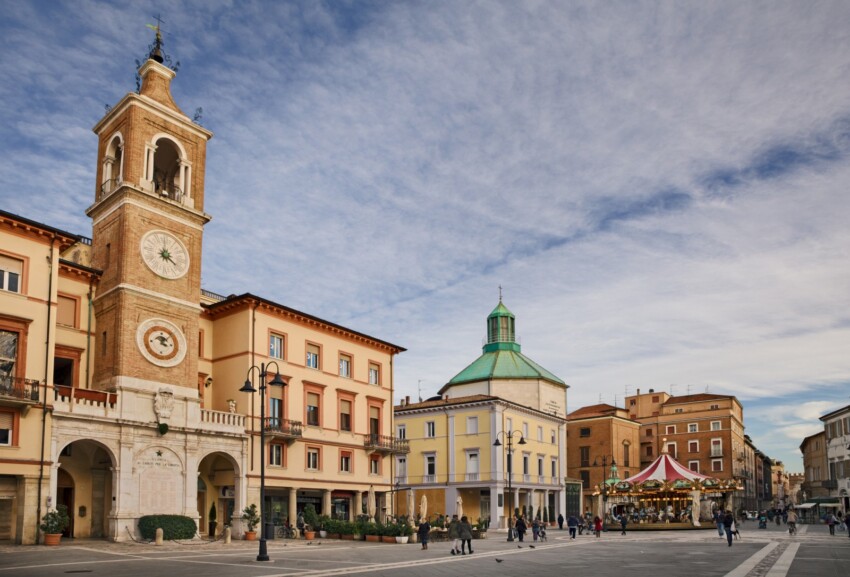
Piazza Tre Martiri represents the historic heart of Rimini and corresponds to the city’s ancient Roman forum. The square takes its name from three Rimini partisans who were hanged by the Nazis on 16 August 1944; a commemorative plaque has been placed in their memory. The most significant monument is the Church of Sant’Antonio, built in 1518 to commemorate a miracle of the saint.
The square is characterised by the presence of important historic buildings such as the Clock Tower from 1547 and the Church of the Paolotti. Here the main streets of the historic centre intersect, and you’ll find the ancient Column of Julius Caesar, which tradition holds marks the spot where the Roman commander addressed his troops after crossing the Rubicon.
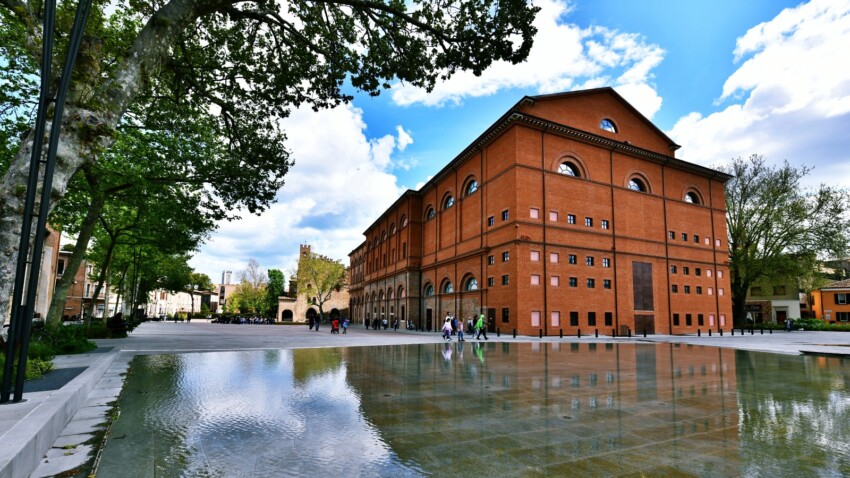
The Amintore Galli Theatre, inaugurated in 1857 under the name Teatro Vittorio Emanuele II, is one of the most prestigious historic theatres in Emilia-Romagna. Designed by architect Luigi Poletti, it represents a magnificent example of nineteenth-century Italian theatre. Severely damaged by bombing in the Second World War, it remained closed for decades.
After lengthy and careful restoration, the theatre reopened in 2018, recovering its original splendour with its magnificent horseshoe-shaped auditorium, four tiers of boxes and gallery. Today the Galli has once again become the centre of Rimini’s cultural life, hosting a rich season of operas, concerts, drama performances and cultural events.
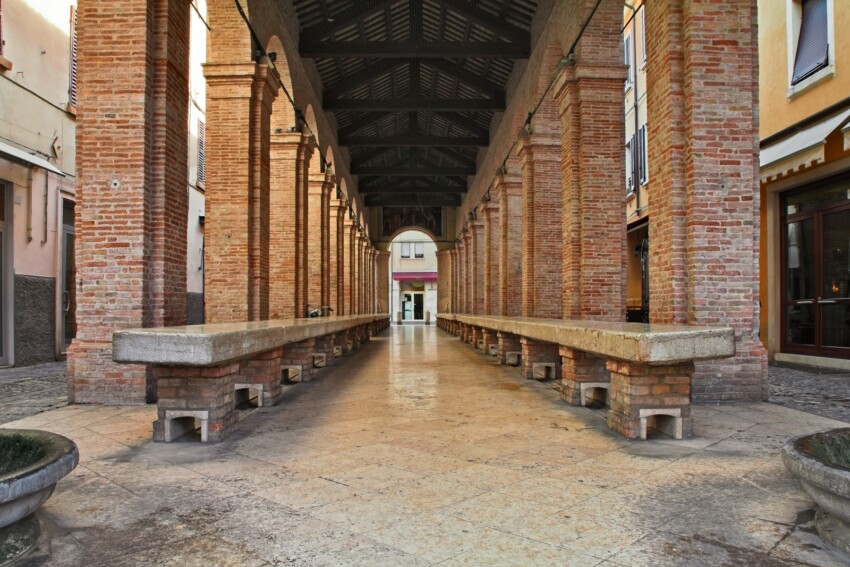
The Old Fish Market is a historic structure dating back to the end of the nineteenth century. The building, characterised by distinctive Art Nouveau architecture with large glass panels and iron structures, served as the city’s fish market until the 1970s, representing an important landmark for the local fishing and trading community.
Today, after careful restoration, the building has been transformed into a multifunctional cultural space, while maintaining its historic charm intact. The structure, renamed “Palazzo del Pesce”, hosts art exhibitions, cultural events and public events, becoming an important community hub in the San Giuliano maritime district, one of the city’s most characteristic neighbourhoods.
Federico Fellini (1920 – 1993) was an internationally renowned Italian film director, screenwriter and author who won multiple Academy Awards as well as the Golden Lion for Career Achievement. Having been born and lived for part of his life in Rimini, the city dedicated a museum to him called the Federico Fellini Museum (or Fellini Museum), which is actually a distributed museum, meaning it has multiple sites throughout the territory. This museum is housed in three different areas of Rimini’s historic centre, including the aforementioned Castel Sismondo, Palazzo del Fulgor and Piazza Malatesta.
A visit to these sites takes you on a journey through time to admire the famous director’s personal and film props, as well as watch rare footage of Fellini at work. At Palazzo Fulgor, screenings of all his films are also held, while in Piazza Malatesta, in addition to light displays, there is a fountain that recreates the setting of the film Amarcord, winner of the Academy Award in 1973.
San Giuliano District is a charming historic quarter located just beyond the famous Tiberius Bridge. It was once a simple fishing village, but in recent years has undergone a remarkable transformation. The district is now known for its unique and picturesque atmosphere, its narrow cobbled streets and houses decorated with murals depicting maritime scenes and portraits of Federico Fellini.
Not to be missed in the area is a visit to the Church of San Giuliano Martire, built in the sixteenth century, which houses splendid works by Veronese and the relics of the martyr Giuliano. The district extends to the coast where you’ll find the small beach of San Giuliano a Mare, a tranquil sandy beach that is not very extensive but well-equipped with amenities and facilities.
Overlooking Piazza Cavour are the thirteenth-century Palazzo dell'Arengo10 and Palazzo del Podestà11, also known as the “Palaces of Art” because they have hosted the San Patrignano Foundation Collection for some years. This collection, begun in 2017, comprises various works donated by internationally renowned contemporary artists and is constantly expanding. Inside, however, there is also displayed the fresco of the Last Judgement created by the Rimini School of the fourteenth century under the guidance of Giovanni da Rimini. In addition to the permanent collection, there is also space dedicated to events and temporary exhibitions.
In the following map you can see the location of the main places of interest mentioned in this article.
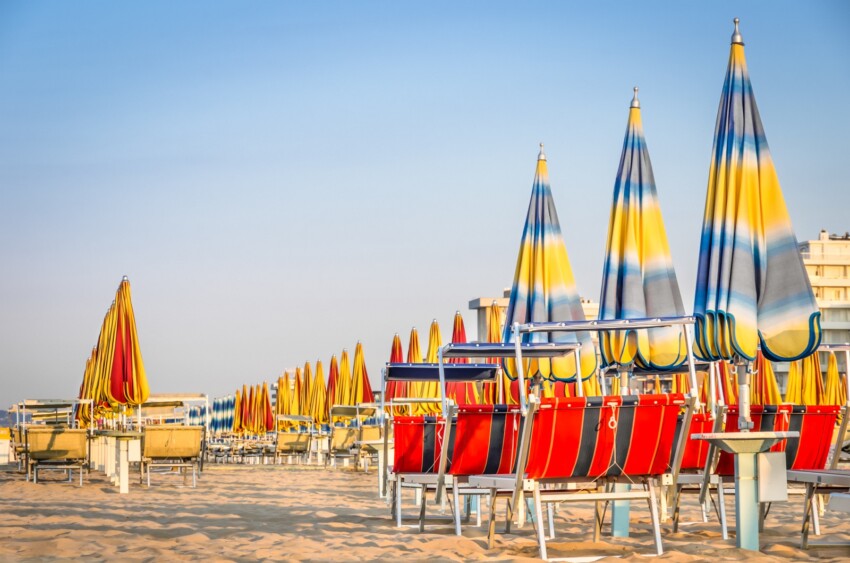
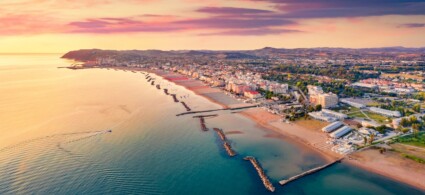
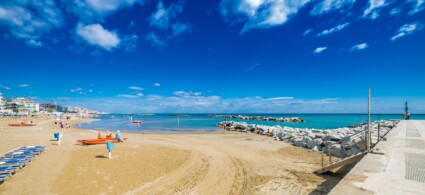
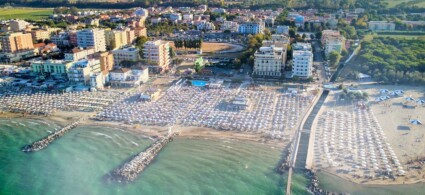
With over 15 kilometres of coastline, Rimini boasts beaches that are internationally renowned for their golden sand, crystal-clear waters, excellent facilities and countless entertainment options. Rimini offers both free public beaches and a wide choice of equipped beach resorts designed to meet every need, from exclusive beach clubs to family-friendly establishments. The coastal area is divided in half by the historic port, where you’ll find Rimini Marina Centro beach, followed by nine other seaside locations positioned either north or south of the port area. To the north are San Giuliano Mare, Rivabella, Viserba, Viserbella and Torre Pedrera, whilst to the south lie Bellariva, Marebello, Rivazzurra and Miramare.
Rimini’s main beach is undoubtedly Marina Centro, located near the city centre and renowned for its vibrant atmosphere as well as its extensive range of restaurants, bars and activities. It was here that Italy’s first beach resort was established in 1843, quickly gaining international acclaim and attracting visitors from across Europe. Today, Rimini’s seafront is at the heart of a new regeneration project called Parco del Mare (Park of the Sea), which aims to revitalise the entire area by introducing more green spaces, sports facilities, cycling paths and pedestrian walkways.
Marina Centro is the ideal spot for those seeking entertainment and relaxation within walking distance of the city centre, though this means it can become quite busy and crowded during summer months. North of Rimini Marina lies Rivabella, a quieter beach more suited to families, with plenty of facilities, children’s play areas and gently sloping seabeds. This area is also home to Fiabilandia theme park, considered the Disneyland of the Riviera, complete with rides and attractions for children and young people.
Historically, Bellariva was crucial to the development of the city’s beach tourism, and together with other locations in South Rimini, it witnessed the construction of numerous holiday colonies (Colonie Marine) in the early twentieth century. From the 1980s onwards, however, most of these colonies were abandoned and fell into disrepair, though many are now undergoing regeneration. Bellariva, along with Marebello and other southern areas, boasts spacious, well-equipped beaches with facilities for various activities and sports including bowls, beach volleyball, tennis and basketball courts. Bellariva also appeals to those who enjoy evening entertainment, as alongside its beach resorts you’ll find numerous beach clubs that serve as daytime relaxation spots and dance venues in the evening.
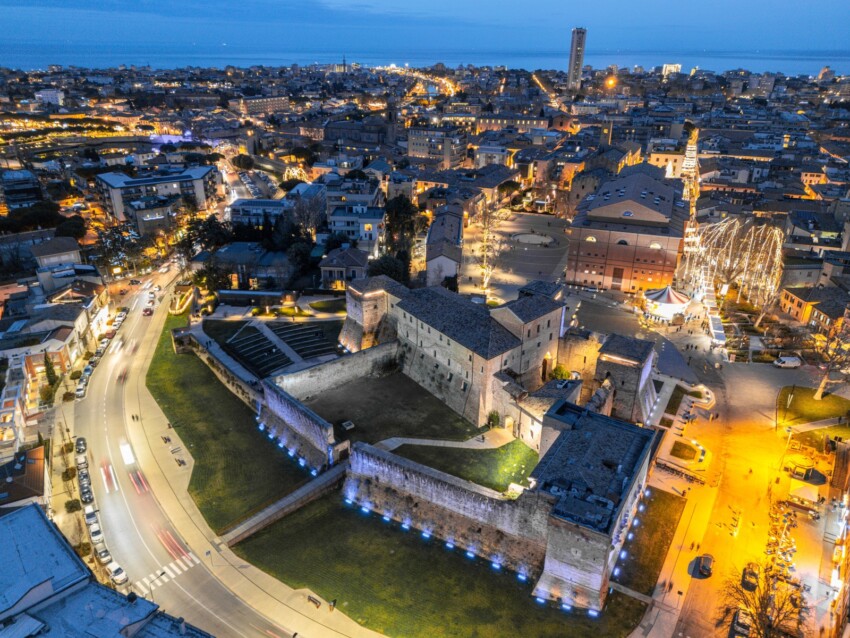
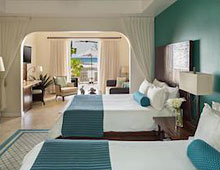
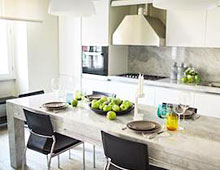
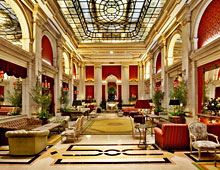
Rimini offers a wide range of accommodation options to suit every traveller’s needs: from luxurious five-star hotels to budget bed and breakfasts, family-run guesthouses to self-catering apartments. Your choice of accommodation and location will depend on the type of trip you’re planning—a more cultural stay is best suited to the historic centre, whilst a beach-focused holiday calls for the seafront.
Marina Centro is certainly a good compromise and the most popular area for summer tourists, thanks to its proximity to major attractions and beaches. Late in the nineteenth century, the first large, upmarket hotels were opened here, such as the Kursaal and the Grand Hotel, and today you’ll find hotels in every category alongside restaurants, bars, shops and several nightlife venues.
Those seeking more budget-friendly accommodation without sacrificing beach access and amenities may wish to consider the Miramare area to the south, whilst quieter, more family-oriented areas are found further north in Viserba, Viserbella and Torre Pedrera.
We offer a selection of hotels at Rimini to suit all categories of travellers. The most booked by tourists are the sea-facing hotels, often right on the beach. If you want to play it safe, choose one of the following: they are among the most booked hotels in Rimini, sorted by number of reviews.


If you prefer space, privacy and the ability to prepare your own meals to a hotel holiday, book a holiday home at Rimini. We recommend a few below, but in this case we advise you to book early because houses and apartments for rent at Rimini are in high demand.


Rimini is easily accessible by car and public transport thanks to its strategic location along the Adriatic coast. Those driving can use the Adriatic Motorway (A14), which connects Rimini with Bologna to the north and Taranto to the south via the Rimini Nord and Rimini Sud junctions. Since Roman times, Rimini has sat at the intersection of three important roads: the Via Emilia (SS 9), the Via Flaminia (SS 16) and the Via Popilia, which respectively link it to Milan, Rome and Padua. The SS 72 road connects the Adriatic Riviera with the Republic of San Marino.
For public transport, Rimini railway station is a major hub served by regional and national trains, offering connections to cities including Bologna, Milan, Padua and Rome. In front of the railway station you’ll find the bus station, with numerous services connecting Rimini not only to nearby cities but also to other destinations across Italy.
Those travelling from further afield can fly into the city via Federico Fellini International Airport, located just a few kilometres from the city centre. The airport offers domestic and international connections, which increase particularly during the summer season, and is easily accessible by bus or taxi. Alternatively, Forlì Airport (58 km away) and Bologna Airport (approximately 120 km away) are also options.
What's the weather at Rimini? Below are the temperatures and the weather forecast at Rimini for the next few days.
Rimini is a city in Emilia-Romagna situated along the Adriatic coast and stands as one of the region's principal seaside resorts. Rimini lies roughly 60 km from Ravenna, 125 km from Bologna and 160 km from Modena.
 Hotel
Hotel 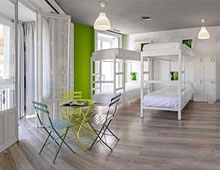 Budget accommodations
  Apartments
  Family Hotel
  Luxury Hotel
  Resorts