Modus Aquae
Brisighella - VIA BACELLO 29 BRISIGHELLA VIA BACELLO 29 BRISIGHELLA
Book now
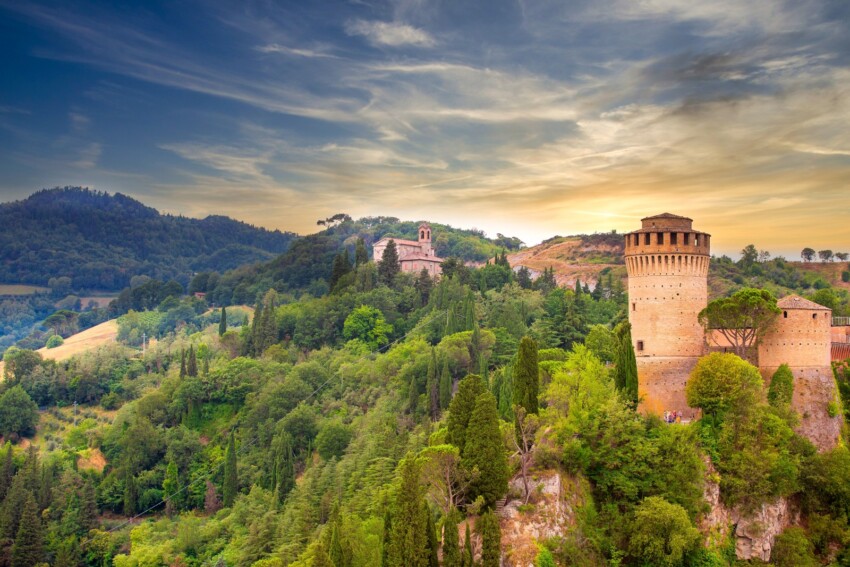
An enchanting medieval village in the province of Ravenna, Brisighella is a charming little town surrounded by three hills that offers a fascinating blend of history, culture and breathtaking landscapes. The town’s skyline is characterised by three rocky pinnacles on which stand the fourteenth-century Rocca Manfrediana, the eighteenth-century Santuario del Monticino and the eighteenth-century Clock Tower.
Brisighella’s origins date back to medieval times, when the village was founded thanks to its strategic position and quickly became an important centre for defence and territorial control. Over the centuries, Brisighella has been ruled by both the Papal State and various noble families who contributed to fortifying the town and building important structures.
One of Brisighella’s most prosperous periods was undoubtedly the Renaissance, when the “Via degli Asini” was built in the town – a street that served both as a rampart walkway and as a route for communication and trade. This street, where donkeys carrying extracted gypsum once passed, is today a unique testament to ancient times that allows visitors to take a genuine journey back in time.
Beyond its history, Brisighella is renowned for the production of Sangiovese wine and extra virgin olive oil, one of the highlights of local gastronomy. The hilly area surrounding the village is characterised by the presence of centuries-old olive groves that produce oil of the highest quality, appreciated worldwide.
Ideal for a relaxing weekend or a day trip, Brisighella offers its visitors all the charm of a medieval village, so much so that it has been included in the “Most Beautiful Villages in Italy” club and has been awarded the Orange Flag of the Italian Touring Club.
Located just a short distance from the region’s major cities, such as Bologna, Ravenna and Rimini, Brisighella can be the ideal stopping point for exploring the most authentic and evocative Emilia-Romagna.
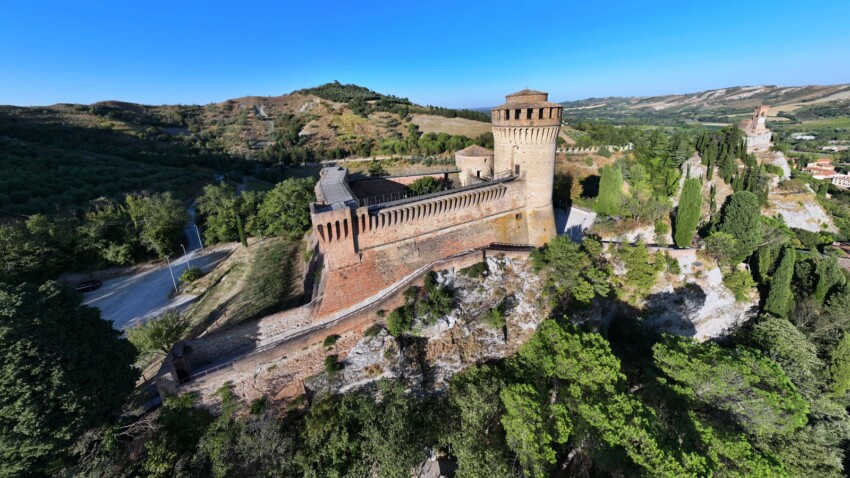
The Rocca Manfrediana or Rocca di Brisighella is undoubtedly the town’s most iconic monument, as this imposing fortress was built in the fourteenth century by the Manfredi family. The Rocca dominates the town from atop a selenite rocky pinnacle and is located within the Vena del Gesso Romagnola Regional Park. Over time, the site has undergone several modifications by the Manfredi, the Papal State and the Venetians, who briefly governed this territory.
The Rocca, with its two crenellated cylindrical towers and imposing walls, offers breathtaking panoramic views of the Lamone Valley and the surrounding hills. Inside, there is now the Museum “L’Uomo e il Gesso” (Man and Gypsum), which tells how gypsum, the material that also makes up the pinnacle, has always contributed to the village’s economy.
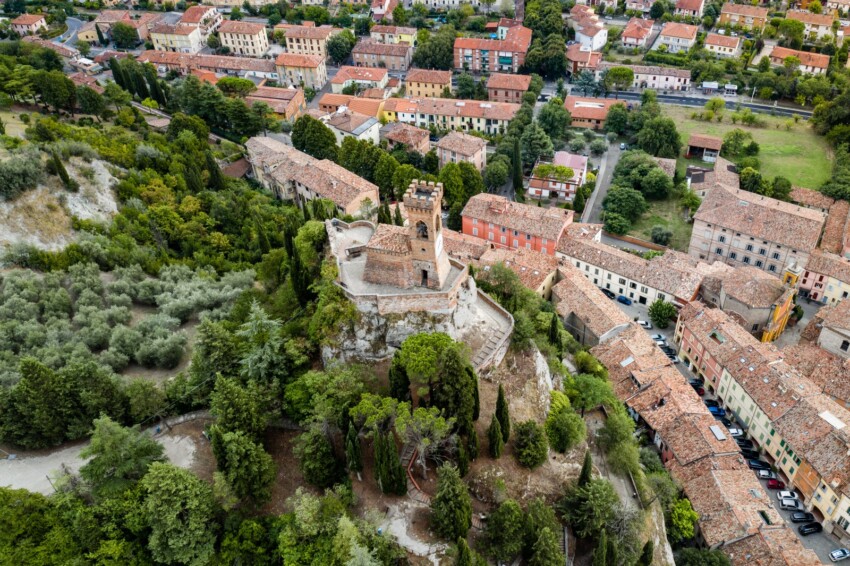
From the Rocca Manfrediana you can easily reach the Clock Tower, another civic symbol that stands on the second selenite pinnacle along a dirt road surrounded by olive groves and vineyards. What now appears as a clock tower was once an early defensive settlement ordered in the thirteenth century by the military commander Maghinardo Pagani, which later became the valley’s most important stronghold.
Subsequently, the Tower was modified several times and became, together with the Rocca Manfrediana, part of Brisighella’s defensive system. Only in the mid-nineteenth century, once its original function was abandoned, was the Tower rebuilt and the clock we can now admire was installed.
The Santuario del Monticino, located on top of the Colle di Monticino, was built in the mid-eighteenth century on the site of a previous religious building to house a sacred image of the Madonna and Child dating from 1626. The sanctuary is reached via a striking stone staircase that allows you to admire the full beauty of the external façade, which was enlarged in 1926 according to a design by Edoardo Collamarini.
The interior of the sanctuary has a single nave and is decorated with elegant pillars with Ionic capitals, fine marble and frescoes by the Faenza painter Savino Lega (1813-1889). In honour of the Madonna del Monticino, one of Romagna’s oldest festivals has been celebrated every September since 1662. From the sanctuary’s terrace, you can also enjoy a breathtaking panorama of the Lamone Valley and the surrounding hills.
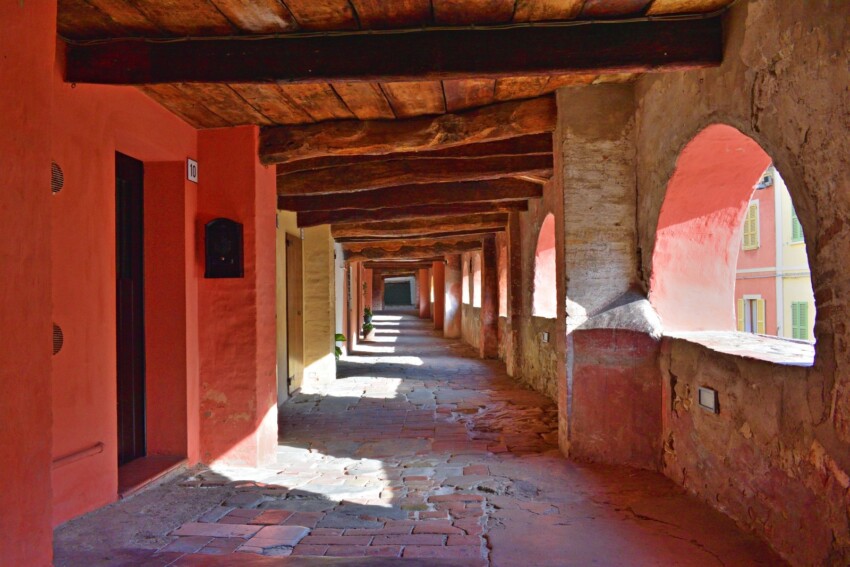
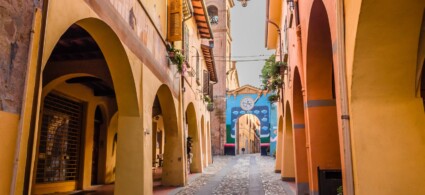
The Via degli Asini is a street carved out of the rock that was originally used for military purposes as a rampart walkway and as a communications route. The street was then covered and now appears as a long covered passageway with dwellings built in the upper section. The Via degli Asini, having abandoned its defensive function, was then used for commercial purposes as a street where donkeys carrying extracted gypsum from the surrounding areas would pass. Today, walking along the Via degli Asini means immersing yourself in a medieval atmosphere, admiring ancient stone houses and artisan shops.
The Pieve di San Giovanni in Ottavo, also known as Pieve del Tho, was built in the eleventh century on the site of a previous religious building commissioned by Galla Placidia, daughter of Theodosius. It was named this way because it is located at the eighth mile along the Roman road “Via Faventina” which connected Faenza with Etruria.
Built with a basilica plan of three naves in the Romanesque style, it was most likely constructed using recycled material – details that are particularly visible in the internal columns. When visiting the interior, you can admire fine decorations such as an altar frontal dating from the seventh century, a seventeenth-century ceramic funeral plaque and frescoes from the fourteenth to sixteenth centuries.
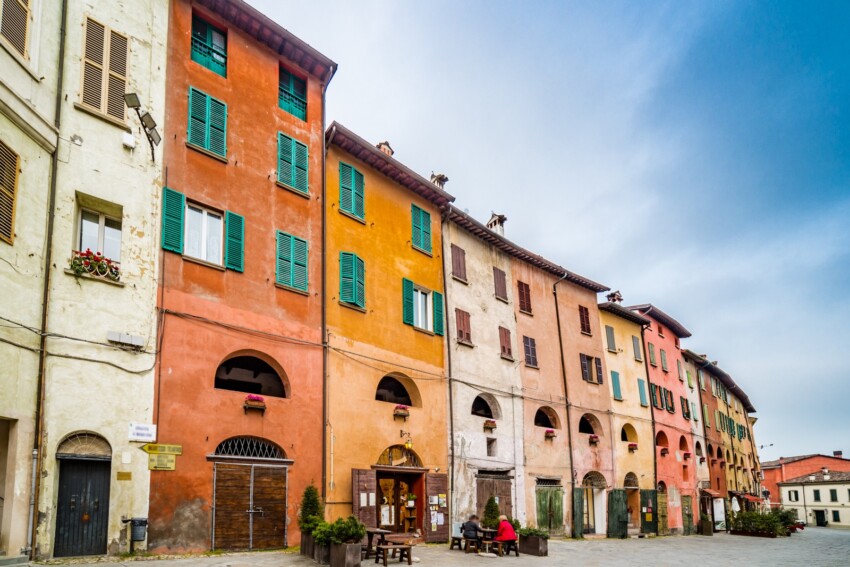
Brisighella’s historic centre is the ideal place to stay to fully experience the village atmosphere and explore its attractions. The town is mostly equipped with small yet welcoming tourist facilities such as family-run hotels and B&Bs. For those seeking tranquillity and greater contact with nature, the surroundings of Brisighella offer numerous farm stays surrounded by hills with olive groves and vineyards.
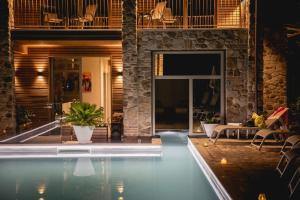

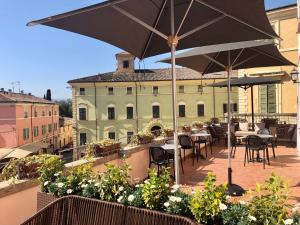
Thanks to its central location, Brisighella is easily reached by car as it is crossed by State Road 302 “Brisighellese Ravennate” which connects Faenza (and the Via Emilia) with Tuscany. From Bologna, for example, you need to take the A14 motorway towards Ancona, exit at Imola and then continue along the SS9 Via Emilia towards Faenza and along the SS 302 (or SR 302R) towards Brisighella. The distance is approximately 70 km and the journey takes about 1 hour. From Ravenna you can follow the SS16 Adriatica road northwards and then take the SS 302 towards Brisighella.
Those who wish to travel by train can use Brisighella’s railway station, which is located on the Faentina line connecting Florence with Faenza via Borgo San Lorenzo. The nearest airports are Forlì, 35 km away, and Bologna, 75 km away from Brisighella.
What's the weather at Brisighella? Below are the temperatures and the weather forecast at Brisighella for the next few days.
Brisighella is a captivating Italian village nestled in the lower Lamone Valley at the foot of the Tuscan-Romagnol Apennines. The town lies 12 km from Faenza, 50 km from Ravenna and 70 km from Bologna.
 Hotel
Hotel  Budget accommodations
  Apartments
  Family Hotel
  Luxury Hotel
  Resorts