Known for its monuments designated as UNESCO World Heritage Sites and its splendid beaches, Ravenna is a charming Romagna town with a long history and great appeal.
Renowned primarily for its magnificent mosaics designated as a UNESCO World Heritage Site, Ravenna boasts a glorious past as the cradle of important civilisations that left precious legacies. This Romagna town is a treasure trove of history, culture and art, and a territory that played a crucial role throughout the centuries, becoming the capital of the Western Roman Empire, the Kingdom of the Ostrogoths and the Byzantine Exarchate. Though this territory has truly ancient origins, it was actually during Roman rule that the city experienced a period of tremendous growth and became an important port and strategic military centre.
In 402 AD, Emperor Honorius transferred the capital of the Western Roman Empire from Milan to Ravenna, ushering in an era of artistic and architectural splendour for the city. Following the fall of the Roman Empire, Ravenna served as the capital of both the Ostrogothic Kingdom (493–540) and the Byzantine Exarchate (584–751) before coming under papal control. Both the Ostrogoths and Byzantines left an indelible mark on the city, enriching it with extraordinary sites and mosaics that continue to captivate visitors from around the world.
Throughout the Medieval period, Ravenna remained an important political and cultural centre, until it was first subjugated by the Republic of Venice and later by the Papal States. Its prestigious past is now reflected in the rich historical heritage comprising extraordinary basilicas, baptisteries and finely decorated mausolea. Yet Ravenna is far more than history and art—it’s a vibrant and welcoming destination with culinary traditions including dishes such as cappelletti in brodo, piadina romagnola and passatelli. Moreover, the city, especially during summer, is a sought-after destination for those who love spending seaside holidays in pursuit of relaxation, sunshine and entertainment.
Things to do in Ravenna
Though often overlooked by traditional Italian tourist routes, Ravenna is a captivating city with a rich history that truly deserves to be discovered. Here you’ll find not only a fascinating historical and architectural heritage, culminating in eight UNESCO World Heritage Sites, but also excellent gastronomic traditions and wonderful beaches to relax on.
A tour of Ravenna’s Mosaics
The mosaics of Ravenna represent one of the world’s most extraordinary artistic treasures, with eight UNESCO monuments safeguarding precious Early Christian and Byzantine masterpieces. To fully appreciate their beauty, it’s advisable to join a guided tour with specialist guides available in several languages.
These tours, lasting around 3 hours, typically include the Basilica of San Vitale, the Mausoleum of Galla Placidia and the Basilica of Sant’Apollinare Nuovo. During the visit, guides explain mosaic techniques, the symbolism of the images and the historical context, allowing you to fully understand the value of these masterpieces. It’s advisable to book in advance, especially during peak season.
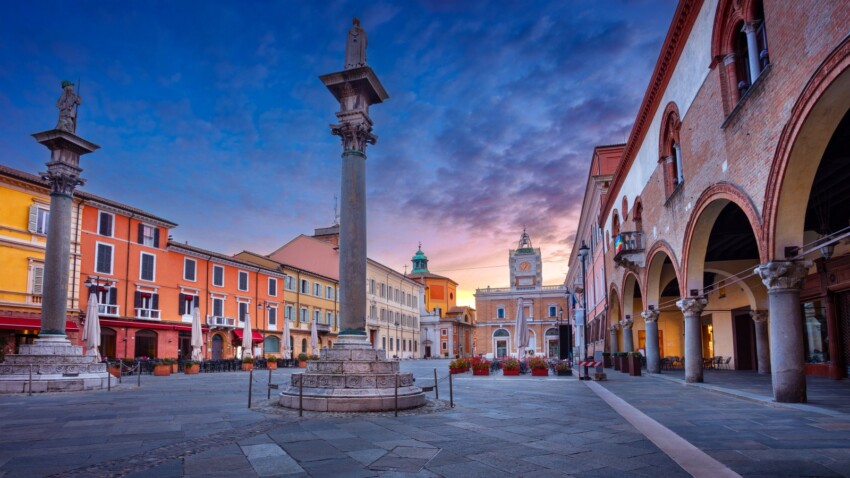
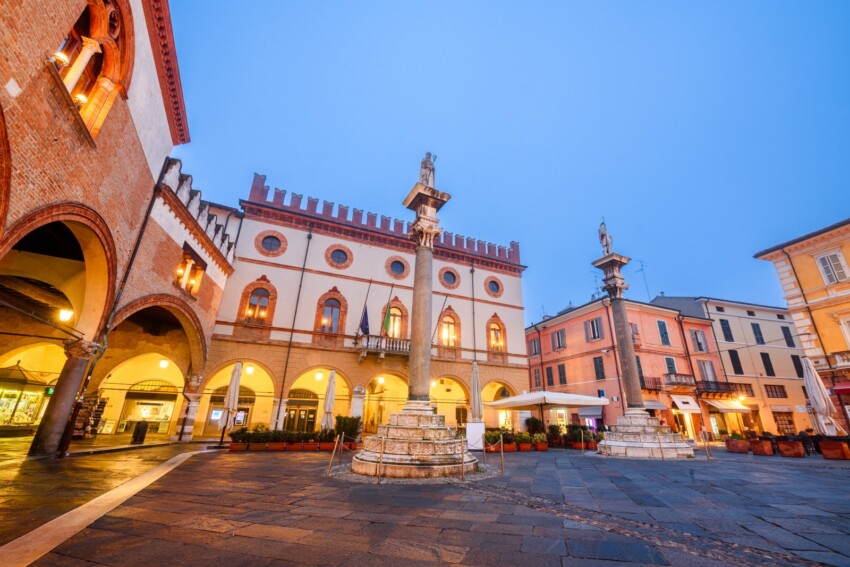
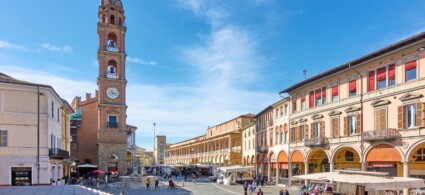
The heart of the city and for many the starting point for discovering Ravenna is Popolo Square, built towards the end of the 13th century at the behest of the Da Polenta family. Originally known as Piazza del Comune, it only became Popolo Square following the birth of the Italian Republic in 1946.
Over time, numerous important buildings have been erected here, including the Apostolic Palace and the Town Hall, today known as the “Crenellated Palace”. During Venetian rule, the two columns still standing were erected, originally topped by the Lion of San Marco, but following the arrival of the Papal States, these were replaced with statues of Sant’Apollinare and San Vitale.
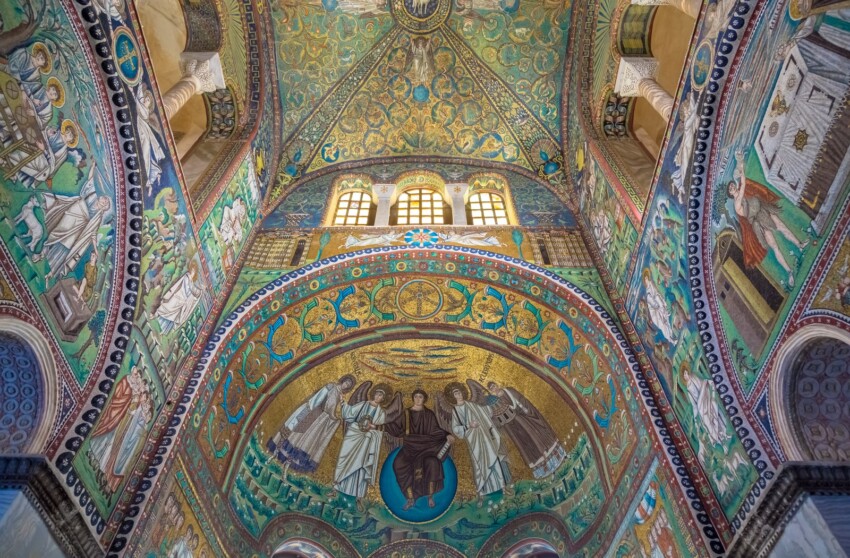
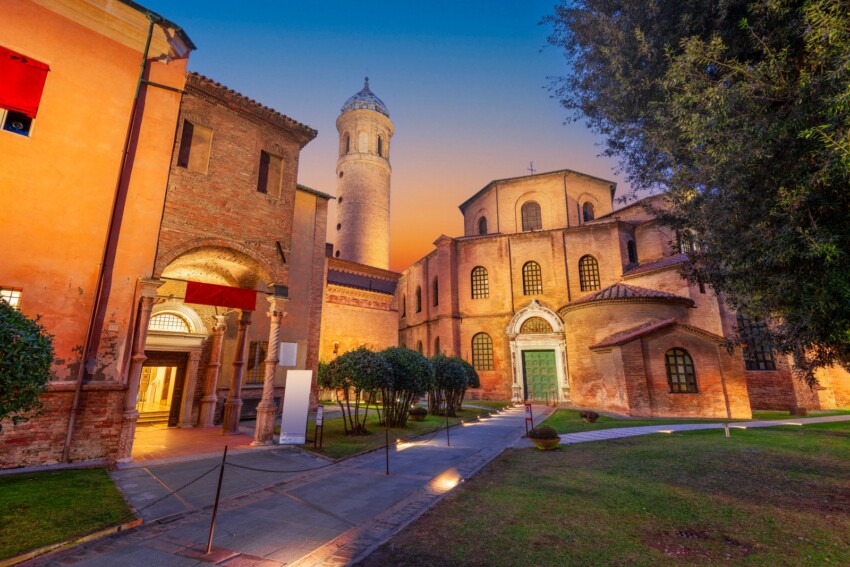
Without question one of Ravenna’s most famous sites and part of the “Early Christian Monuments of Ravenna” complex, declared a UNESCO World Heritage Site in 1996, is the Basilica of San Vitale, a masterpiece of Byzantine architecture. The religious building was constructed in the 6th century at the behest of Bishop Ecclesius on the site of the former mausoleum of San Vitale and is considered a magnificent testimony to Early Christian art. The Basilica of San Vitale features an octagonal plan with a central core crowned by an intricately decorated dome. The interior captivates with its extraordinary mosaics adorning the inner walls and dome with biblical scenes and figures of saints executed with great skill and attention to detail.
Among the most famous are the portraits of Emperor Justinian and Empress Theodora, created to testify to the power and magnificence of the Byzantine Empire. On the apse is the Christ Pantocrator, holding the Scroll of the Seven Seals in one hand while offering the triumphal crown to San Vitale with the other; beside him stands the proto-bishop Ecclesius. Beyond the celebrated mosaics, the interior decorations comprise polychrome marble and elegantly finished stucco that leaves everyone speechless.
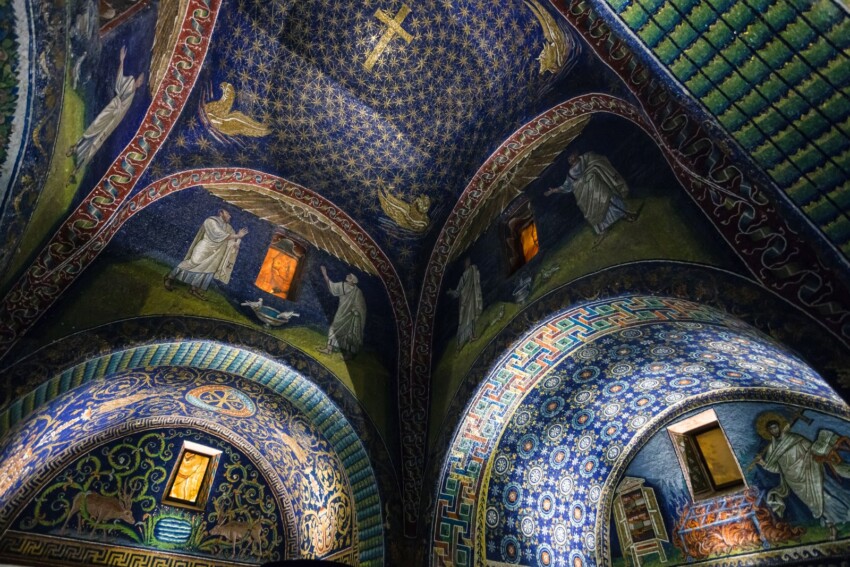
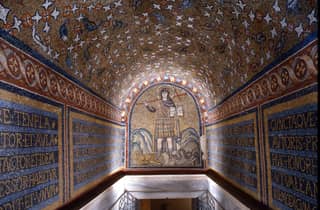
Close to the Basilica of San Vitale stands the Mausoleum of Galla Placidia, another 5th-century gem and the oldest of Ravenna’s eight Early Christian monuments declared UNESCO World Heritage Sites. This small but wonderful masterpiece was commissioned by Emperor Honorius, who in 402 had moved the capital of the Western Roman Empire from Milan to Ravenna. The sovereign had ordered the construction of this building as a mausoleum dedicated to his sister Galla Placidia, who had previously served as empress of the realm before him.
Externally, the site presents a Latin cross plan with a large dome at its centre. The simplicity of the building’s exterior contrasts sharply with its beautifully decorated interiors adorned with elegant mosaics covering the walls and ceiling, representing another invaluable testimony to Byzantine heritage. Blue predominates in mosaics depicting biblical scenes, saints and religious symbols, including the famous image of the Good Shepherd, one of the most elegant examples of ancient mosaic art.
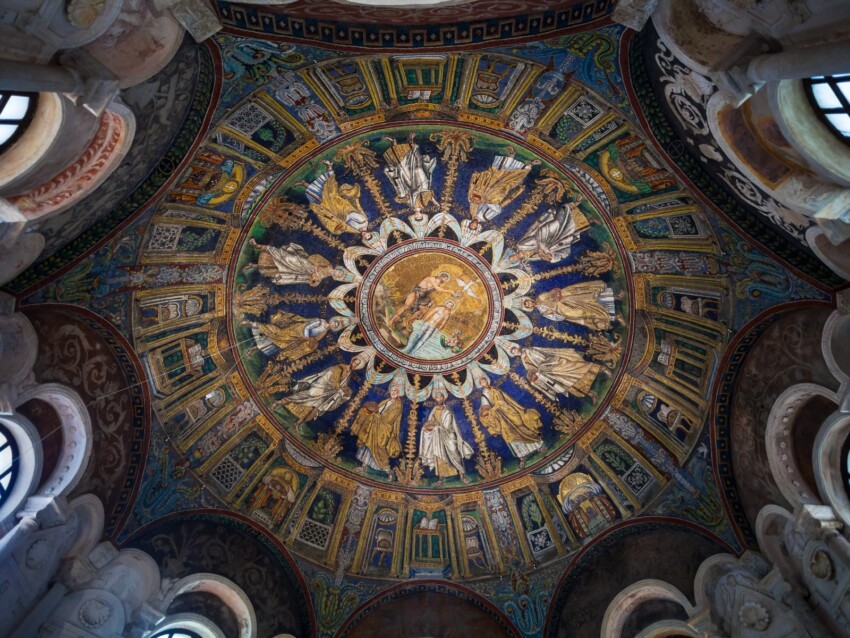
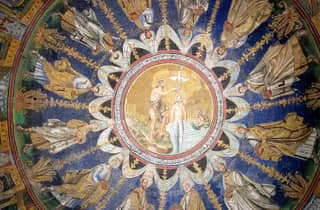
The Neoniano Baptistry was also constructed in the 5th century and is dedicated to Bishop Neon (450–475 AD), who completed its construction, making it one of the most lavish Early Christian temples. It is also called the Baptistry of the Orthodox, that is, the baptistry for the faithful who followed Christian doctrine in a more orthodox and correct manner.
Like other sacred buildings of the time, it features an octagonal plan, a number that was far from arbitrary, as eight in the numerology of the period signified resurrection. Externally, it features simple brickwork with pilasters, arcades and four small apses, though these were added later in the 10th century.
Considered one of the best-preserved Christian baptistries in the world, the Neoniano Baptistry houses beautiful mosaics inside depicting the baptism of Christ in the presence of apostles and prophets. The walls were also finely decorated in the 5th century and boast eight arches with a central window surrounded by stucco representing prophets and scenes from both the Gospels and the Old Testament.
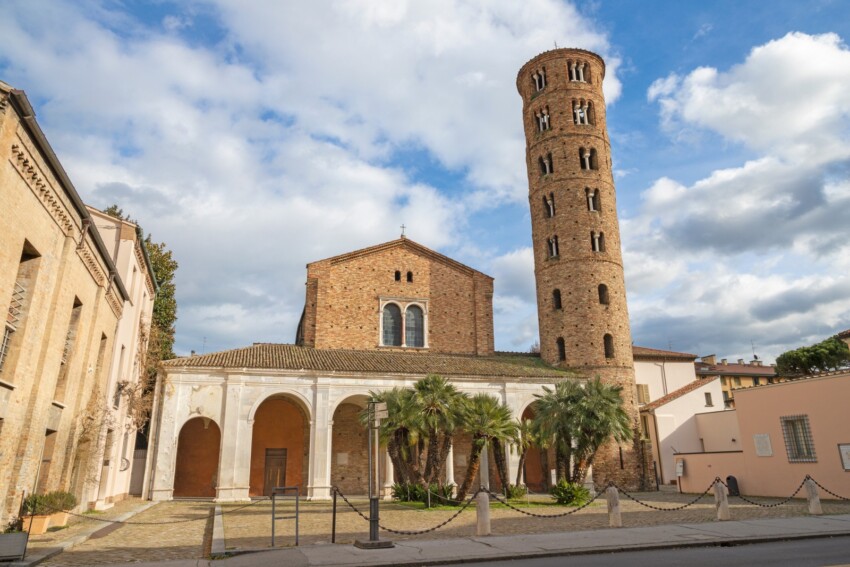
Initially conceived in the 6th century as a palatine chapel, that is, a court chapel, the Basilica of Sant’Apollinare Nuovo was later modified during the Byzantine period when mosaics were created on the walls of the central nave. The Basilica was built from 505 onwards at the behest of the Gothic king Theodoric as a church for Arian worship, which at the time stood in opposition to more orthodox forms of worship. When the city was conquered by the Byzantines in 540, Emperor Justinian ordered that all buildings linked to Arianism be decommissioned or converted to orthodox Catholic worship. In this context, the Basilica was reconsecrated to Saint Martin of Tours, regarded as the defender of the Catholic faith and opponent of all heresy.
In the 9th century, however, due to the numerous pirate raids on the Ravenna coast, the relics of the proto-bishop Sant’Apollinare, the city’s patron saint, were transferred from the Basilica of Sant’Apollinare in Classe (outside the walls) to that of San Martino. The Basilica of San Martino was located within the city walls at that time and was easier to protect in the event of attack. From that point onwards, the Basilica was renamed Sant’Apollinare Nuovo to distinguish it from the older Sant’Apollinare in Classe. Externally it features a stepped façade made of brick with an adjoining bell tower, also in brick, built between the 9th and 10th centuries; inside, the religious building boasts three naves with the central one ending in an apse that has been modified and rebuilt several times over the centuries.
The interiors decorated with beautiful mosaics reflect the tastes and modifications made over time from Ostrogothic to Byzantine rule and the rather turbulent history of the building. The mosaic works were, in fact, created at different periods, as can be seen from the different styles used and the changes made. On the walls, three bands can be identified, with the highest being the least tampered with and depicting scenes from the life of Christ in great detail. In the middle, between the windows, are figures of Saints and Prophets, while in the lower band, the largest and the one that has undergone the most changes, is depicted the famous Palace of Theodoric.
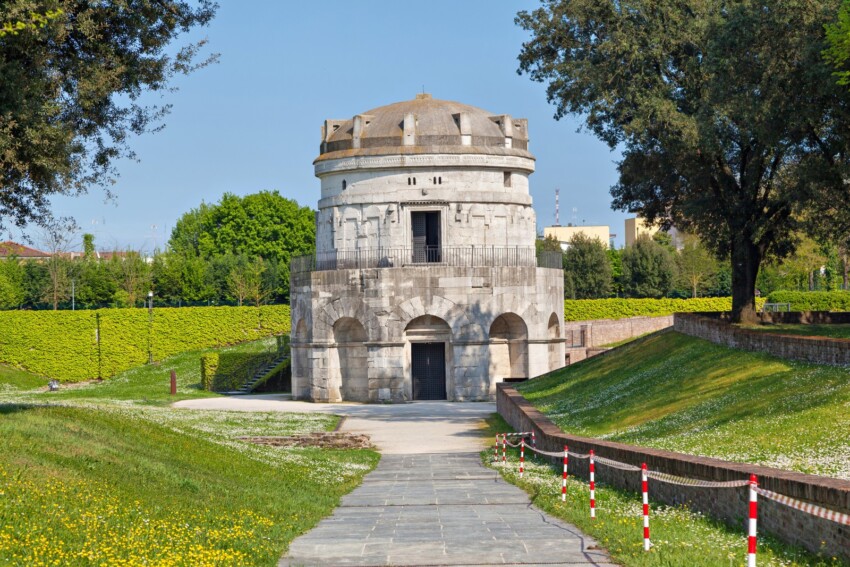
Built by the Ostrogothic king Theodoric in the 6th century as his personal tomb, the Mausoleum of Theodoric is a unique monument that differs from others in that it features no mosaics or particular decorations and was built in Istrian stone. The mausoleum, with a central plan, is relatively simple inside but boasts a roof formed by an enormous single monolith shaped like a dome made from Aurisina stone. According to legend, the porphyry tub found on the second floor of the building is the place where Emperor Theodoric died, struck by lightning.
Located just a few kilometres from Ravenna’s centre, the Basilica of Sant’Apollinare in Classe is another important example of Early Christian architecture built in the 6th century and famous for its apsidal mosaics. This Basilica was built at the behest of Bishop Ursicinus on the site of Sant’Apollinare’s martyrdom, Ravenna’s first bishop, to whom it was subsequently dedicated. The façade, which has undergone several modifications, is very simple and on the left houses a 9th-century bell tower, whilst the interiors feature three naves with roof trusses.
The walls are fairly bare except for the apsidal area where splendid mosaics dating from the mid-6th century are found. In the upper band is a starry sky with a cross at its centre overlaid by God’s hand emerging from the clouds, whilst on either side are figures of Elijah and Moses. In the lower part is a green meadow with the figure of Sant’Apollinare in prayer surrounded by twelve white lambs representing the twelve apostles.
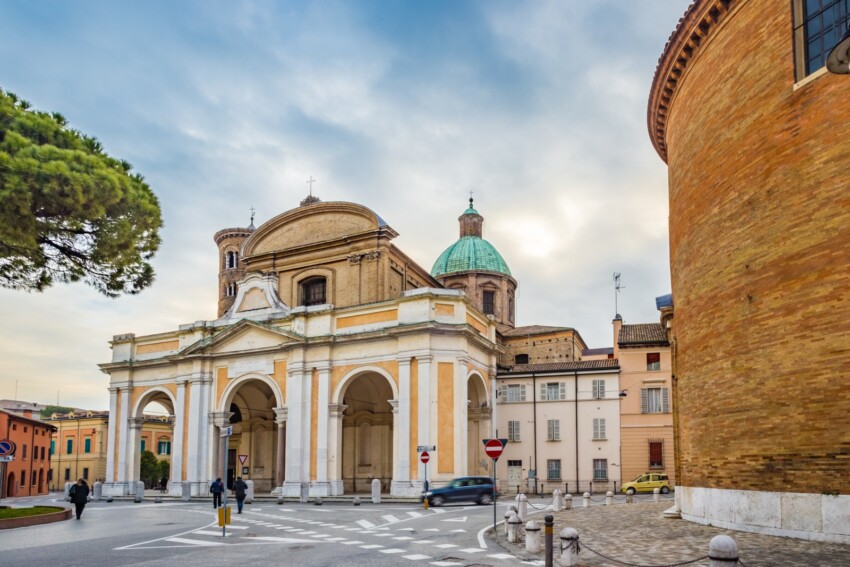
Not far from the Neoniano Baptistry stands Ravenna Cathedral, which was built in the early 5th century at the behest of Bishop Orso but was subsequently modified on several occasions and repeatedly stripped of its decorations. What we can admire today in Baroque style is the result of reconstruction work carried out in the mid-18th century to a design by architect Giovan Francesco Buonamici. Externally, the façade is simple with a portico of three arches built in the 18th century and on the left a cylindrical bell tower approximately 35 metres high.
The cathedral’s interior features a Latin cross plan and three naves, including one large central nave and two side aisles housing finely decorated chapels. In the right arm of the transept is the Chapel of the Madonna del Sudore, built in 1630 with donations from the people of Ravenna who had made a vow to the Virgin to be freed from the plague.
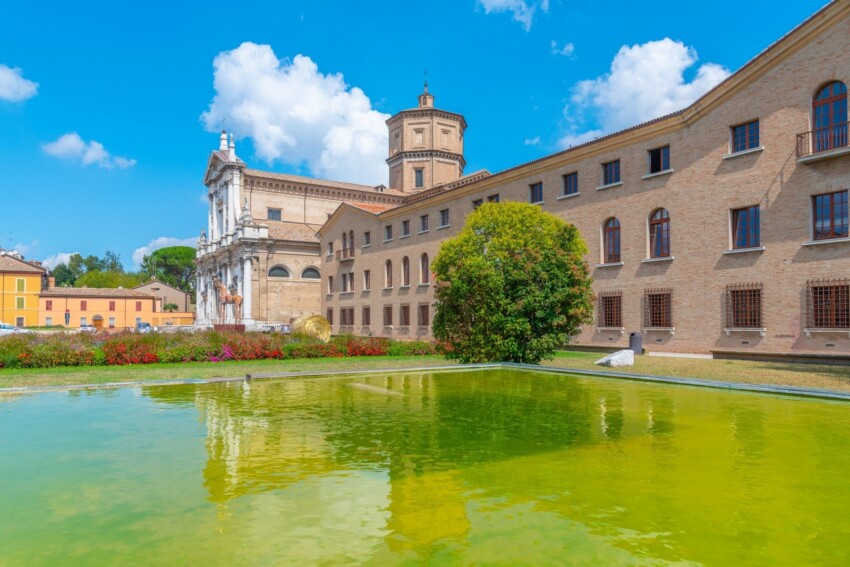
The Basilica of Santa Maria in Porto is an interesting stop on Ravenna’s tourist trail, easily reached from the historic centre with a short walk. It is open to visitors daily from 7:30 to 12:00 and from 15:30 to 19:00, with free admission.
The building impresses with its impressive Baroque façade and houses the celebrated Greek Madonna, one of the city’s most beloved symbols. The visit takes approximately 30 minutes and can be combined with other monuments in the area; tourists particularly appreciate the peaceful cloister and the intimate atmosphere, less crowded than other Ravenna attractions.
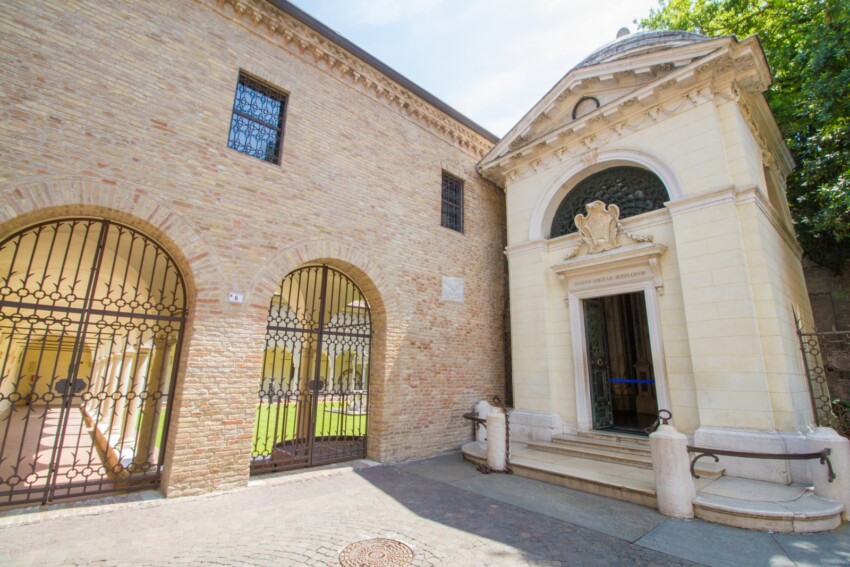
Ravenna was the final resting place of the great poet Dante Alighieri and is home to his tomb, which not only celebrates his life and works but also represents an important cultural and historical symbol. The tomb is located in Ravenna’s historic centre in what is known as the “Zone of Silence”, an area dedicated to remembrance and contemplation, near the Basilica of San Francesco. Dante died in Ravenna in 1483 and at that time Cardinal Bernardo Bembo, the city’s prefect, had a small mausoleum built to honour the poet. Between 1780 and 1782, the tomb was completely rebuilt by architect Camillo Morigia on the instructions of Cardinal Luigi Valenti Gonzaga, following a neoclassical style and giving it a austere and elegant appearance.
Dante’s remains were long protected by the Franciscan Friars who prevented them from being returned to Florence and also safeguarded them during periods of war. Dante’s Tomb now appears as a small temple-like building with a simple, austere façade made of white stone and a full arch framing the entrance. Above the arch is a plaque reading “Dantis Poetae Sepulcrum” (Tomb of the poet Dante). Inside, the tomb consists of a marble sarcophagus, on which is carved a Latin inscription composed by Bernardo Bembo that praises the poet’s virtues, and a relief sculpture by Pietro Lombardo depicting Dante absorbed in contemplation. The interior space is illuminated by a votive lamp, donated by the city of Florence, which long requested the return of the remains of the Poet.
Domus of the Stone Carpets
11Via Gian Battista Barbiani, 16, 48121 Ravenna RA, Italy
The Domus of the Stone Carpets is an archaeological site discovered in the 1990s in the centre of Ravenna approximately three metres below the level of the 18th-century Church of Santa Eufemia. The name derives from the fact that it is a private Roman residence of the 4th–5th century whose floors are decorated with splendid polychrome mosaics depicting mythological scenes and geometric motifs. The most famous mosaics brought to light almost entirely depict the Dance of the Genii of the Four Seasons and the Good Shepherd.
Mirabilandia
After visiting the city’s most interesting cultural sites, you can dedicate some time to fun by heading to Mirabilandia, one of Italy’s most famous and popular amusement parks.
Mirabilandia is located in the Savio area, just a few kilometres from Ravenna’s historic centre, and stretches across an area of approximately 850,000 square metres, encompassing both the main theme park and the water park Mirabeach. Within the Park there are several themed areas, each with a different setting and numerous attractions for all ages, and live entertainment and shows are also staged.
Map
In the following map you can see the location of the main places of interest mentioned in this article.
Guided tours in Ravenna
Guided tours in Ravenna offer a range of itineraries to discover the city’s UNESCO heritage. Tours are available in multiple languages and can be booked online, typically lasting around 3 hours and including the main Byzantine monuments. Expert guides accompany visitors, discussing the history, art and symbolism of the Early Christian mosaics.
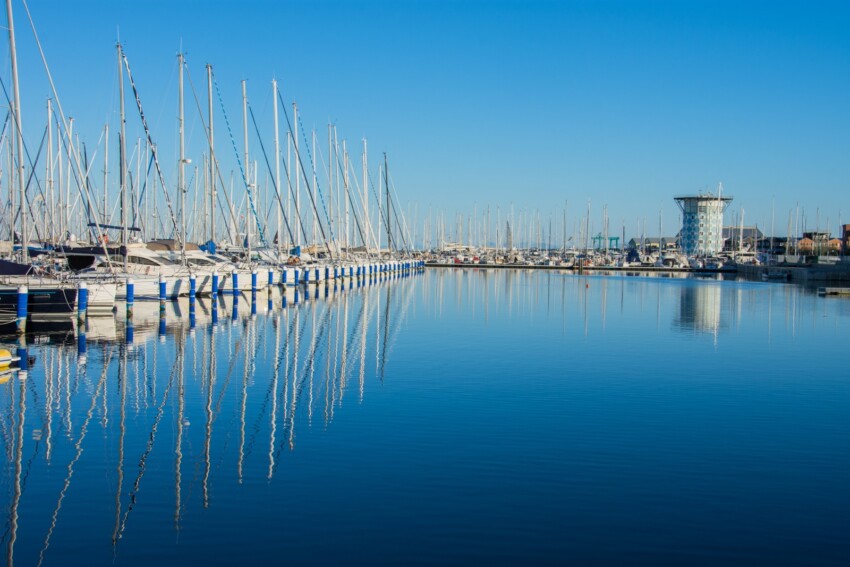
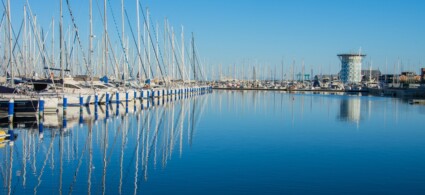
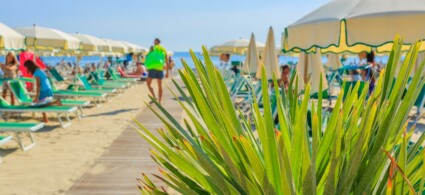
Ravenna is a town overlooking the Adriatic Sea and boasts an impressive 35 km stretch of coastline where a major port and nine seaside resorts are located, many of which have been awarded the Blue Flag award multiple times. Along the shore you’ll find stretches of free beach as well as over 200 beach clubs equipped with full facilities, children’s play areas and numerous restaurants.
The beaches, also known as lidi, are divided into those north of the port—Casal Borsetti, Marina Romea and Porto Corsini—and those to the south: Marina di Ravenna, Punta Marina Terme, Lido Adriano, Lido di Dante, Lido di Classe and Lido di Savio. The shores are all soft, golden sand, with clear, crystalline waters, and it’s easy to enjoy sports and activities both on the beach and at sea.
The most famous and busiest beach is undoubtedly Marina di Ravenna, the closest to the centre, which boasts high-quality tourist facilities and attracts many visitors from Italy and abroad. By day, Marina beach is a place to relax and swim, but in the evening this area is perfect for those who enjoy the nightlife scene, with numerous bars, clubs and concerts.
Where to stay in Ravenna
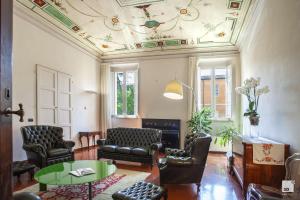
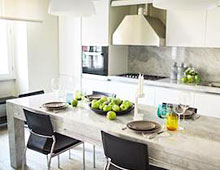
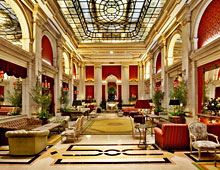
Ravenna offers a wide range of accommodation options to suit all needs and budgets. For a culturally-focused stay, the historic centre is certainly the most convenient area, as it puts most of the main tourist attractions and points of interest within easy reach, along with numerous bars and restaurants. Here you’ll find many upmarket hotels and boutique hotels alongside B&Bs and apartments, which are more affordable yet welcoming and practical solutions.
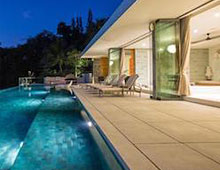
In summer, for a beach and relaxation-focused break, it’s best to choose one of the properties along the coast, where you’ll find plenty of beachfront accommodation with easy access to the beaches. There are numerous hotels, all-inclusive resorts as well as campsites for those who enjoy being immersed in nature. The area also has various apartments and holiday homes, ideal for those seeking greater freedom, independence and privacy.
We offer best rates If you find it cheaper we refund the price difference.
Free cancellation Most properties allow cancellation without penalty.
We're available 24 hours a day For any problem call Booking.com.
Ravenna is well connected to the main cities of Emilia-Romagna and the rest of Italy thanks to an efficient transport network. By car, Ravenna is easily accessible thanks to its proximity to major motorways such as the A14 Adriatica, which connects the city with Bologna to the north and Rimini to the south. From Bologna, you can reach Ravenna by car in around sixty minutes, whilst from Rimini the journey takes about 50 minutes. Additionally, the SS16 Adriatica connects Ravenna with Ferrara and Venice, offering a scenic route for those who prefer to travel along the coast, whilst the Strada statale 3 bis Tiberina connects Ravenna to Orte.
Ravenna’s railway station is well connected to the main cities of Emilia-Romagna and northern Italy, such as Bologna, which is about an hour and a half away, as well as Ferrara and Rimini, both less than two hours by train. Additionally, Ravenna station is served by regional trains connecting the city with various coastal resorts along the Adriatic.
The nearest airport to Ravenna is Federico Fellini airport in Rimini, approximately 70 km away, which offers connections to various European cities. Another option is Bologna Guglielmo Marconi airport, around 80 km away, from which numerous domestic and international flights depart.
Ravenna Weather
What's the weather at Ravenna? Below are the temperatures and the weather forecast at Ravenna for the next few days.
Sunday 18
13°
24°
Monday 19
13°
23°
Tuesday 20
9°
22°
Wednesday 21
16°
22°
Thursday 22
13°
20°
Friday 23
12°
19°
Where is located Ravenna
Ravenna stands as not only Romagna's largest city but also Italy's second-largest municipality by area after Rome, thanks to its extensive territorial reach. With a rich history spanning centuries and stunning UNESCO World Heritage sites at its heart, the city occupies a strategic location perfectly positioned between Bologna, 80 km to the west, and Rimini, 70 km to the south.


 Hotel
Hotel  Budget accommodations
  Apartments
  Family Hotel
  Luxury Hotel
  Resorts