Best Western Park Hotel
Piacenza - Strada Val Nure 7
Book now
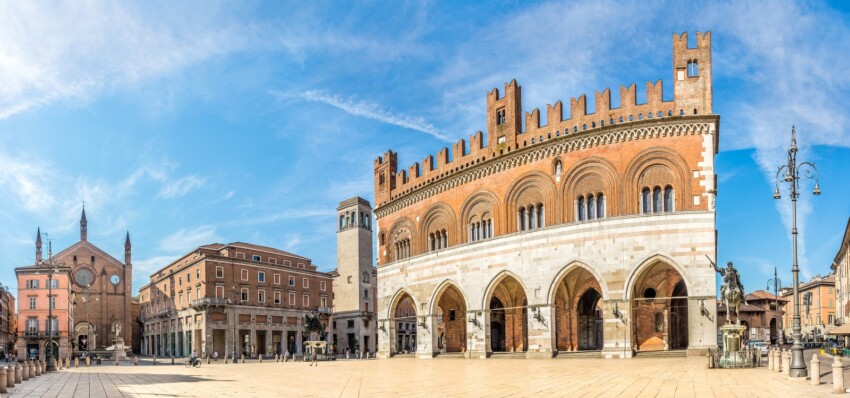
Orderly and human in scale, Piacenza is a town in the Emilia-Romagna region that captivates all its visitors with its historic sites, warm hospitality and delicious cuisine. With its strategic position on the banks of the River Po, Piacenza has been an important crossroads for merchants and travellers since ancient times. Founded in 218 BC by the Romans as a military colony, Piacenza later played a crucial role in managing trade routes between Italy and the rest of Europe, as it stood at the end of the Via Emilia, one of the most important Roman roads.
Over the centuries, Piacenza was first the capital of the Duchy of Parma and Piacenza ruled by the Farnese family, but also territory dominated by various important families, most notably the Visconti, the Habsburgs and the Bourbons. Piacenza’s strategic position indeed made it a key territory not only commercially but also as a military stronghold. Thus, each successive dominion over the centuries has left indelible marks and evidence on the city’s urban and cultural fabric.
The city is separated from Lombardy by the River Po but is also very close to Liguria and Piedmont, two regions that have influenced local history, traditions and culture. Today, Piacenza is known for its peaceful atmosphere that immediately appeals to those seeking a place away from the hustle and bustle of big cities. Moreover, Piacenza also preserves a unique gastronomic heritage made up not only of PDO cured meats and cheeses but also of products such as tortelli with a tail, pisarei (breadcrumb gnocchi) and anolini in broth.
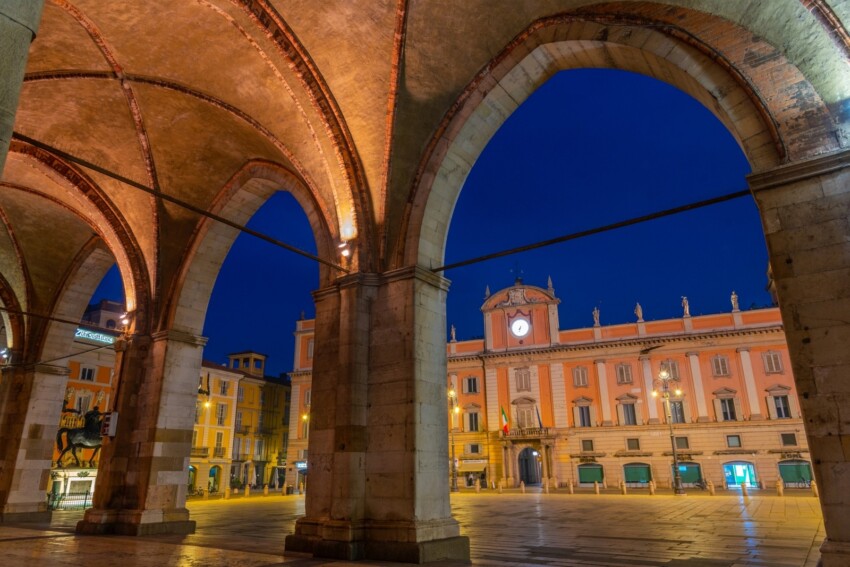
Thanks to its splendid historic monuments and long culinary tradition, Piacenza proves to be a destination rich in charm and history that is easily explored on foot. The heart of the city for centuries is undoubtedly Piazza dei Cavalli, from which various lanes and alleyways lead to the discovery of a truly unique area.
During your exploration of the city, it is recommended to stop and taste some of its delicacies such as boards with salami, coppa, pancetta and Provolone Valpadana accompanied by baked goods such as burtleina or chisulen.
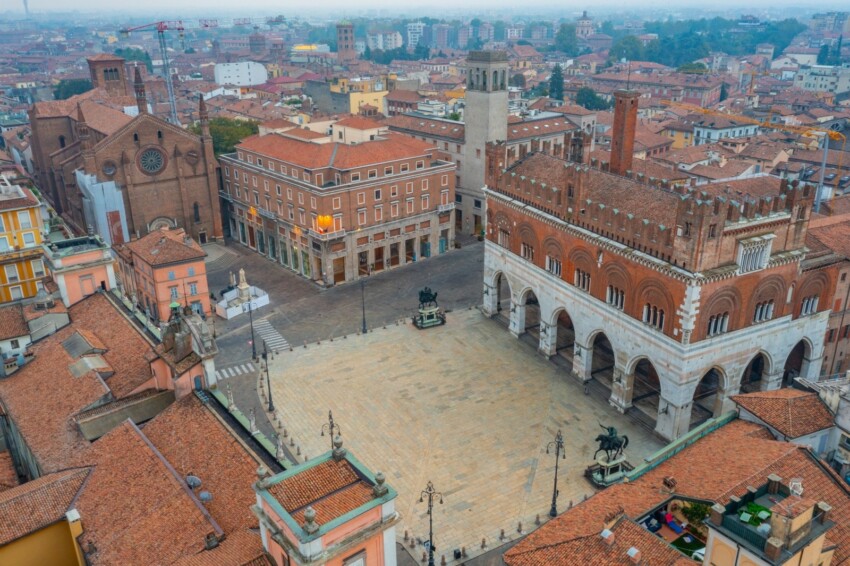
For many, the starting point for discovering the town is Piazza dei Cavalli, the historic and political heart of Piacenza for centuries, where not only historic buildings are found but also bars and venues where you can sit and take in the atmosphere of the city. Once called Piazza Grande, it changed its name in the seventeenth century when two bronze equestrian statues were placed in the centre of the square. The two statues represent Alessandro and Ranuccio Farnese and were created in the seventeenth century in the Baroque style by Francesco Mochi.
Around the square are important buildings such as the Palazzo Gotico, one of Piacenza’s most important medieval structures, now home to the Town Hall. Built in 1281, the building boasts a white and pink marble façade and is considered a fine example of civil Gothic architecture. Another building of great value is the Palazzo del Governatore, built in 1787 to a design by architect Lotario Tomba on the site that previously housed the city’s market stalls.
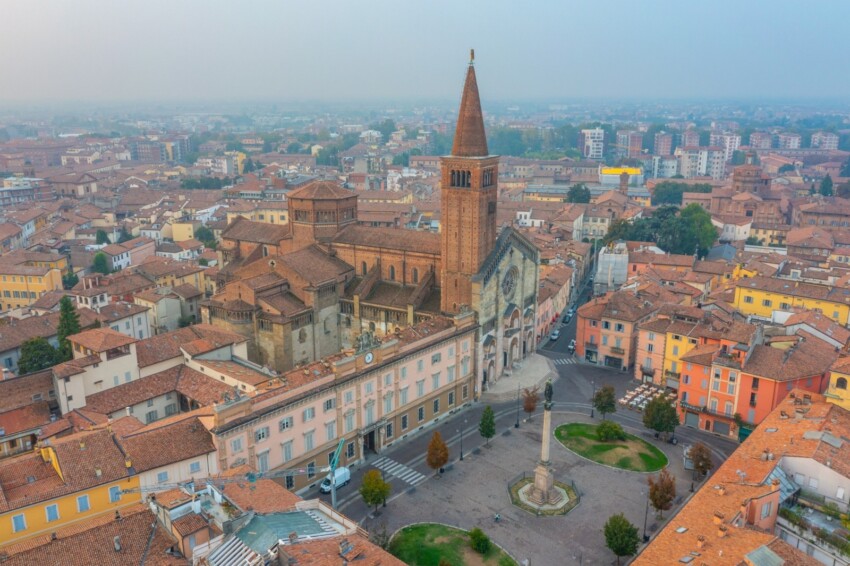
The Cathedral of Piacenza, also known as the Cathedral of Santa Maria Assunta and Santa Giustina, is one of the region’s most important Romanesque cathedrals and a splendid testament to the abilities of Piacenza’s artists. Built between 1122 and 1233, the cathedral features an imposing pink marble façade and a bell tower crowned with a sculpture of an angel known as Angil dal Dom.
Inside, the cathedral boasts three naves and has been richly frescoed and decorated with works of art by important local artists such as Camillo Procaccini and Ludovico Carracci. Particularly noteworthy is the cycle of frescoes in the dome, created between 1626 and 1627 by Giovanni Francesco Barbieri, known as Guercino, which depicts the Triumph of the Christian Faith.
Inside is also the Museo Kronos, which houses frescoes of considerable value created by Serafino De’ Serafinico, Guido Reni, Saverio di Robert De Longe, as well as sculptures and liturgical objects. Here you can also admire the Master’s Book (or Codex 65), a medieval volume from the twelfth century with stunning miniatures explaining concepts of astronomy, astrology, science and medicine.
The Basilica of Sant’Antonino is another important religious building in Piacenza built in the fourth century to house the relics of Sant’Antonino, the city’s patron saint. The Basilica was later remodelled at different times, as evidenced by the stylistic differences visible between the body of the church and its octagonal bell tower. In 1183, the church also hosted a meeting between delegates of the Lombard League and Emperor Frederick Barbarossa, who began talks here that led to the signing of the Peace of Constance.
Externally, the façade is gabled with exposed brickwork and has two entrances, one on the western side built in the eleventh century, while the other on the northern façade is called the “Gate of Paradise” and was created in the mid-fourteenth century by architect Pietro Vago. This gate is also a stop for pilgrims travelling the Via Francigena, a pilgrimage route from northern Europe to Rome and one of the most important communication routes in the medieval period.
Inside, the Basilica not only preserves the relics of Saints Antonino and Vittore beneath the high altar but also valuable canvases created by Flemish artist Robert De Longe that tell the life of the patron saint. The vault, meanwhile, was decorated by Camillo Gavasetti in 1622 with a majestic work depicting the Triumph of Jesus.
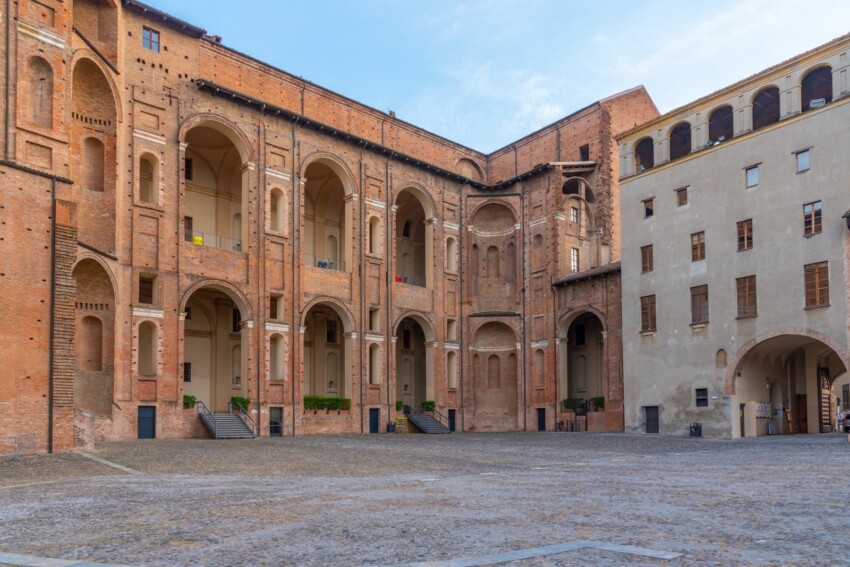
It is known that since the fourteenth century the Visconti had a first residence built here which was then extensively restructured in the mid-sixteenth century by the Farnese Family, who wanted a ducal palace with integrated defensive features. Palazzo Farnese is one of the city’s most important Renaissance buildings and its construction was carried out to a design by architect Jacopo Barozzi, known as Vignola, who was very active at the Farnese court. The complex was never fully completed and over the years the building underwent various changes, was looted several times and was also used as a military barracks.
Today, Palazzo Farnese develops over two noble floors, plus two mezzanines, a third floor and an underground area, whilst at the entrance there is a majestic wrought iron gate bearing the coat of arms of the Farnese family. Inside are the civic museums, which include several main sites such as the Archaeological Museum, the Pinacoteca, the Museum of the Risorgimento and the Carriage Museum, as well as important areas such as the armoury, the sculpture and fresco halls and the wonderful Alcove of Elisabeth Farnese.
The Civic Museums of Piacenza offer a fascinating journey through the history of Italian art, with works and evidence ranging from prehistory to the modern age. The site is divided into several sections but one of the main ones is undoubtedly that of the Archaeological Museum, which displays prehistoric finds, including the famous Etruscan Liver, which is considered a rare testimony of religious practices. The Pinacoteca houses artworks from different periods, among which stands out “The Madonna adoring the Child with Saint John” a work by Sandro Botticelli created between 1475 and 1480.
The Weapons section houses a vast collection of ancient weapons, whilst the Carriage Museum chronicles the evolution of transport from the eighteenth to the twentieth century and offers one of the most prestigious collections of carriages and carts. Other valuable collections include the Fasti Farnesiani, a series of pictorial cycles narrating the history of the Farnese family, and those of the Risorgimento Museum, which tells the story of the Italian Risorgimento through documents, photographs and memorabilia.
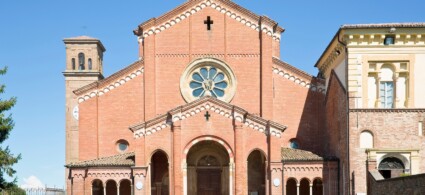
In Piazza dei Cavalli is also the Church of San Francesco, built in the Lombard Gothic style between 1278 and 1373 at the behest of the Ghibelline Ubertino Landi but later remodelled several times. Externally, the façade is built in terracotta and features a large rose window at the top that illuminates the interior of the church, whilst at the bottom are three portals, one large central one and two lateral ones. The interior boasts a basilican structure with three naves, with the central nave separated from the two side naves by a series of pointed arches.
The church is important because in 1848 the city of Piacenza declared here for the first time its annexation to the Kingdom of Sardinia, thus earning the title of “Firstborn”. Once inside, in addition to valuable frescoes and sculptures, you can admire the tombs of illustrious Piacenzans such as the patriot Giuseppe Manfredi, president of the Senate of the Kingdom of Italy who died in 1918.
Founded by Giuseppe Ricci Oddi in 1931, the Gallery of Modern Art houses an extensive collection of nineteenth and twentieth century Italian artworks by artists such as Giovanni Fattori, Giuseppe De Nittis and Amedeo Modigliani. The building that houses the gallery is an architectural masterpiece in itself, designed by architect Giulio Ulisse Arata to provide a truly exceptional visiting experience through the exploitation of natural light.
The visit route inside sees the works divided according to the origin of the painters, with some rooms dedicated to the most important Italian schools and others reserved for foreign artists who had a particular impact on Italian art. Finally, some rooms have been set up dedicated to artists most appreciated by Ricci Oddi, such as Antonio Fontanesi, Antonio Mancini and Stefano Bruzzi.
According to reports that have come down to us, around 874, Queen Angilberga, wife of Emperor Louis the Pious, had a monastery of Benedictine nuns built here with a small church. The church we can see now, however, is the result of construction work carried out between 1499 and 1511 according to a design by architect Alessio Tramello and then other remodelling.
The façade, for example, was modified in the eighteenth century when the large porticoed courtyard was also built. The interior of the Church of San Sisto is an important testament to local Renaissance architecture and houses works of great value created by artists such as Pittoni, Palma the Younger and Campi.
Above the high altar is a copy of Raphael’s “Sistine Madonna“; originally the artist had executed the painting specifically for this church, but later the original was sold by the Benedictines in 1754 to Augustus III, King of Poland, and today the painting is still housed in the Dresden Museum.
The Basilica of Santa Maria di Campagna is a church built in the Renaissance style between 1522 and 1528 to a design by Alessio Tramello on the site where a small sanctuary already existed. Initially, the Basilica had a Greek cross plan with a dome at the intersection of the four arms but later, towards the end of the eighteenth century, remodelling work transformed it into a Latin cross.
Inside the side naves feature valuable works created by Giulio and Bernardino Campi, Camillo Procaccini, Guido Reni, Guercino and Jan Geernaert, whilst the dome was frescoed between 1530 and 1535 by Pordenone and Bernardino Gatti, known as Sojaro. Inside are also two valuable pipe organs built in the nineteenth century by the Serassi family of Bergamo, renowned for its master organ builders.
The Alberoni Gallery in Piacenza is located within the homonymous College built at the behest of Cardinal Giulio Alberoni between 1733 and 1752, which also houses a seminary and a natural history museum. Giulio Alberoni (1664-1752) was not only a churchman but also an important politician in the service of Emperor Philip V of Spain. Alberoni used much of his wealth for the construction of this college, which was meant to train poor boys for the priesthood.
Now the rooms of the cardinal’s apartment house the pinacoteca with the gallery’s oldest paintings, among which stands out the Ecce Homo created by Antonello da Messina in 1473. There are also numerous valuable works by artists such as Jan Provost and Guido Reni, as well as Flemish school canvases dating from the fifteenth and sixteenth centuries and a remarkable collection of tapestries.
In the following map you can see the location of the main places of interest mentioned in this article.
Piacenza offers a wide range of accommodation options to suit all types of visitor. The best area to stay is undoubtedly the historic centre, which is ideal if you want to be close to the main attractions such as the Cathedral, Piazza dei Cavalli and Palazzo Farnese, and prefer to explore the city on foot.
The centre is home to numerous charming hotels and boutique establishments, many housed in historic buildings with unique character, as well as intimate bed-and-breakfasts with a family feel. If you’re after a more relaxing experience immersed in nature, the agritourism farms in the countryside around Piacenza are an excellent choice, especially if you’d like to combine a city visit with excursions through the Piacenza countryside.
Piacenza enjoys excellent connections to Italy’s major cities thanks to its strategic position on key road and rail routes. Those travelling by car from Milan or Bologna can take the A1 towards the Piacenza sud or Basso Lodigiano exit, whilst from Turin you can follow the A21 to the Piacenza ovest exit, and from Brescia also the A21 to the Piacenza sud exit.
Piacenza also has a railway station well served by regional and interregional trains with frequent connections to both Milan and destinations on the Adriatic Coast (Rimini, Ancona, Pescara, Bari). The train station is less than ten minutes’ walk from the historic centre; alternatively, you can use the SETA bus company’s services.
Piacenza’s strategic position places it close to major Italian airports including Parma Giuseppe Verdi at 60 km, Milan Linate at 75 km and Bologna Guglielmo Marconi at 150 km.
What's the weather at Piacenza? Below are the temperatures and the weather forecast at Piacenza for the next few days.
Located in the heart of the Po Valley, Piacenza sits on the right bank of the River Po at the endpoint of the ancient Via Emilia. The city lies 70 km from Milan, 65 km from Parma and 115 km from Modena.
 Hotel
Hotel  Budget accommodations
  Apartments
  Family Hotel
  Luxury Hotel
  Resorts