Starhotels Du Parc
Parma - Viale Piacenza 12/c
Book now
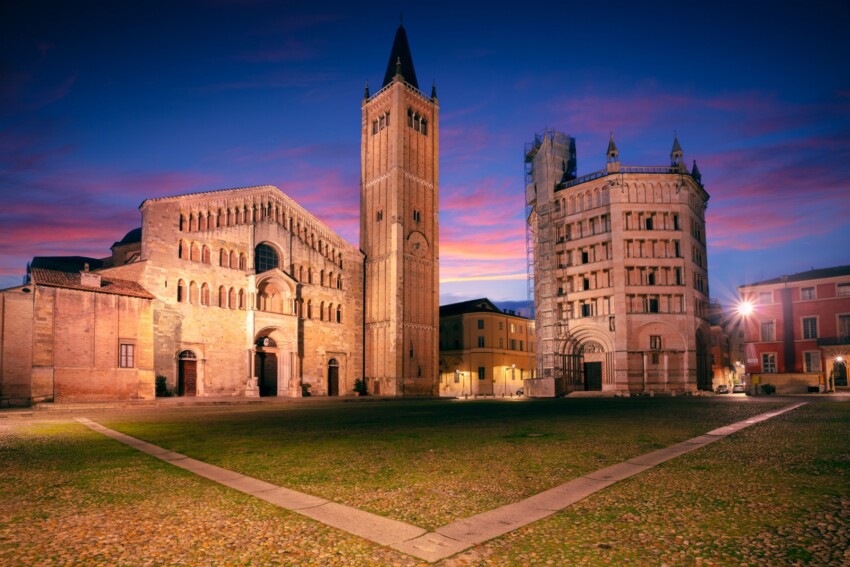
Known for its rich history, unparalleled gastronomic tradition and Renaissance charm, Parma is one of the gems situated in the heart of the Emilia-Romagna region. Founded by the Etruscans and later flourishing under Roman rule, Parma rose precisely along the Via Emilia, which connected Rimini to Piacenza, and at that time a hundred-mile road also departed from here, linking Parma to Luni in Liguria. With the fall of the Roman Empire, Parma was first subjugated by the Lombards and then dominated by a succession of count-bishops until the city was proclaimed a free commune in the 12th century.
During the Renaissance, Parma became an important cultural and commercial centre, rivalling other great European capitals. After the domination of the Visconti and Sforza families, in 1545 Pope Paul III (born Alessandro Farnese) created the Duchy of Parma, entrusting it to his son Pier Luigi Farnese. The Farnese family maintained power until 1731 and made Parma a city rich in works by great artists such as Correggio and Parmigianino. From the mid-18th century onwards, Parma was ruled first by the Bourbons, then by Napoleonic France and finally by the Habsburgs. During the years of Napoleonic rule, Parma was, alongside Florence, the most plundered city with nearly 50 works of great value deported.
Today, the city of Parma is a charming place that combines within its territory a rich historical and artistic heritage with a vibrant modern cultural scene and a thriving gastronomic tradition. Parma, indeed, is renowned worldwide for local products such as Parma ham PDO, Parmigiano Reggiano and Culatello di Zibello PDO, amongst many others, which have earned it the title of “UNESCO Creative City for Gastronomy”. Since 1117, Parma has also been the home of a historic university that is considered one of the oldest in Italy and has welcomed numerous students from around the world over the centuries.
Parma is a town with an elegant, human-sized historic centre and a vast array of historical, artistic and cultural attractions that enchant visitors from around the world. The historic centre of Parma is indeed full of monuments, churches and palaces that tell the story of a city that was for a long time the former capital of the Duchy of Parma and Piacenza (1545-1859) and played a leading role in Italian culture and art. Parma is also considered amongst the capitals of music, having given birth to important composers such as Giuseppe Verdi and Arturo Toscanini, and it houses not only important theatres but also a truly vibrant musical scene.
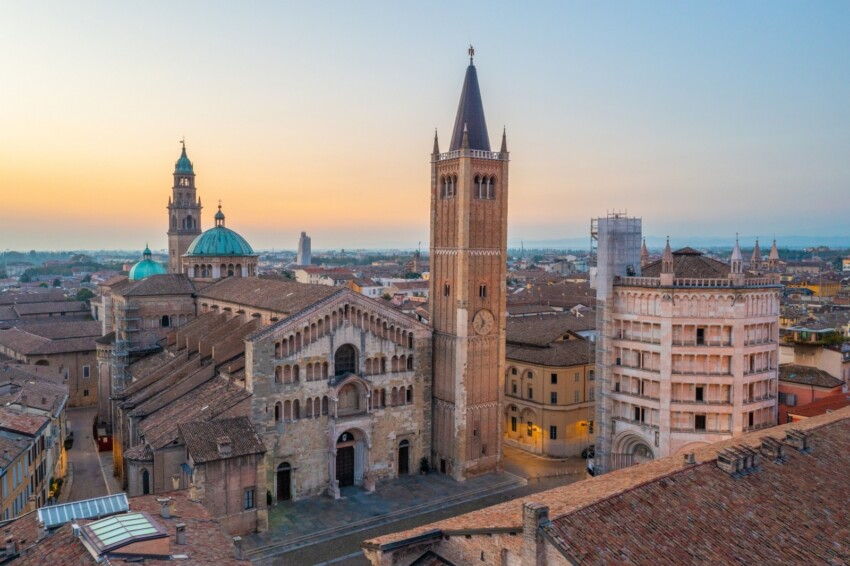
One of the most iconic symbols of the city is undoubtedly the Cathedral of Parma, the city’s cathedral built between 1059 and 1106, which is considered one of the finest examples of Romanesque architecture in Italy.
Dedicated to Santa Maria Assunta, the church externally features a Romanesque gabled façade with an adjoining bell tower standing 63 metres high in Gothic style. Inside, the original Romanesque structure has been maintained, although it has been revisited several times with Renaissance and Gothic additions and modifications, especially in the frescoes and sculptures.
Once inside, beyond the elegant chapels, the dome painted by Correggio with the scene of the Assumption of the Virgin captivates all visitors – it is considered one of the masterpieces of the Italian Renaissance.
Next to the Cathedral stands the Baptistry of Parma, another exceptional example from the 14th century that combines Romanesque and Gothic architecture. Built in an octagonal shape in pink Verona marble, the Baptistry was designed by Benedetto Antelami between 1196 and 1216 but was only consecrated in 1307. Two beautiful portals were created to the west and east, called the Portal of the Last Judgement (the one facing west) and the Portal of Life (the one facing east).
Inside, at the centre, there is a large baptismal font, also with an octagonal structure created at the end of the 13th century, and numerous decorations and frescoes of great value created by Parmesan artists. In particular, the high-relief sculptures, depicting the months and seasons of the year, and the sixteen arches in the niches with frescoes and paintings dating back to the 13th and 14th centuries are striking.
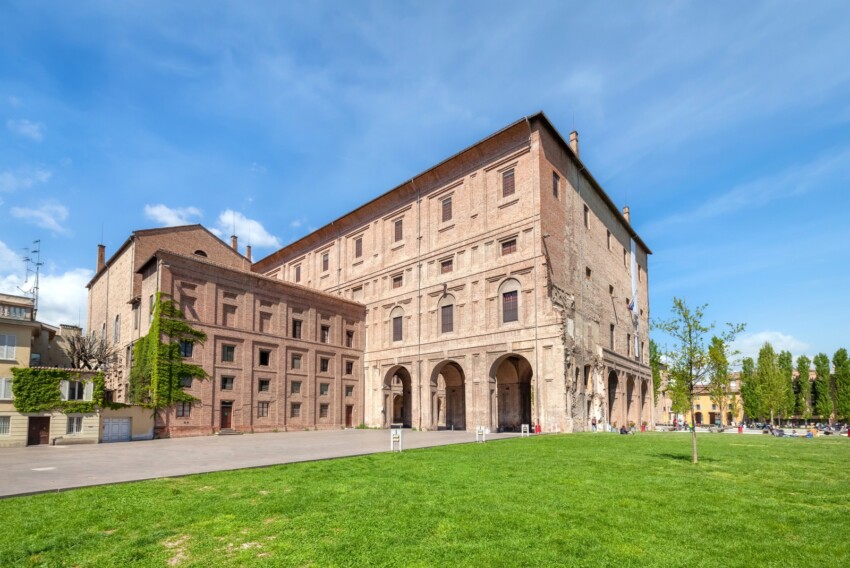
In the very central Piazza della Pilotta stands the eponymous monumental complex, which was built from the late 16th century as a residence at the behest of the Farnese family by various architects. The name “pilotta” derives from a ball game of Spanish origin that was called “della pelota” and was played in this very area.
Within the complex, there are now several buildings of great importance, such as the Farnese Theatre, the National Gallery, the Petitot Gallery of the Palatine Library, the National Archaeological Museum and the Bodoni Museum.
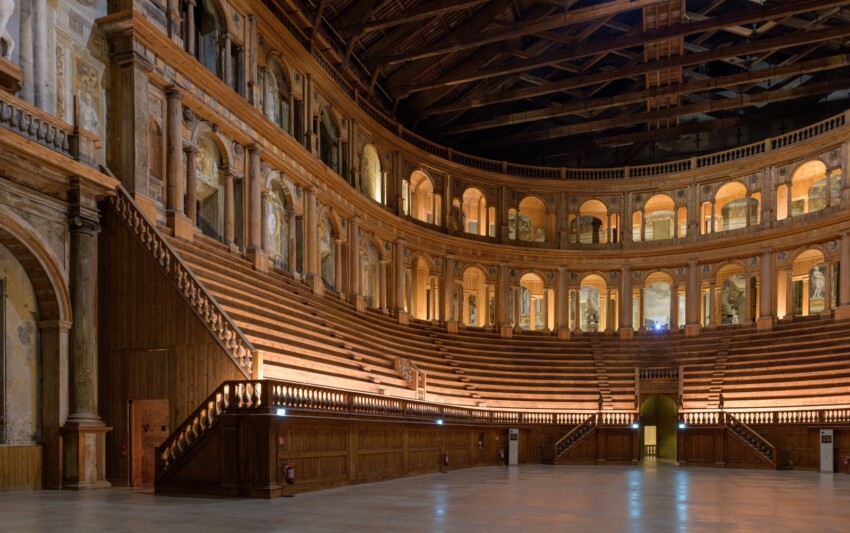
The Farnese Theatre was built from 1618 by Ranuccio I Farnese, Duke of Parma and Piacenza, who at the time commissioned the work to architect Giovan Battista Aleotti, known as l’Argenta (1546-1636). Completed in autumn 1618 and dedicated to the goddess of war Bellona and the Muses, the theatre was built taking inspiration from the Teatro Olimpico in Vicenza, built by Palladio in 1580.
The structure was entirely constructed in wood – Friuli spruce pine covered with stucco to simulate marble – and was finely decorated with statues of mythological subjects and frescoes. Important artists of the time worked on the structure’s decorations, including Giovan Battista Trotti known as il Malosso, Lionello Spada, Antonio Bertoja and Pier Antonio Bernabei.
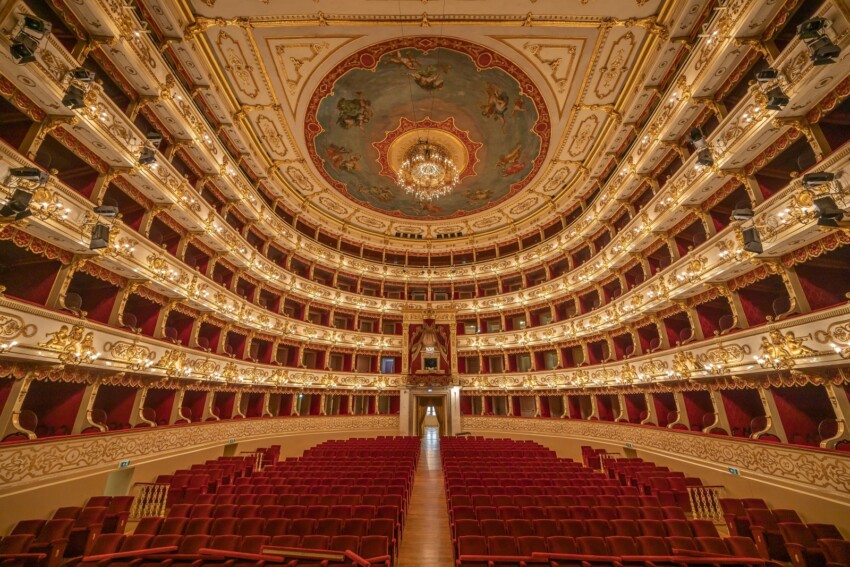
The Teatro Regio in Parma is a world-renowned opera house, commissioned by Duchess Maria Luigia of Austria in 1821 and built by architect Nicola Bettoli. It hosts international-standard events and artists. Here, not only are classical and contemporary operas performed, but also the famous Verdi Festival, dedicated to the renowned composer Giuseppe Verdi.
Inside, it features four tiers of boxes and a gallery decorated by Girolamo Magnani, whilst the ceiling was created by Giovan Battista Borghesi in 1828 with figures of renowned playwrights such as Seneca, Goldoni, Alfieri, Euripides and Aristophanes.
The Glauco Lombardi Museum tells part of the story of the city of Parma between the 18th and 19th centuries through artefacts and testimonies collected by collector Glauco Lombardi (1881-1970).
Here it is possible to retrace the history of the Duchy of Parma and Piacenza during the years when it saw first Philip and Ferdinand of Bourbon, then Maria Luigia of Habsburg (wife of Napoleon Bonaparte) and finally Charles III of Bourbon and his wife Luisa Maria succeed to power.
A large section of the exhibition is devoted precisely to the period concerning Maria Luigia, with her personal objects, documents and works of art linked to the Duchess, as well as insights into her cultural and political influence in the city.
The San Paolo Complex is a collection of historic buildings that includes the San Paolo Monastery and the Abbess’s Chamber, which has become famous for the frescoes by Correggio that adorn the ceiling. The Monastery reached its period of greatest splendour between the 15th and 16th centuries thanks to the presence of Abbesses Cecilia Bergonzi and Giovanna da Piacenza.
The chamber of Abbess Giovanna is part of the fascinating visiting route for its history and decorations. Here two rooms were finely decorated, one by Alessandro Araldi in 1514 and the other by Correggio in 1519.
Araldi created sacred and secular scenes in the first room and lunettes illustrated with episodes from the Old and New Testament, whilst the Abbess Giovanna’s Chamber was adorned by Correggio with mythological and symbolic scenes.
Within the San Paolo Complex, you will also find the Puppet Castle (or Giordano Ferrari Museum), which houses one of the most important collections of puppets and marionettes in Italy. The Castle was created thanks to the work of the Parmesan puppeteer Giordano Ferrari, to whom it was later named.
Inside the site are now preserved over 2,800 pieces, including marionettes, puppets, dolls and pupi, plus over six hundred scenic elements and wings and more than four hundred scripts, most of which are handwritten. The Puppet Castle also includes a library specialising in puppet theatre and an archive with documents, posters, photographs, letters and other testimonies on the history of theatre.
Spazio Aemilia 187 BC is an archaeological site with artefacts and structures that tell much about ancient Roman Parma. In particular, the space was opened following the discovery of the Pons Lapidis, originally built during the Augustan era in masonry. The bridge was considered a true masterpiece of Roman engineering as it measured 140 metres and featured eleven arches. Unfortunately, the structure was damaged and rebuilt several times throughout its history until it fell into disuse and was only rediscovered in the 1960s.
In 1966, during the reconstruction work of Via Mazzini, the remains of two of the eleven arches of the ancient Pons Lapidis and its foundations were brought to light. To tell the story of Parma in the age of ancient Rome and its important strategic role, within Spazio Aemilia 187 BC, a route with explanatory panels, objects and findings of the time was created. In particular, over 260 archaeological artefacts, weapon friezes and Corinthian capitals from the 1st and 2nd centuries AD and many other ancient materials can be found.
For a walk immersed in greenery and tranquillity, Parco Ducale is recommended – a space with centuries-old trees created by the Farnese family in 1560 and later enlarged in the 18th century.
Walking through the park, you can admire numerous ancient plants and also several fountains and sculptures created by important artists such as the Silenus group (1766) and the statues of four Geniuses (1756) by J.B. Boudard.
Within the Park you will also find the ancient Ducal Palace and the Eucherio Sanvitale Palace, both built in Renaissance style between the 16th and 17th centuries.
In the following map you can see the location of the main places of interest mentioned in this article.
Parma offers a variety of accommodation options to suit the diverse needs and budgets of its visitors: from historic hotels to welcoming bed and breakfasts, from boutique hotels to apartments. The historic centre is undoubtedly the ideal place for those who wish to be close to the main tourist attractions such as the Cathedral, the Baptistry and the Pilotta Palace, but also to restaurants, bars and shops.
Parma is also a university town, so some areas of the centre are very lively and animated in the evenings thanks to the presence of students who gather after hours of study. The most popular areas for this are San Leonardo and San Lazzaro, where you often find more budget-friendly solutions and venues.


Parma is well connected to major Italian destinations thanks to an efficient and well-developed transport network that allows you to reach the city by car, train or bus. Parma is indeed located along the A1 motorway (Milan – Bologna), which makes it easy to reach the city by car from the main Italian cities. From Milan, for example, Parma can be reached in approximately ninety minutes by travelling south along the A1, whilst from Bologna the city is just over an hour away by continuing north along the same motorway. Those arriving from Liguria can use the A15 motorway Parma – La Spezia and exit at the Parma Ovest junction. Numerous state and provincial roads, such as Via Emilia, Via Mantova, Via La Spezia and Via Cremonese, provide connections to neighbouring cities and towns.
Those who prefer to travel by train can use Parma railway station, which is an important stop on the rail line connecting Milan to Bologna. High-speed and regional trains stop regularly at Parma, making connections to cities such as Milan, Bologna, La Spezia and Florence convenient and swift. The nearest airport is Parma’s “Giuseppe Verdi” Airport, which is located less than 6 km from the city centre and is connected to it by several bus lines. Alternatively, you can use Bologna Guglielmo Marconi Airport, situated approximately 90 km from the city, or Milan Malpensa Airport, located around 180 km away.
What's the weather at Parma? Below are the temperatures and the weather forecast at Parma for the next few days.
Parma is a charming town nestled between the Apennines and the Po Valley, in the western part of Emilia. Parma lies roughly 100 km from Bologna, 145 km from Ferrara and 205 km from Rimini.
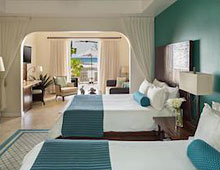 Hotel
Hotel 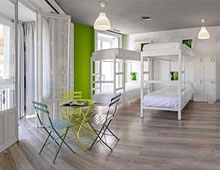 Budget accommodations
 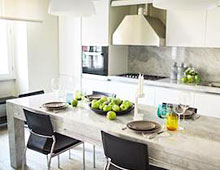 Apartments
 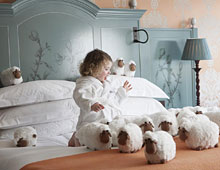 Family Hotel
  Luxury Hotel
  Resorts