Smart Hotel
Carpi - Via Cesare Battisti 25
Book now
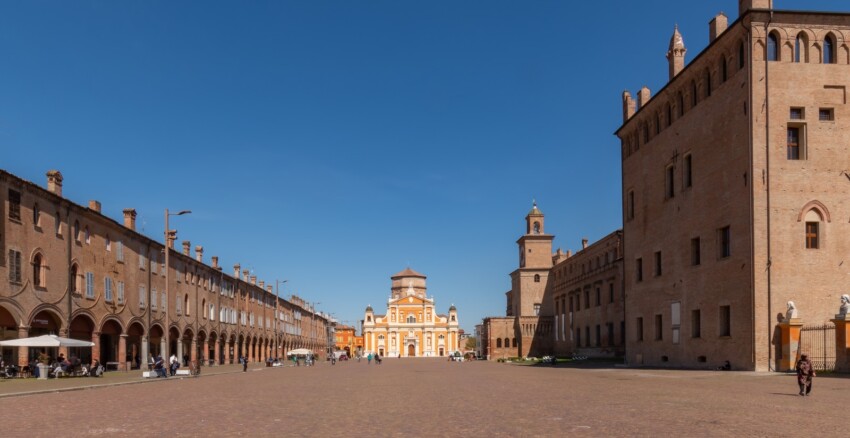
Situated in the Modena plain, Carpi is also known as “The Pearl of the Renaissance” for its rich Renaissance architectural heritage. The city is located just a few kilometres from Modena and is renowned as an important cultural and economic centre, particularly in the textile industry. The earliest traces of human settlement date back to prehistoric times, though legend has it that the city was founded around 750 by the Lombard king Astolfo.
What is certain is that Carpi is a medieval village of prehistoric origin that developed around a fortress called Castrum Carpi. From the 14th century onwards, Carpi first became the seat of the Seigneury of Carpi and then the county of the Pio family, an Emilian feudal dynasty that contributed to the construction of numerous prestigious buildings. The city experienced a period of great prosperity and development, becoming one of the most important centres in Emilia, and many of the monuments built during this era still form the heart of Carpi’s artistic heritage today.
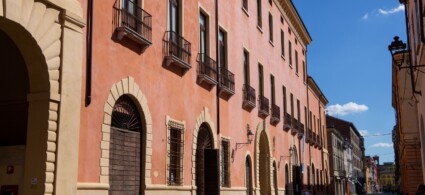
Today Carpi is known as an enchanting town that has managed to preserve a unique historical and architectural heritage, a place where past and present coexist harmoniously. Strolling through its streets means retracing its glorious past, among ancient residences, evocative squares, beautiful churches and historic monuments.
The heart of Carpi is undoubtedly Piazza dei Martiri, which hosts historic buildings and is connected via an elegant avenue, known as Corso Alberto Pio, to Piazza Garibaldi, another vibrant area of the city. It is in this area that you will find numerous shops, restaurants and activities as well as many sites of interest such as the city’s Cathedral and the Palazzo dei Pio.
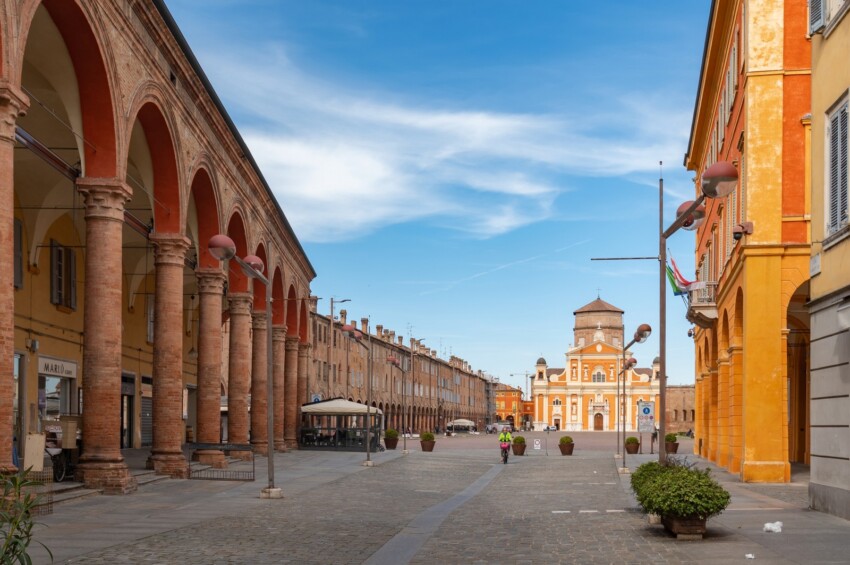
The ideal starting point for discovering the city is Piazza dei Martiri, the beating heart of Carpi and one of the largest and most evocative squares in Italy, surrounded by historic buildings and monuments of great prestige. The square is a true open-air museum, where every corner tells part of the city’s history, with the Castello dei Pio, the Cathedral of Santa Maria Assunta and the Clock Tower overlooking it. As you stroll along the arcades, you can admire shop windows or stop at one of the cafés or restaurants that make this place a meeting point for both residents and visitors.
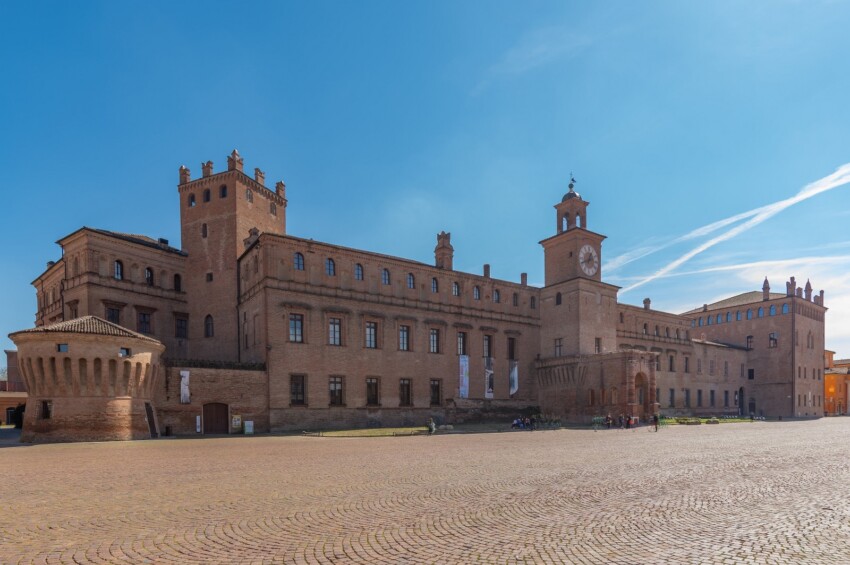
Built between the 11th and 17th centuries, the Castello dei Pio is a majestic complex comprising multiple buildings and is considered a true symbol of the city. From the 14th to the 16th century, the Castle was the residence of the Pio family, but it was particularly Alberto III Pio in the 15th century who transformed what had been a medieval fortress into a Renaissance-style residence. The site comprises several sections built in different periods, reflecting the evolution of taste and architectural style of the time, and notably the Clock Tower, built in the 17th century, stands out among the buildings.
Inside the Palazzo dei Pio are now housed the city’s civic museums, divided into several sections, among which the Palazzo Museum and the City Museum stand out. The first allows you to admire a rich collection of artworks, frescoes and period furnishings that offer a complete overview of the history of the Pio family, with rooms dedicated to different historical periods and the most significant events. The second is the City Museum, which features a journey through the history of this territory and its development from the earliest Bronze Age settlements to the 20th century.
Another symbol of Carpi is the Clock Tower, which rises above Piazza dei Martiri at the centre of the main façade of Palazzo Pio. This was erected in the 16th century as part of the city’s fortification system but was later transformed into a bell tower with a large mechanical clock at its centre that still marks time for residents. Specifically, the tower’s current forms were given to it between 1625 and 1637 by a design of Guido Fassi. You can climb to the top of the Clock Tower to enjoy a magnificent panoramic view of the city and its surroundings.
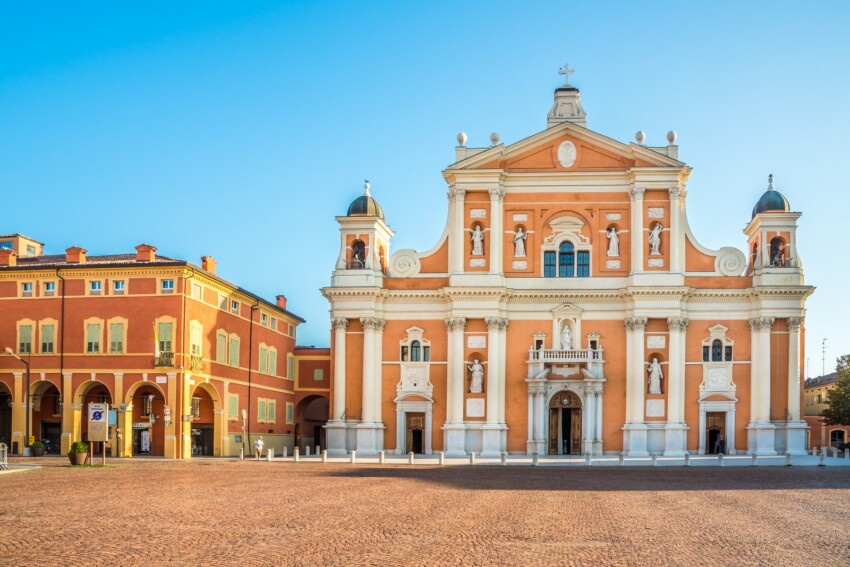
The Cathedral of Santa Maria Assunta, or Carpi’s Duomo, is a masterpiece of sacred architecture built from 1514 onwards by architect Baldassarre Peruzzi at the behest of Alberto Pio. Construction work lasted several centuries and was only completed in the 18th century, but the building we can admire today is the result of work carried out in the 19th century. The cathedral has an imposing façade with Baroque lines and three portals—one central and two side portals—whilst the interior, with three naves, is decorated with frescoes and artworks of great value. Carpi’s Cathedral houses an important cycle of paintings by Bolognese painter Giacomo Cavedoni as well as artworks that enrich the chapels created by Teodoro Ghisi, Matteo Loves, Luca Ferrari and Sante Peranda. The Basilica was severely damaged by the earthquake that struck the region in 2012 and reopened only after restoration work in 2017.
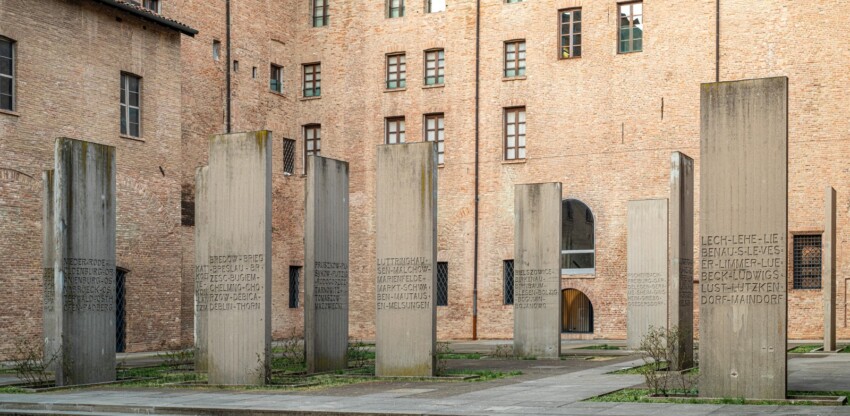
The Museum Monument to the Deportee is a place of great historical and cultural importance, dedicated to the memory of victims of deportation during the Second World War, located within the Castello dei Pio. The museum recounts what happened in the former Fossoli concentration camp, a locality just a few kilometres from Carpi, where many deportees were held before being transferred to other German camps.
The exhibition path retraces these tragic events through documents, photographs and testimonies, as well as through graffiti by major contemporary artists. In the external courtyard there are ditches with 16 reinforced concrete stelae six metres high, engraved with the names of some of the many European concentration camps. A visit to the Deportee Museum is a moving and instructive experience that allows for reflection on one of the darkest chapters in European history.
Built by the Confraternity of San Bernardino in the 15th century, the Church of San Bernardino da Siena is another architectural gem of Carpi and an excellent example of Renaissance architecture. The pitched façade is in simple yet elegant brick with an architraved portal at the centre and, above, a round window.
The interior, with a single nave, is decorated with a cycle of frescoes dedicated to the life of San Bernardino, which tells the story of the saint clearly and in detail, while beneath the 18th-century main altar is a bust containing the Saint’s relics.
Built in 1892 at the behest of industrialist and art collector Pietro Foresti, Palazzo Foresti is a fascinating example of Neo-Renaissance architecture. The building’s design was overseen by engineer Achille Sammarini (1827-1899), who demolished and rebuilt a family property previously used as a wood shaving hat workshop. Sammarini thus created a façade clad in stuccoed brick and enriched by two balconies with twin-light windows.
The interior of the palace, meanwhile, was decorated with elegant frescoes created at the end of the 19th century by artists such as Lelio Rossi, Carlo Grossi, Andrea Becchi and Fermo Forti. Today, Palazzo Foresti houses a prestigious collection of paintings from the Italian school dating between the mid-19th century and the early 20th century, among which several works by the Macchiaioli stand out.
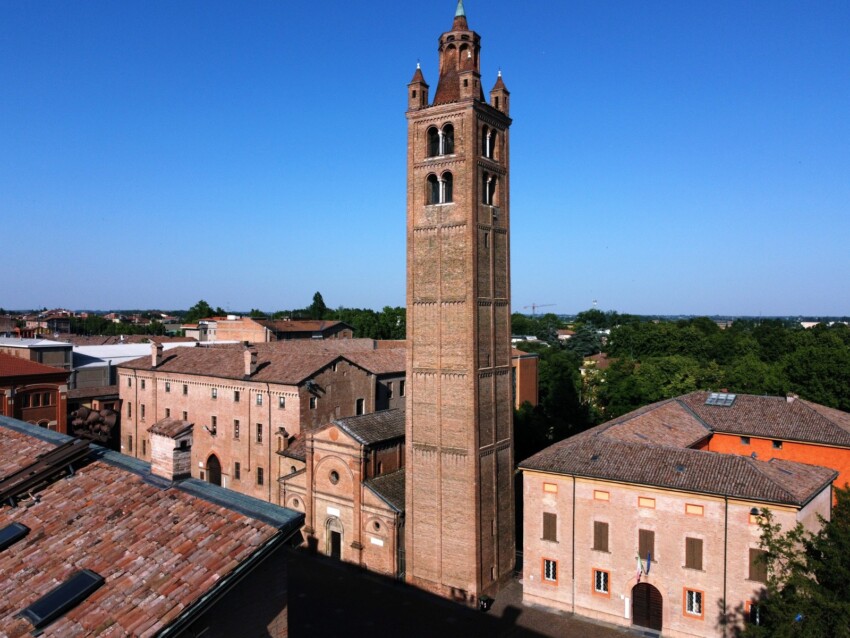
The Church of Santa Maria in Castello, known as La Sagra, is the oldest place of worship in Carpi and has been included in the European circuit of Romanesque buildings. Tradition has it that it was founded by Lombard king Astolfo in 752/753, but was subsequently rebuilt and then reconsecrated in 1184, adopting the architectural and decorative characteristics typical of the Romanesque style.
The façade of the church that we can see today was redesigned by Baldassarre Peruzzi around 1515 at the behest of Alberto III Pio. Inside, the church preserves important 15th-century frescoes and a marble sarcophagus from 1351, a work by Sibellino da Caprara, containing the remains of Carpi’s lord Manfredo I Pio.
Carpi’s historic centre is undoubtedly the best area to stay thanks to its proximity to the main tourist attractions and services and the wide range of accommodation options. The hotels located in this area are not numerous but offer elegant and comfortable rooms, often in historic buildings. Those preferring a quieter atmosphere can opt for accommodation in the Carpi surroundings, nestled in the Modena countryside where you can enjoy peace and tranquillity.
Those travelling by car can easily reach Carpi by driving along the A22 motorway (Modena–Brennero, which connects Italy to northern Europe), exiting at the Carpi junction and then continuing along the SP 468. Alternatively, from Modena you can take the SS 9 “Via Emilia” towards Carpi and continue on the SP 413 to reach Carpi in fifty minutes. Carpi boasts a railway station located along the Modena-Mantua railway line with frequent and fast connections to both cities.
The nearest airport to Carpi is Guglielmo Marconi Airport in Bologna, located approximately 50 km away; from the airport, you can reach Carpi by car or train using the railway connections or public transport services.
What's the weather at Carpi? Below are the temperatures and the weather forecast at Carpi for the next few days.
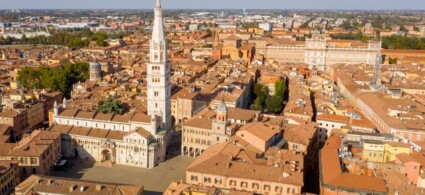
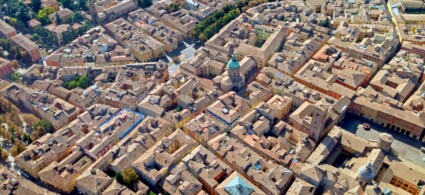
Carpi is a city of art with a thousand-year history and welcoming atmosphere, just 20 km from Modena, 50 km from Bologna and 150 km from Ravenna.
 Hotel
Hotel  Budget accommodations
  Apartments
  Family Hotel
  Luxury Hotel
  Resorts