Best Western Cesena Hotel
Cesena - Via Rosoleto, 607
Book now
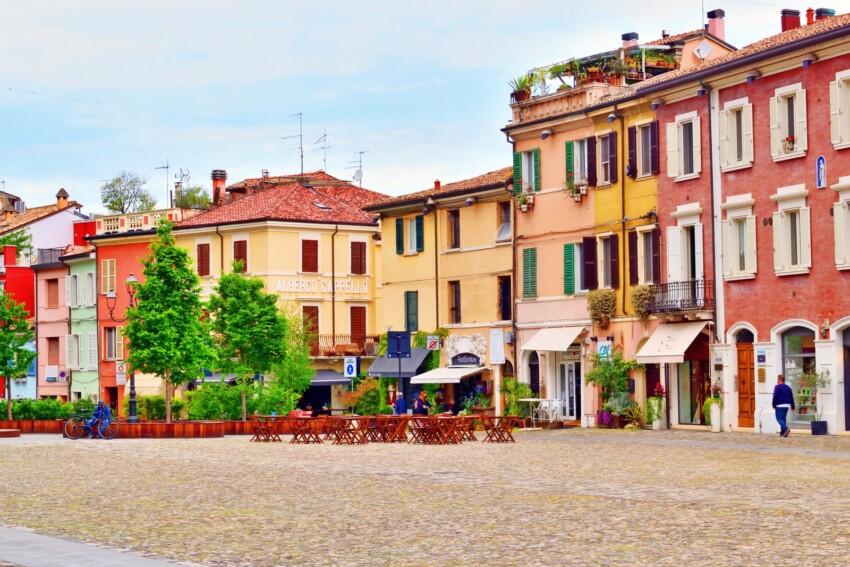
Nestled between the lush green hills of Emilia and the blue expanse of the Adriatic Sea lies Cesena, a charming town in Emilia-Romagna renowned for its artistic and historical heritage. Situated along the historic Via Emilia, one of the most important Roman roads, Cesena boasts a rich and fascinating history dating back to ancient times. The town’s foundations, it is believed, were established in the 5th century BC by the Umbrians, but it developed significantly during the Roman period when it became an important commercial hub thanks to its strategic location.
During the Middle Ages, Cesena became a fortified city under the rule of the Malatesta family, one of the most influential noble families of the era. Under the Malatesta, Cesena experienced a period of great splendour marked by the construction of numerous buildings and monuments, including the celebrated Malatestiana Library, considered an outstanding example of a perfectly preserved humanist library. For a period, Cesena also served as the “capital” of the Duchy of Romagna under the Borgia family, and during those years the city hosted various artists including Leonardo da Vinci.
A vibrant town with a long and storied past, Cesena today offers visitors a veritable journey through time across its squares and numerous sites of interest. Cesena is also known as “The City of Three Popes“, though this definition is not entirely accurate, as it was the birthplace of Pope Pius VI and Pope Pius VII and had as bishops Pius VIII and Benedict XIII. Moreover, the town is now recognised for its rich gastronomic heritage as part of the Wine and Flavour Route of the Colli di Forlì and Cesena. Cesena is also part, along with Imola, Faenza, Forlì, Lugo, Ravenna and Rimini, of the so-called “Seven Sisters“, which refers to seven principal towns of Romagna, the south-eastern area of the region.
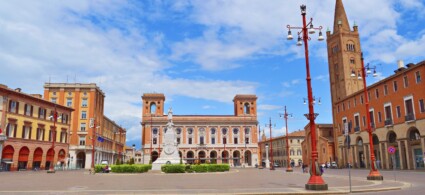
The heart of the town is Piazza del Popolo, redesigned in its current form under Andrea Malatesta and home to the Fontana Masini at its centre, whilst surrounding the square are the Town Hall, the Rocchetta di Piazza and numerous arcaded passages lined with shops and bars. Exploring Cesena continues as you wander through the streets of the historic centre, where you’ll find historic palaces, ancient churches and interesting museums.
The Malatestiana Library is undoubtedly one of Cesena’s principal attractions and, given its importance, has also been inscribed by UNESCO on the Memory of the World register, which aims to identify and safeguard historical archives and documents. Founded in 1452 at the behest of Domenico Malatesta (also known as Novello) and Franciscan friars from the local convent, the library is considered a masterpiece of Renaissance architecture and represents an institution of immeasurable cultural value. It is, in fact, regarded as the first civic library in Europe and among the few to have preserved intact its original structure, furnishings and collection of books and volumes. Its beautiful reading room, with wooden benches and large windows, is a space that evokes a truly captivating atmosphere.
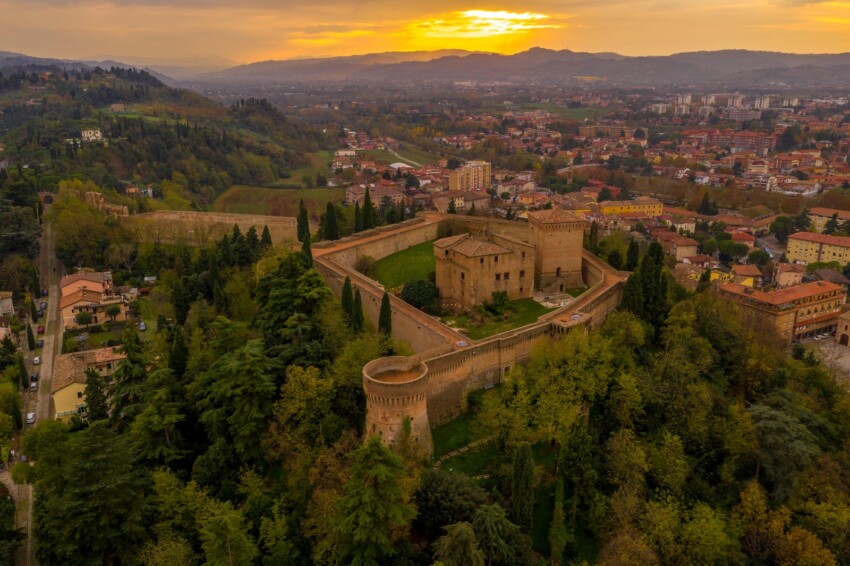
Another testament to the power and influence of the Malatesta in the town is the Rocca Malatestiana, an imposing fortress that dominates Cesena’s historic centre from atop the Garampo hill. Built in the 14th century, the Rocca is another fine example of medieval military architecture in Emilia-Romagna and one of the region’s best-preserved fortifications. The fortress, which underwent enlargements and transformations over the centuries, was converted into a prison during the Napoleonic period and remained so until the 1970s, when the municipality transformed it into a museum.
The Rocca is now open to the public, offering the opportunity to explore its towers, walls with their defensive walkways and ancient dungeons. In the Torrione Femmina you’ll find the Museum of Agricultural History, which tells the story of rural Romagnol life, whilst the Maschio section houses an exhibition of Malatesta ceramics. From the summit of the Rocca, you can also enjoy a breathtaking panoramic view of the town and surrounding countryside.
The Cathedral of Cesena, dedicated to San Giovanni Battista, was built between 1385 and 1405 and is an outstanding example of Gothic-Romanesque architecture with a brick façade and a majestic bell tower. The bell tower was erected between 1443 and 1456 to a design by Maso di Pietro, but was later modified and heightened in the mid-18th century to reach a height of 72 metres. The exterior of the church strikes you with its simplicity, whilst the three-nave interior is truly impressive, adorned with frescoes and artworks of considerable merit.
Among its most important works is a 12th-century wooden Crucifix, a painting of San Battista attributed to painter Livio Agresti, and in the Chapel of the Madonna del Popolo, 18th-century frescoes by Corrado Giaquinto. In the cathedral’s crypt are also preserved the remains of San Mauro, who was bishop of Cesena in the 10th century and is now the town’s patron saint.
On the Spaziano hill in Cesena, around the year 1000, an abbey was built on the site of a 9th-century chapel that had previously existed there. Tradition has it that Bishop Mauro would come to pray at this location and that, after his death (which occurred around 946), numerous miracles took place here; thus, the small prayer cell he had built was rebuilt to accommodate the ever-growing number of the faithful.
The building, however, assumed its current appearance following work carried out between the 15th and 16th centuries, also thanks to artists and architects who were very active in the area, such as Scipione Sacco, Girolamo Longhi and Francesco Masini. The complex now houses the monastery and Church, and from the square in front it is possible to admire a panorama that stretches from Monte Titano to the Adriatic Sea. The interior features a single nave with four chapels on each side, housing artworks of considerable prestige, whilst in the presbytery area are the altar and a walnut choir.
The monastery itself is also worth a visit for its beautiful areas, such as the refectory, library, Laboratory for the Restoration of Rare Books and monastic herbalist’s shop, which remain active. However, the Abbey of Santa Maria del Monte’s priceless heritage is its collection of ex-votos, a collection of 690 pieces of great value, consisting of painted tablets dating from 1400 onwards that depict the miracles performed over the years by the Madonna del Monte.
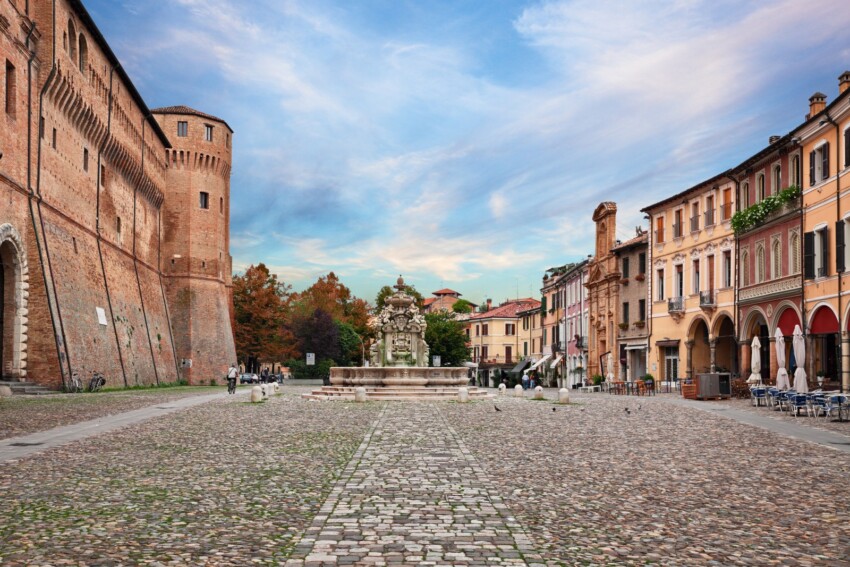
In Piazza del Popolo you can also admire the Rocchetta di Piazza, a fortification dating from the mid-16th century, conceived as part of the town’s defensive system alongside the Rocca Malatestiana. The Rocchetta was designed by architect Matteo Nuti and comprises a brick curtain wall over twenty metres high, connected to a passage known as the Loggetta Veneziana and a polygonal tower. On the walls of the Rocchetta di Piazza hangs a quotation from Dante taken from Canto XXVII of the Inferno, where he spoke of Cesena, and the coat of arms of Lorenzo Zane, the papal governor at the time of construction. Today, the Loggetta Veneziana and the Rocchetta di Piazza house the Cesena Museum of Natural Sciences.
At the centre of Piazza del Popolo stands the elegant Fontana Masini, created by Domenico di Montevecchio between 1586 and 1590, to a design by Francesco Masini. Regarded for nearly five hundred years as one of Cesena’s icons and a meeting point for locals, the Fountain was crafted from Istrian stone and is richly decorated. On one side you can admire the coat of arms of Pope Sixtus V, whilst on the others are the coats of arms of Cesena’s bishops and cardinals. According to many experts, the Fontana Masini closely resembles the style of Bologna’s celebrated “Fontana del Nettuno”.
The Civic Art Gallery of Cesena is housed in the former Convent of San Biagio, a building constructed between the 14th and 15th centuries as a monastery that was enlarged several times over the years. In the 19th century, with the Napoleonic rule and the suppression of religious orders, the convent was first used for military purposes and later as an orphanage.
Today it houses Cesena’s Civic Art Gallery, which preserves numerous artworks created between the 15th and 20th centuries by various artists, both local and prominent figures in the Italian art scene. The visit includes first the discovery of the older canvases dating from the 15th to the 17th century, then creations from the 18th and 19th centuries, and finally a section dedicated to contemporary art.
Built between 1843 and 1846 to a design by Vincenzo Ghinelli, the Teatro Alessandro Bonci is considered a jewel of neoclassical architecture and one of the most prestigious theatres in Emilia-Romagna. Inaugurated in 1846, the theatre is named after the celebrated tenor from Cesena, Alessandro Bonci, and remains today a place of great cultural significance for the town.
On the exterior, the building features a neoclassical façade, whilst the interior is divided into four tiers of boxes and a gallery with decorations by Francesco Migliari. Thanks to its acoustics and large stage, the Teatro Bonci hosts a rich programme of theatrical performances, concerts and operatic works.
Villa Silvia-Carducci, also known as Villa Pasolini-Zanelli, was built in the early 18th century on the hills of Lizzano, a few kilometres from the centre of Cesenatico. The property was purchased in 1874 by Countess Silvia Pasolini Zanelli, who gave it her name and transformed it into a refined salon of Italian bourgeoisie.
Some of Romagna’s most illustrious intellectuals and artists frequented the villa, including writers Nazzareno Trovanelli and Antonio Messeri, tenor Alessandro Bonci and, most notably, Giosuè Carducci, whose bedroom still remains on display. Today the villa has been transformed into a house-museum that hosts the Carducci Museum and Musicalia, a permanent exhibition of mechanical musical instruments and a venue where research, preservation and restoration activities of musical instruments take place.
In the following map you can see the location of the main places of interest mentioned in this article.
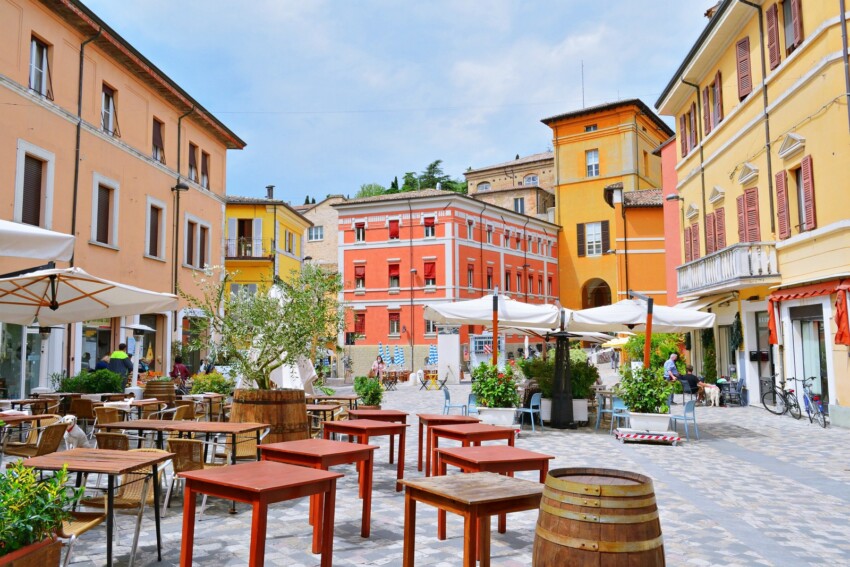
Cesena is a welcoming and hospitable town with a human-scale historic centre that is wonderful to explore on foot to soak up the vibrant atmosphere of the city. Cesena offers a decent range of accommodation options suitable for all needs and budgets. The historic centre is the most convenient area, with charming hotels, bed & breakfasts and apartments offering comfortable stays and easy access to the main attractions.
Cesena can be easily reached by car via the A14 Bologna-Taranto motorway, which has two “Cesena” and “Cesena Nord” exits from which you can easily access the town centre. The town is also situated along the SS9 Via Emilia state road, which passes through several provincial capitals of the Emilia-Romagna region and extends to San Donato Milanese. Additionally, the SS3bis Tiberina road (E45 motorway) passes through Cesena, providing access to Perugia, Terni and Rome.
For those preferring public transport, Cesena is served by the Bologna-Ancona railway line with regional, express regional and Intercity trains connecting the town to major destinations in the north and centre of Italy. There are also local and long-distance bus services providing connections to nearby towns in the province. The nearest airports are Forlì, less than 20 km away, Rimini, approximately 40 km away, and Bologna airport, roughly 90 km away.
What's the weather at Cesena? Below are the temperatures and the weather forecast at Cesena for the next few days.
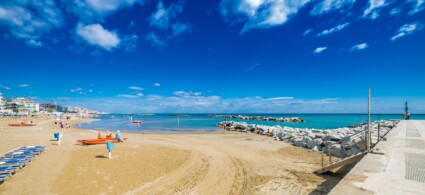
Cesena is a charming Romagna town positioned strategically just a few kilometres from the Adriatic Sea and close to major centres such as Rimini, Forlì and Ravenna. Specifically, Cesena lies 35 km from Rimini, 17 km from Forlì and 40 km from Ravenna.
 Hotel
Hotel  Budget accommodations
  Apartments
  Family Hotel
  Luxury Hotel
  Resorts