Locanda La Comacina
Comacchio - Via E. Fogli,17/19
Book now
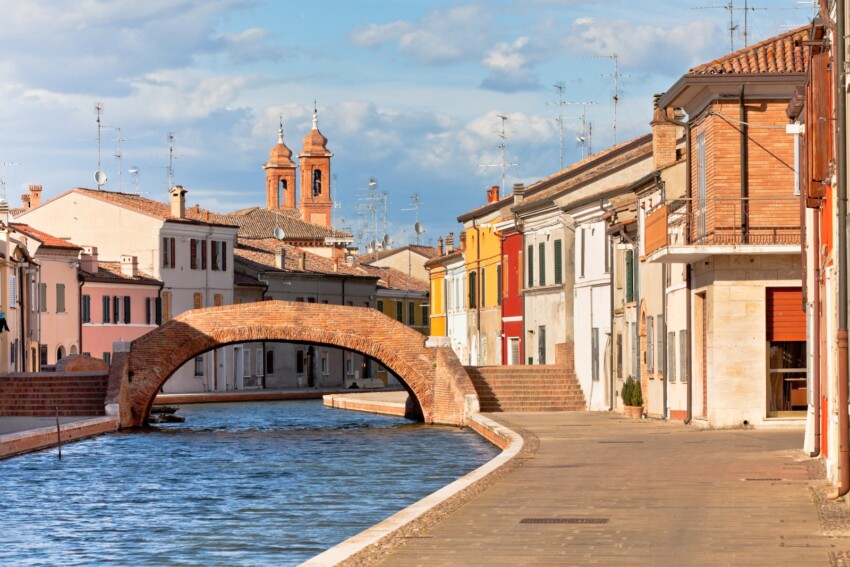
Sometimes dubbed “Little Venice”, Comacchio is a lagoon town in Emilia-Romagna comprising thirteen islands connected by a network of canals and bridges. The town sits in the Po Delta region, precisely where this mighty river meets the Adriatic Sea, creating truly spectacular lagoon landscapes. Though the city’s origins date back centuries, the layout of present-day Comacchio largely stems from the Middle Ages, when the town began to flourish thanks to its strategic location, exploiting the salt pans and fishing resources of the area.
Within a short time, this territory became one of Italy’s leading salt producers, making it hotly contested between the Este family and the Venetian Republic. In the 17th century, it came under Papal State rule, and Comacchio was almost entirely rebuilt. Over the following two centuries, various land reclamation and hydraulic engineering projects were completed. Today, Comacchio presents itself as a place of great charm—compact, human-scaled, peaceful, yet rich in fascinating sites waiting to be discovered on foot through its narrow streets.
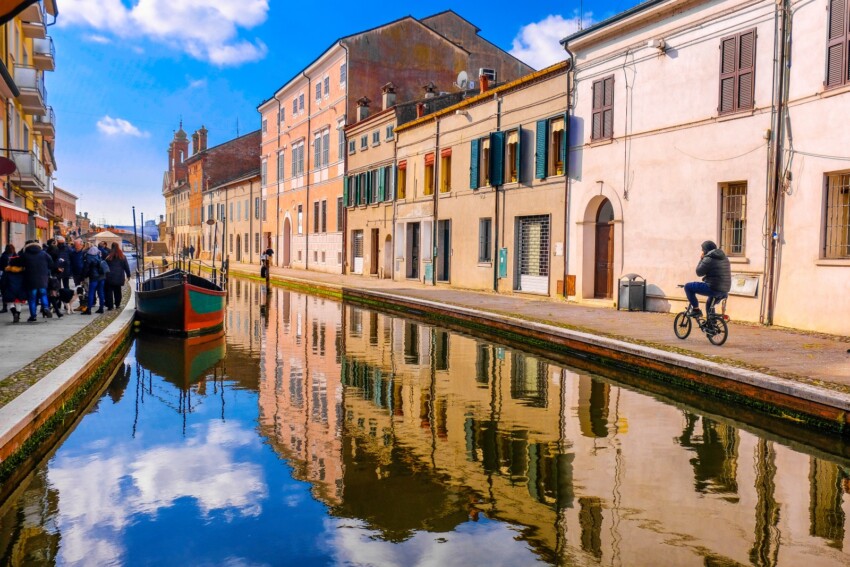
Visiting Comacchio, you’ll notice the unique and inseparable bond this city has with water, and discover how, for years, it was the economic lifeblood of the territory. You can explore the city on leisurely walks or by boat through the canals aboard traditional vessels known as “batane”, which were long the area’s primary transport. Moreover, Comacchio is the largest centre within the entire Po Delta Park, an area renowned for its marvellous natural landscapes and rich wildlife.
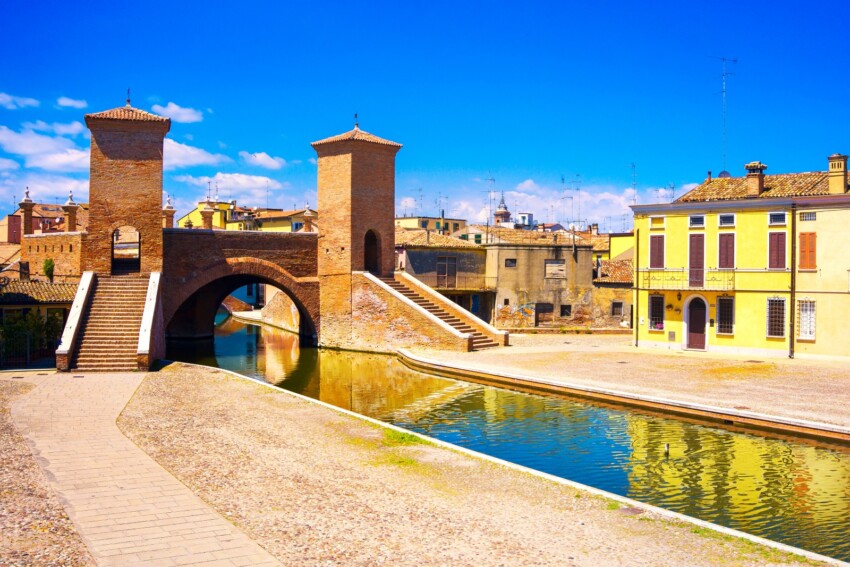
The undisputed symbol of the city is the Trepponti complex, a 17th-century structure also known as the Pallotta Bridge because it once allowed navigation along an ancient waterway, called the Pallotta, leading to the Adriatic Sea. Built in 1634 by architect Luca Danesi, the Trepponti complex comprises five grand brick staircases (three on the front and two on the rear) and was long considered the city’s gateway. Over time, the bridge has been renovated several times and underwent various modifications, such as the addition of guard towers on the rear staircases and the construction of six pillars on the front staircases.
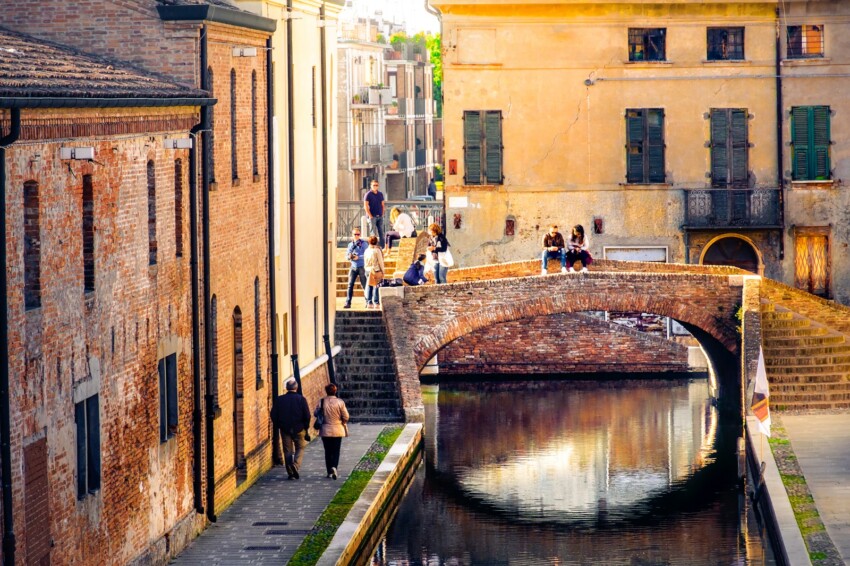
Comacchio is also called “Little Venice” for its numerous canals lined with colourful houses and various bridges, most of which were built during Papal State rule. Right next to the Trepponti lies the Bridge of the Sbirri2, built at another important junction in the city’s waterway network. The bridge has a complex structure with three flattened arches made of Istrian stone, and crossing it offers lovely views of the city. Its name derives from the fact that it once stood near the city prison where many “sbirri” (police officers) worked.
Another significant structure is the Bridge of the Sisti3, located at the intersection of via Antonio Buonafede canal and the San Pietro canal, also built in the 17th century in brick with a simple structure featuring a single arch. Don’t miss San Pietro Bridge4, erected in brick in the 17th century at the centre of the Canal Maggiore in one of the city’s oldest and busiest areas. Considered among the most distinctive for its unique form and structure, this bridge was most likely built on the site of an earlier wooden bridge.
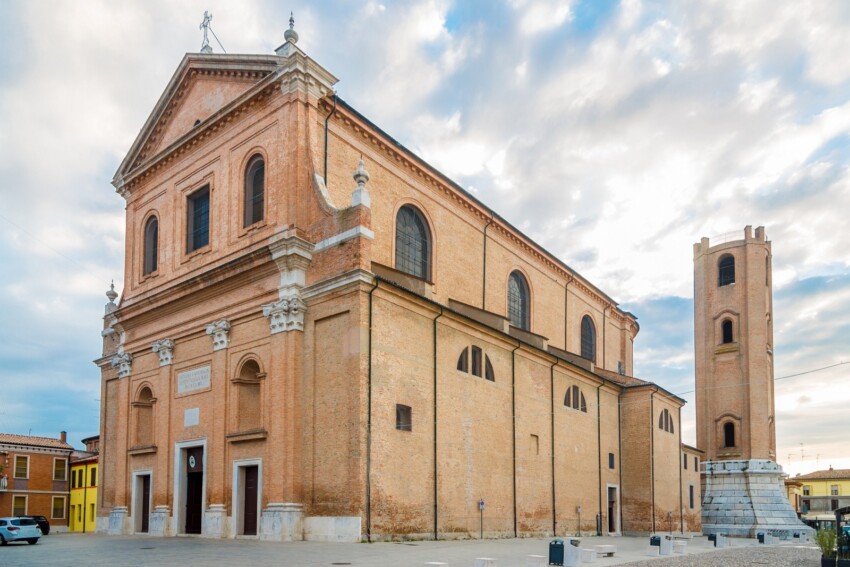
The San Cassiano Basilica, also known as Comacchio’s Cathedral, has been the city’s principal place of worship since the mid-18th century, having been consecrated in 1740 after years of construction following architect Angelo Cerruti’s design. A religious building has stood here since the 8th century, though it was repeatedly destroyed and rebuilt until the 18th century saw the construction of the Baroque-style church we see today.
The façade is entirely built in brick with details such as capitals, pilaster plinths and other cornice elements in Istrian stone. Inside, the San Cassiano Basilica boasts a single central nave with six chapels on each side housing fine artworks by the Bolognese School, including a canvas by Biagio Bovi (18th century) and a wooden crucifix by Germano Cignani.
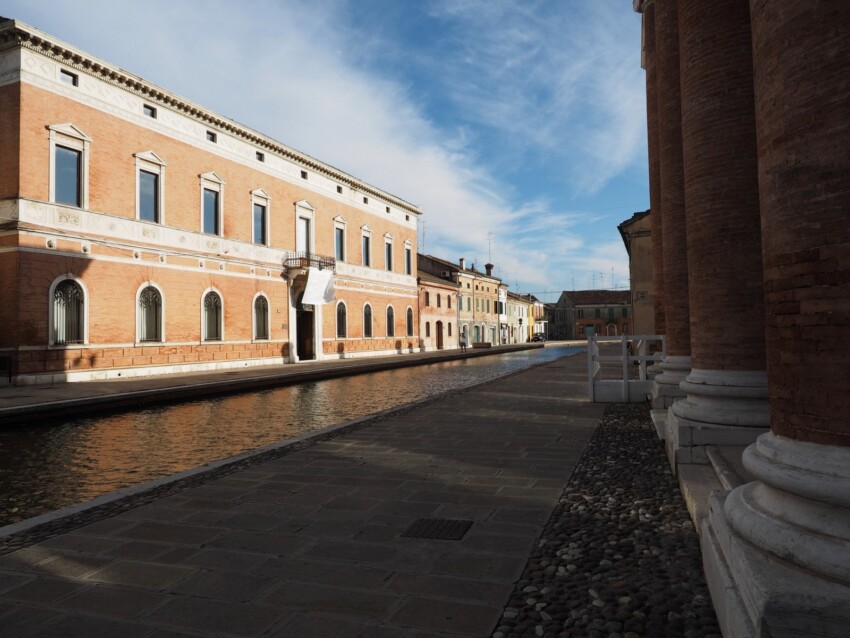
Palazzo Bellini is a splendid 19th-century building named after local entrepreneur Luigi Bellini (1831-1908), who commissioned this edifice in the 1800s as a family residence. His daughter Veturia Bellini later married renowned Emilian painter Fernando Torchi, who created the elegant ceiling frescoes in the main floor rooms and other artistic finishes of outstanding quality and refinement.
The building currently houses the Art Gallery where exhibitions and shows take place, the Civic Library, and on the top floor the Municipal Historical Archives and the Department of Cultural Institutions. Palazzo Bellini stands along a canal directly facing another significant Comacchio site: the Hospital of the Infirm, dedicated to San Camillo de Lellis.
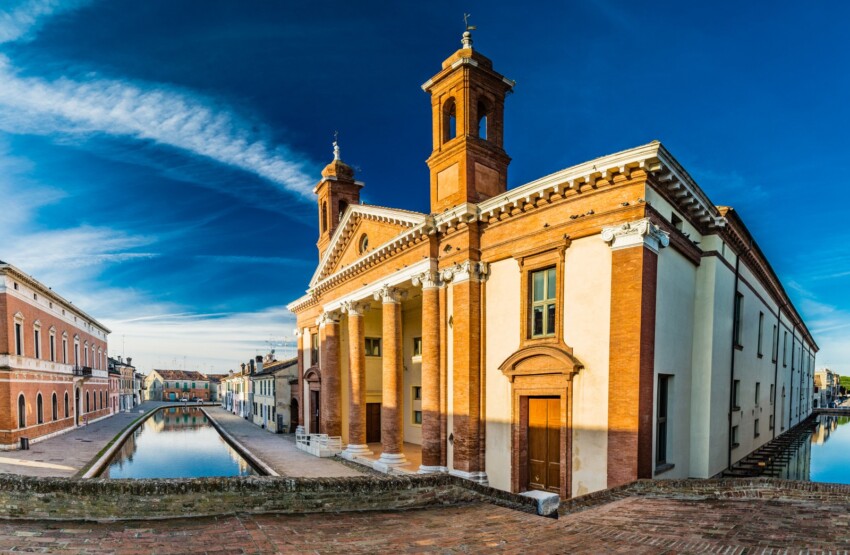
The Hospital of the Infirm is a neoclassical palace built in the 18th century during Papal State rule, designed by Antonio Foschini and Gaetano Genta. The building features a grand colonnade entrance supporting a classical pediment, whilst inside a monumental staircase leads to a large hall once used for patient care and recovery.
Within lies an important 19th-century canvas depicting the hospital’s façade with San Camillo tending to a patient, and above, the Madonna with Child and San Cassiano, the city’s patron saint. The complex served as a hospital until the 1970s and now houses the Museum of Ancient Delta, featuring an extensive collection of artefacts and testimony documenting the region’s history from Protohistory through the Middle Ages.
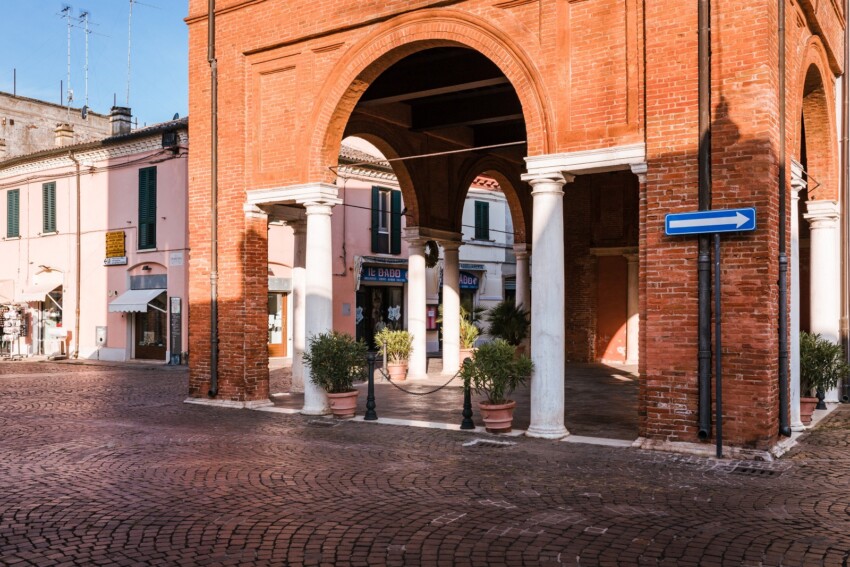
In the heart of the city on the central via Ugo Bassi stand the Civic Tower (or Clock Tower) and the Loggia del Grano. The Loggia del Grano was built between 1615 and 1623 by Cardinal Giacomo Serra’s order, designed by renowned Ferrara architect Giovan Battista Aleotti.
At its base is an atrium with Istrian stone columns and brick pilasters, while inside a staircase leads to the granary where residents once obtained supplies. Adjacent to the Loggia del Grano stands the Clock Tower, rebuilt in the 19th century with an octagonal form and an impressive Istrian stone base.
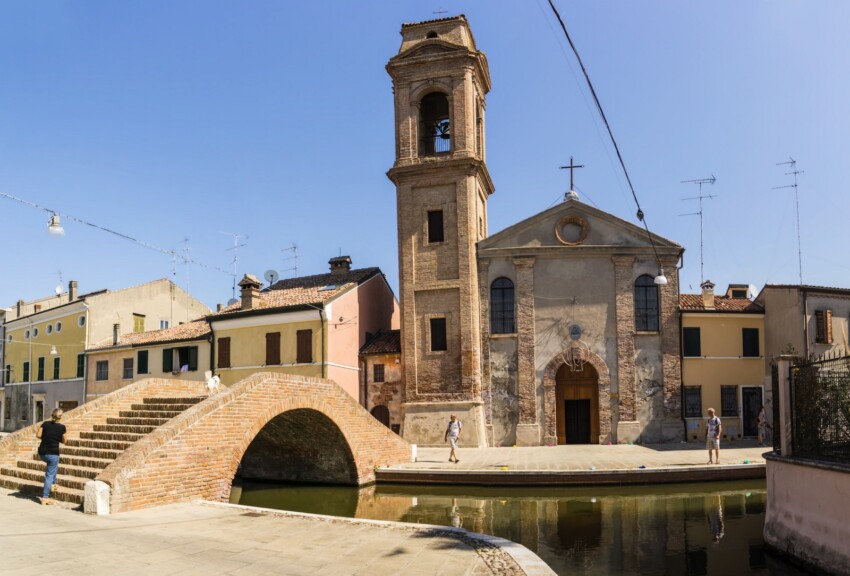
The Church of Santa Maria del Carmine stands in the Carmine district and is among Comacchio’s oldest churches, built in the early 1600s, though it underwent various modifications over time. Dedicated to the Blessed Virgin of Mount Carmel, the small church features a very simple and austere exterior façade, whilst inside it displays a precious wooden frame in blue and gold adorned with the Madonna and Child.
In Comacchio’s historic centre stands the eel processing works, where for years (and still today) eel is processed and preserved. Eel was long vital to the city’s life and economy, with fish caught in local waters marinated here in a craft that sustained many Comacchio families. A preservation and marinating method passed down through centuries in this territory continues in use today. Now, during certain months the complex operates as a working factory, while at other times it functions as a museum showcasing this age-old tradition.
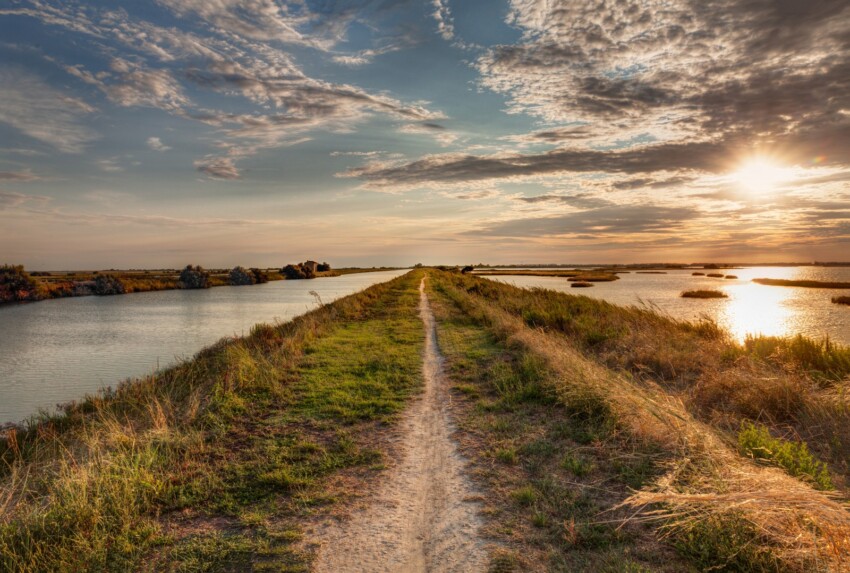
Comacchio is worth visiting not just for its charming centre but also for the Valli di Comacchio wetlands to the south, famous for stunning natural scenery. Here, via dedicated historical and nature trails, you can explore the past and traditions of these territories, visiting not only salt pans but also traditional fishermen’s huts (casoni, tabarre) and fishing weirs (lavorieri)—special devices used for catching fish. Considered among Italy’s largest wetland areas, the Valli di Comacchio boasts incredible flora and fauna, with frequent birdwatching excursions organised throughout the year.
In the following map you can see the location of the main places of interest mentioned in this article.
Comacchio is a small, intimate town with a peaceful atmosphere and modest but welcoming accommodation options. Most choices in town are hotels, B&Bs and apartments.
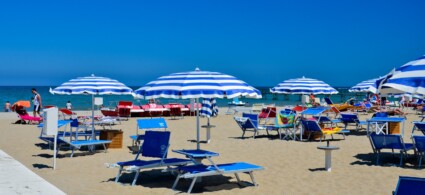
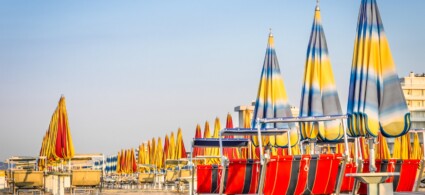
Those wanting a seaside summer holiday can opt for facilities in the Lidi Ferraresi, which are very popular in warmer months. The offering here is wide and varied, with numerous 4-star hotels, B&Bs, apartments, holiday villages and campsites.
Another option could be staying in Ferrara, where accommodation choices are even more extensive, and from there you can visit Comacchio as a day trip.


From Ferrara, you can reach Comacchio by car via the A13 motorway, exiting at Ferrara south where you can take the Ferrara-Porto Garibaldi motorway link to Comacchio exit; from there, continue on the S15 Via del Mare following signs for the city centre. Those driving from Milan can take the A1 to Bologna and then the A13 to Ferrara south exit.
The nearest railway station is Ostellato, 22 km away, connected to Comacchio by bus services, whilst other available stations include Ferrara and Ravenna. For those travelling by bus, the Ferrara-Ostellato-Lidi di Comacchio line operates from Ferrara.
What's the weather at Comacchio? Below are the temperatures and the weather forecast at Comacchio for the next few days.
Comacchio is a vibrant town in the Ferrara province that sits along the Po Delta area in the northern part of Emilia-Romagna. The town lies 50 km from Ferrara, 90 km from Rovigo and 110 km from Venice.
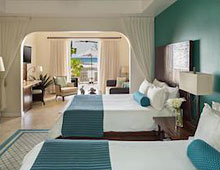 Hotel
Hotel 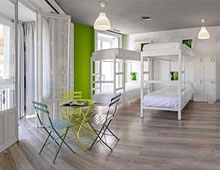 Budget accommodations
 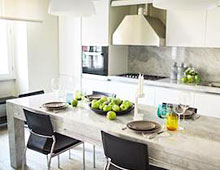 Apartments
  Family Hotel
  Luxury Hotel
  Resorts