Bologna: City Center Walking Tour
4.088 reviews
Enjoy a classic guided walking tour through the streets of Bologna. Admire the Asinelli Tower and see the impressive Basilica of San Petronio.
Buy now
From 28,00€ per person
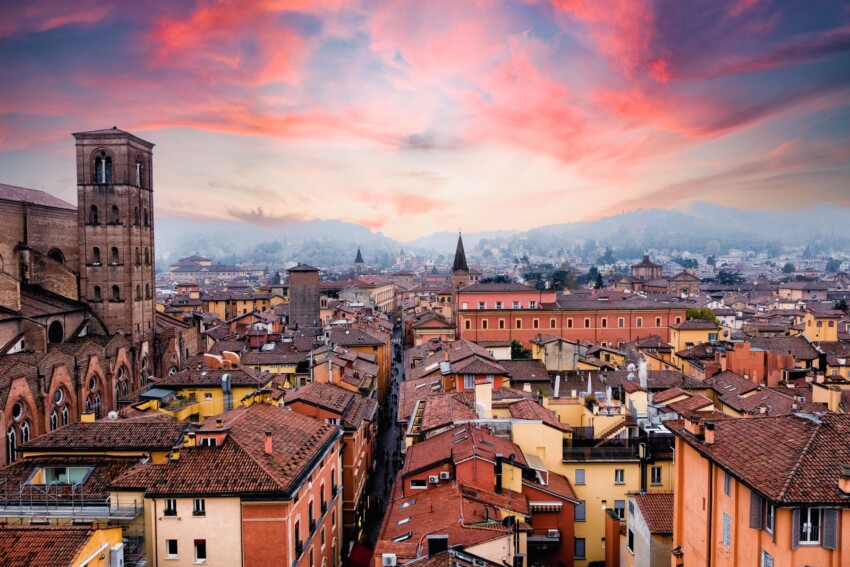
The capital of Emilia-Romagna and a city with a long history, Bologna is also nicknamed for its distinctive characteristics “the Learned, the Fat and the Red”. Here, indeed, you’ll find a prestigious University which, having been founded in 1088, is considered one of the oldest in the world and has hosted illustrious scholars for centuries, thus conferring on Bologna the nickname “the Learned“.
Beyond its academic heritage, Bologna is also famous for its cuisine, hence the nickname “the Fat”, passed down through many restaurants, shops and markets that celebrate Emilian culinary traditions made up of products such as Bolognese ragù, cappelletti and mortadella. The epithet “the Red“, on the other hand, is said to derive from the colour of the roofs and bricks that were used in the construction of buildings in the historic centre during the medieval period. This name, however, seems to have taken on a more social significance over time, linked to the city’s political leanings.
After being dominated by the Phoenicians and Romans, Bologna in the Middle Ages underwent considerable transformation, becoming an independent city-state, and this not only led to the birth of Italy’s first university seat but also to the creation of a very active cultural hub. In the Renaissance, Bologna became an important city of art that hosted famous artists and later became an active commercial centre and a strategic railway and road junction.
Today the city is a destination that attracts not only students from all over the world, thanks to its important University, but also a coveted destination for tourists and visitors who appreciate it for its historical, cultural and gastronomic heritage.
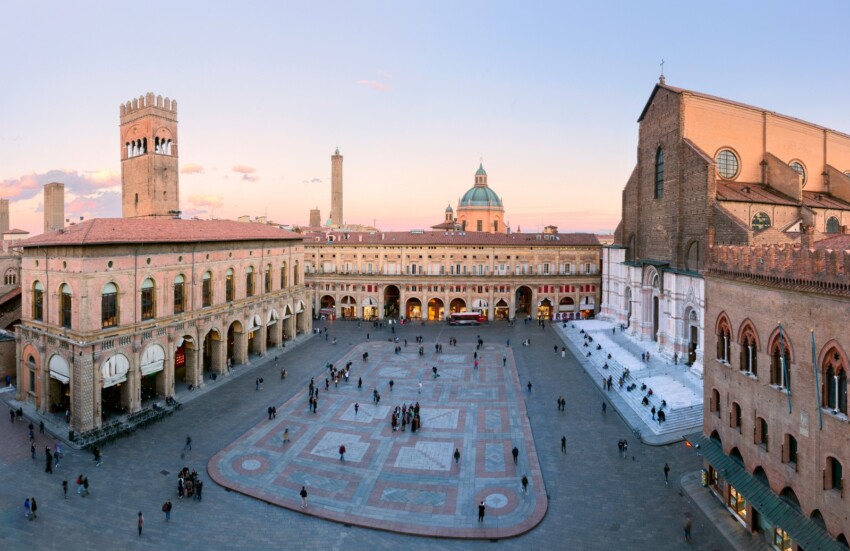
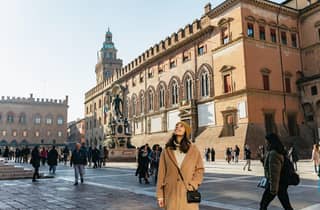
Piazza Maggiore is known, thanks to singer Lucio Dalla, also as Piazza Grande and has been for centuries the heart of Bologna’s political and religious life. It is considered one of the first Italian squares, as it was created before those of Florence and Siena, to be conceived and built as a public meeting and trading place since the city market was originally held here.
The square was created in the Middle Ages but over the years it was modified several times to meet different needs and only in the 15th century did it assume its current form thanks to work commissioned by Cardinal Carlo Borromeo. With an area of 6,900 square metres, Piazza Maggiore presents itself monumentally to its visitors and is surrounded by the most important buildings such as the Palazzo Comunale with the Clock Tower, the Sala Borsa, the Basilica of San Petronio, the Palazzo del Podestà, but also hosts numerous bars and venues.
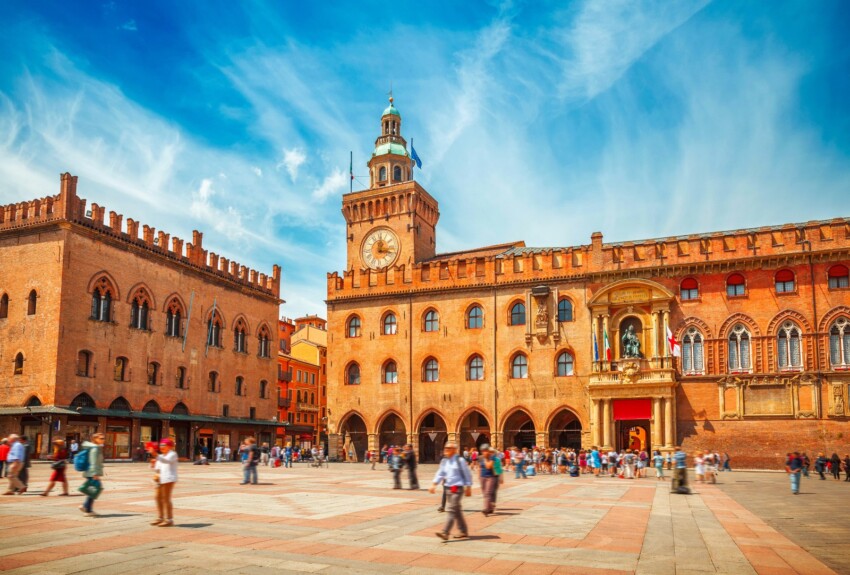
The Palazzo Comunale, also known as Palazzo d’Accursio, extends over approximately 15,000 square metres and is one of Bologna’s oldest and most important buildings. This was originally built in the 12th century as the residence of jurist Accursio da Bagnolo but was later purchased by the City Council and became first the seat of the magistracy and then of the city’s municipal government. The main façade strikes visitors with not only a large portal dating from the sixteenth century but also rich decorations and a bronze statue of Pope Gregory XIII.
A visit inside is certainly worthwhile to admire on the first floor rooms of great artistic and cultural interest such as the Sala d’Ercole with the terracotta statue of triumphant Hercules, the City Council Chamber and the Red Hall, so called for its red coverings. Through an imposing staircase, designed by Bramante, you reach the second floor where you’ll find the Sala Urbana, the Sala Boschereccia, the Sala Farnese and Cappella Farnese, with the latter two having been created in 1665 at the behest of Cardinal Girolamo Farnese.
Next to the palace stands the Torre di Accursio, or Clock Tower, which can be visited by climbing from the Sala Farnese to its summit where the mechanism that regulates the ancient clock, installed here in the mid-15th century, and the bell that still rings every hour are kept. Additionally, there are two panoramic terraces that allow you to admire all of Bologna and the surrounding area from above. The tower also hosts an interesting exhibition on the Municipal Art Collections with objects, paintings and artefacts ranging from the medieval period to the twentieth century and were mainly acquired through bequests.
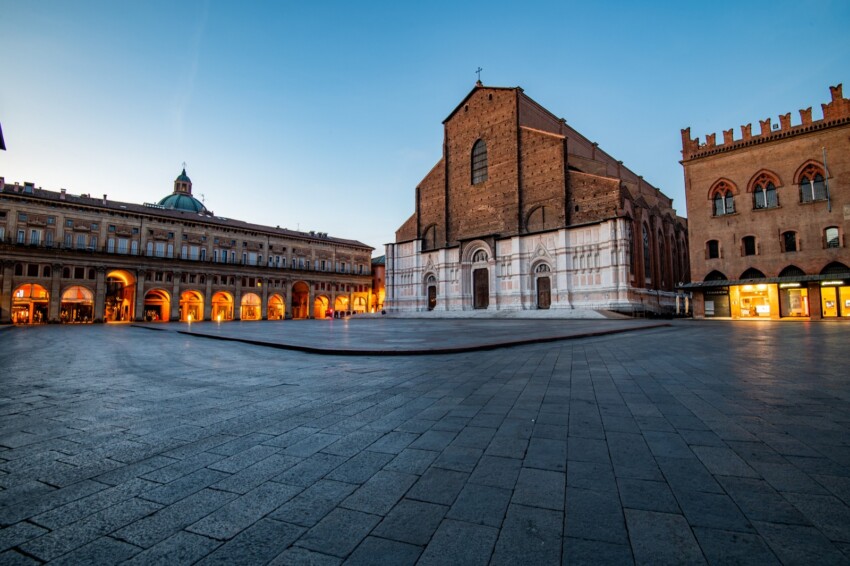
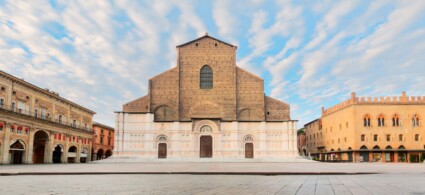
The Basilica of San Petronio has dominated Piazza Maggiore since the late 14th century and thanks to its impressive dimensions is considered one of the largest churches in the world even though its façade is still incomplete. Construction work began in 1390 at the behest of the City Council and ended only in the mid-17th century but even before completion, in 1530, it was here that Charles V was crowned Emperor of the Holy Roman Empire by Pope Clement VII.
Outside there is a portal decorated with bas-reliefs by Jacopo della Quercia, while inside there are three naves (one central and two lateral) that house twenty-two chapels finely frescoed by artists such as Giovanni da Modena, Lorenzo Costa and Girolamo da Treviso. In the floor of the left nave is found a large meridian line, designed in 1655 by mathematician and astronomer Giovanni Domenico Cassini, which at 66.8 metres long is one of the largest in the world and was also used at the time to conduct important astronomical studies.
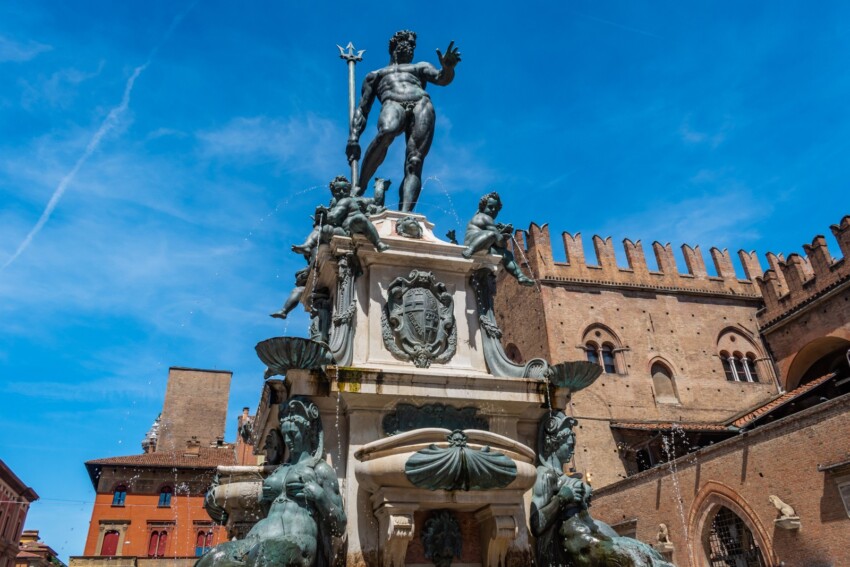
The Neptune Fountain, considered one of the city’s most emblematic and beloved monuments and a masterpiece of the Italian Renaissance, stands majestically in Piazza del Nettuno, a pedestrian area that connects Piazza Maggiore with Via Rizzoli. The fountain was commissioned by Cardinal Carlo Borromeo during the years when Bologna was under the rule of the Papal States to Tommaso Laureti, a Sicilian artist who was very active in the area.
The protagonist of the work is undoubtedly the statue of the god Neptune, which was created between 1563 and 1566 by Flemish sculptor Jean de Boulogne, better known as Giambologna. The fountain depicts the god Neptune, the mighty sovereign of the seas in Roman mythology, in all his grandeur with a trident in his hand and his gaze turned towards the horizon. The bronze statue of the god stands over three metres high and rises on a finely decorated base with putti and mythological figures, while at his feet are four sirens symbolising fertility and abundance.
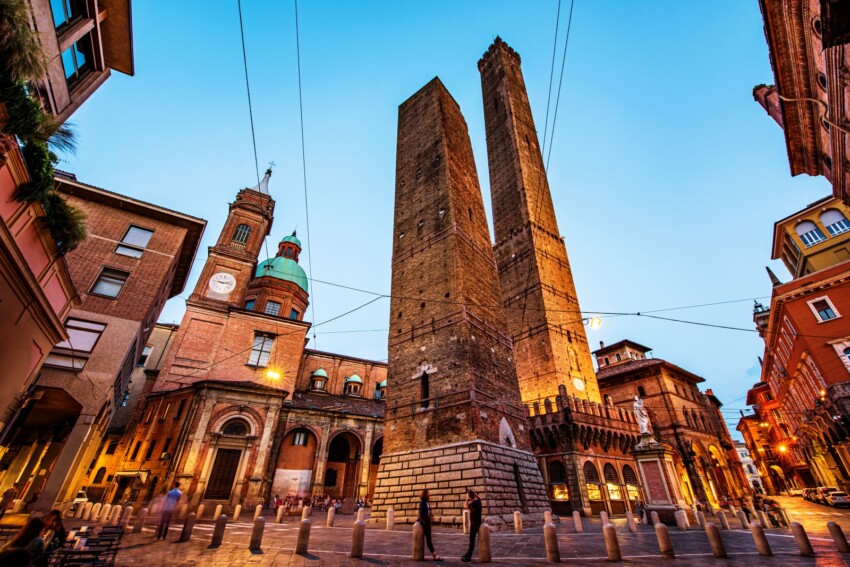
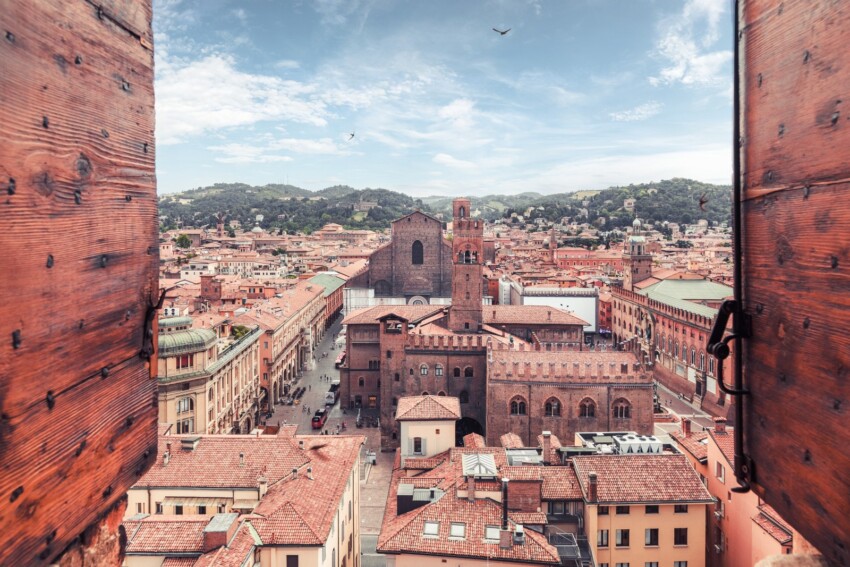
The Asinelli Tower, at 97.2 metres in height, is the symbol of Bologna and one of the city’s most iconic historical monuments, so much so that it is now famous abroad as well. In the medieval period, hundreds of towers were erected by the most prestigious Bolognese families in this territory, serving not only as a display of power and wealth but also for defensive purposes. Among the many built, only about twenty remain today, and among the most well-known is certainly the Asinelli Tower erected in the 12th century by the Asinelli family themselves. The tower is accessible by climbing almost five hundred steps that lead to the summit from where you can enjoy a spectacular view over the entire city.
Unlike the Asinelli Tower, the Garisenda is not open to visitors but is nonetheless a site worth mentioning when talking about Bologna as it is another testament to the medieval engineering capabilities of the Bolognese. The Garisenda Tower was also built in the 12th century right next to the Asinelli Tower and has been characterised by a strong lean since then.
The Garisenda, in fact, has a lean greater than both the Asinelli Tower and the Tower of Pisa, so much so that for this visible characteristic it was also mentioned by Dante Alighieri in the Divine Comedy. The lean seems to be due to ground and foundation subsidence which makes it very unstable, so much so that originally the tower was at least 20 metres taller but was later reduced due to its precariousness and fear of collapse.
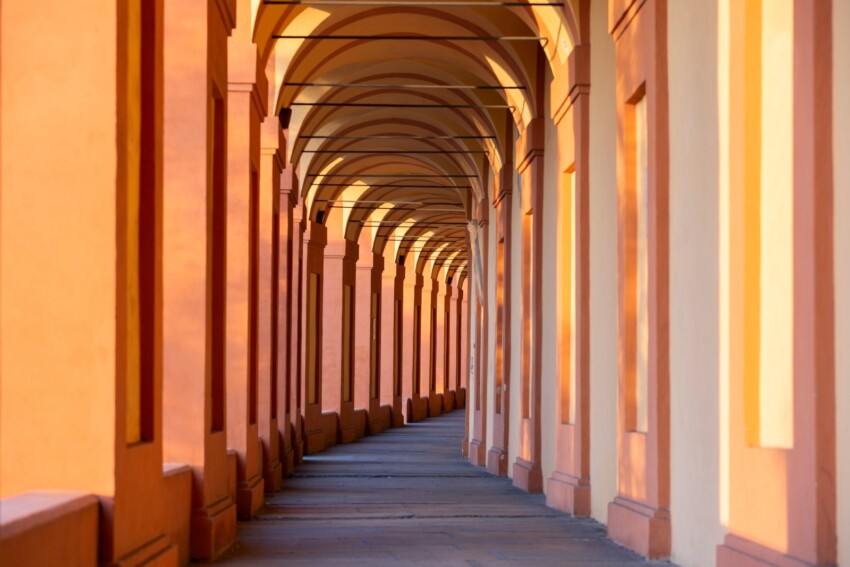
Bologna is known as “the city of arcades” since these, built over the centuries, now extend for almost 40 kilometres across the city territory and were recently declared a UNESCO World Heritage Site. The arcades have long been considered protection from the sun, rain and snow, making it easy to move around the city in any weather conditions.
Without a doubt the best-known arcades are those of San Luca, namely those that from the centre of Bologna allow you to reach the top of Colle della Guardia where the Sanctuary of the Virgin San Luca is located, a place of pilgrimage for centuries. The walk under these arcades composed of 666 arches begins at Porta Saragozza in the city centre and winds for about 4 km along the side of Colle della Guardia up to the Sanctuary.
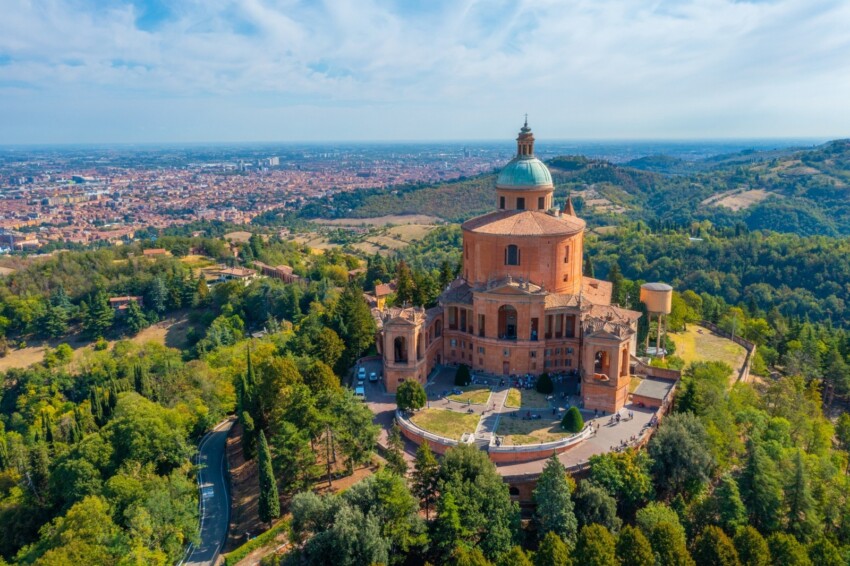
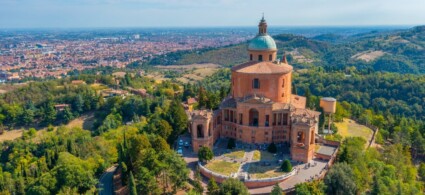
The Sanctuary of the Virgin of San Luca, also known as the Sanctuary of the Madonna of San Luca, is one of the most important religious symbols not only of the city of Bologna but of the entire Emilia-Romagna region. The first reports of a small church in the area date back to the late 12th century when Angelica Bonfantini, a noblewoman from a wealthy local family, is said to have had a place built to house a sacred icon of the Virgin. The religious importance of this work derives from the fact that it was supposedly painted by the evangelist Luke and then brought to Bologna in the 12th century by a pilgrim named Theocles.
Over the centuries the small church underwent various enlargements and renovations and what we can admire now is a large Sanctuary built in the mid-18th century to accommodate the ever-growing number of the faithful. The building is an extraordinary example of Baroque religious architecture with the main façade characterised by a large triangular pediment decorated with marble reliefs and a majestic dome. The church’s plan is Greek cross and the interiors are richly decorated with frescoes, stuccos and works of art that narrate episodes from the life of the Virgin Mary largely created by Guido Reni, Guercino, Giuseppe Maria Crespi and his pupils.
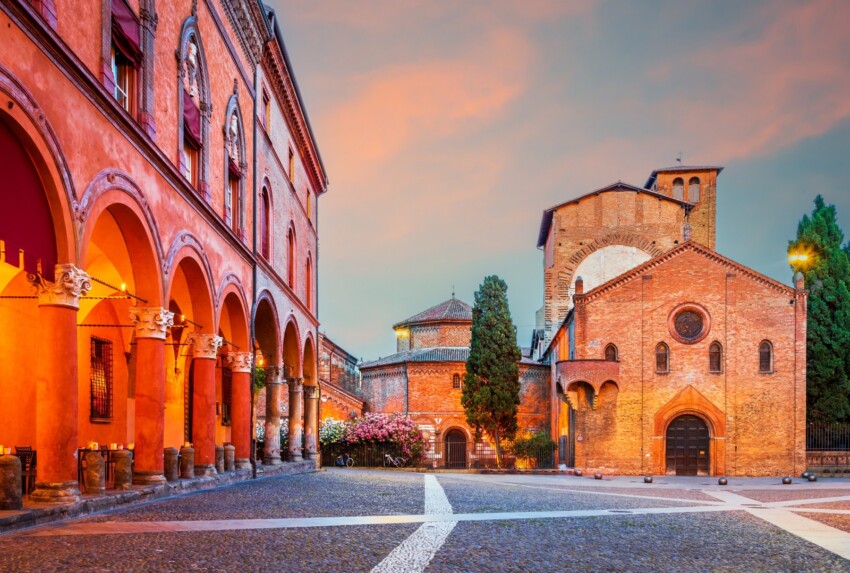
The Sanctuary of Santo Stefano, also known as the “Seven Churches”, is a site of great spirituality as it is a complex of buildings constructed in different eras, on the site where a pagan temple once stood, all around a large courtyard called Piazza Santo Stefano. The Piazza houses seven buildings, religious and otherwise, such as the Church of the Crucifix, the Basilica of the Holy Sepulchre, the Basilica of the protomartyr Saints Vitale and Agricola, the Church of the Martyrium, the Courtyard of Pilate, the Medieval Cloister and the Museum of Santo Stefano.
The oldest buildings are the Basilica of the Holy Sepulchre and the Basilica of San Vitale and Sant’Agricola which was built to house the relics of Saints Vitale and Agricola who were victims in 304 AD of the persecutions of Emperor Diocletian. The Church of the Crucifix, on the other hand, was erected in the 8th century by Lombard king Liutprand, as was the Courtyard of Pilate which has at its centre the Basin of Pilate built to commemorate his gesture of “washing his hands”.
The Cathedral of San Pietro was built around the 10th century on the remains of an early Christian building, though the church you see today is the result of work carried out in the mid-18th century by architect Alfonso Torreggiani at the behest of Pope Benedict XIV, who had formerly been Archbishop of Bologna. The façade is Baroque with a stepped structure and features three doors, the central one being the main entrance, topped by a pediment bearing the coat of arms of Pope Benedict XIV.
The interior boasts three naves, with a large central nave flanked by two side aisles that each contain five finely decorated and ornate chapels, whilst the high altar created by Alfonso Torreggiani is made of polychrome marble and is crowned by a remarkable Romanesque wooden crucifix carved from cedar. In the crypt lies the tomb of Giovanni Acquaderni, co-founder of the Italian Catholic Youth Society, which later became Italian Catholic Action.
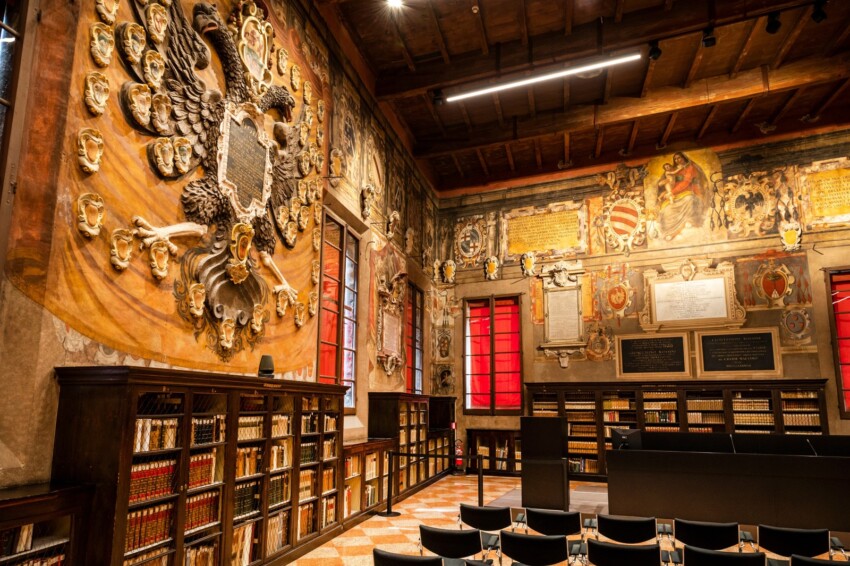
The Archiginnasio dates back to the 16th century and is one of the city’s most important historic buildings, having served as the main seat of the University of Bologna until the 19th century. Today it houses the Biblioteca Comunale dell’Archiginnasio and the Anatomical Theatre, a place of great fascination that has been beautifully decorated with statues of illustrious physicians from the past. Construction of the palazzo began around 1562 at the behest of Cardinal Carlo Borromeo, who commissioned the design from Antonio Morandi (known as il Terribilia) to give Bologna a distinguished university home.
The ground floor features a large portico adorned with decorations and comprising over 6,000 student coats of arms, whilst the upper floors house two loggias accommodating two aulas and various classrooms still in use. From here you can also access the magnificent Anatomical Theatre, built in 1637 in wood in the shape of an amphitheatre as a venue dedicated to the study of human anatomy.
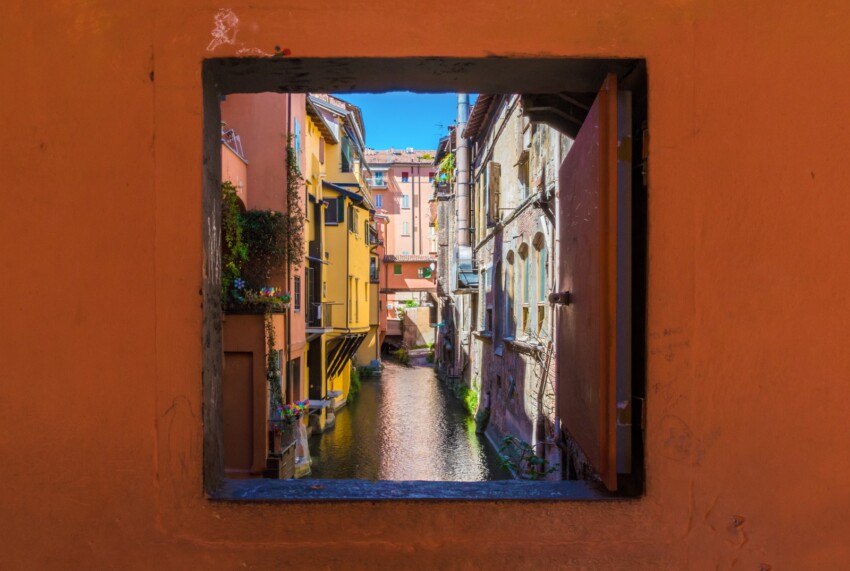
One of Bologna’s most “Instagram-worthy” spots is undoubtedly the little window on Via Piella, which offers a truly enchanting view of the Moline Canal, considered a continuation of the Reno Canal. Few know that Bologna was once a city crisscrossed by numerous canals that powered various mills used for grain production, but many of these waterways have since been largely covered over.
One such canal, the Moline Canal no less, remains visible through a small window on Via Piella, not far from Porta Govese, also known as the Piella tower. In this cobbled alleyway between the walls of palazzo buildings, you can see and hear one of the few waterways that wasn’t buried in the city; in addition to the Via Piella window, further vistas of the Moline Canal have been created through the bridges on via Oberdan and via Malcontenti.
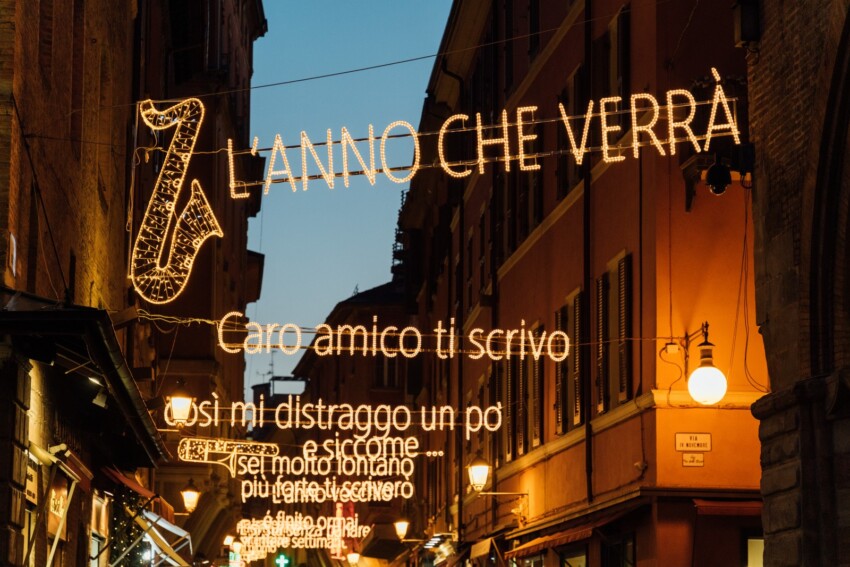
Lucio Dalla was a renowned Italian singer-songwriter and composer born in Bologna in 1943, with a profound connection to his native city that also inspired many of his compositions. In 1999, the University of Bologna awarded him an Honorary Degree in Literature and Philosophy.
His former residence on Via d’Azeglio, just a stone’s throw from Piazza Maggiore, has now become a house museum to explore through guided tours that trace the history and achievements of this great Italian artist. You can walk through the rooms of the house to admire in particular the singer’s studio, photographs, many of his cherished personal possessions and various awards.
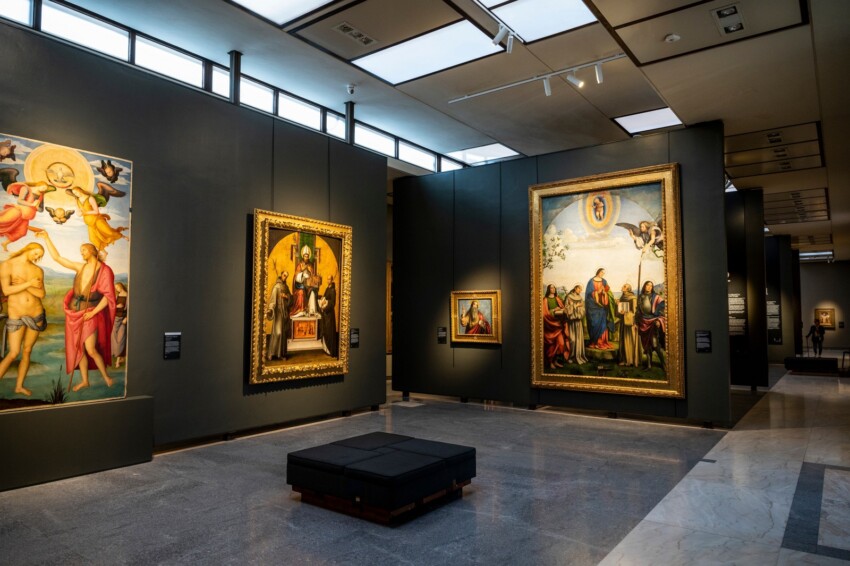
Just a short distance from Piazza Maggiore stands the former Jesuit Novitiate of Sant’Ignazio, built in the 17th century, which now houses Bologna’s National Picture Gallery. First opened to the public in 1885, it contains works by some of the most important Italian painters of the Renaissance, Mannerism and Baroque periods.
Among the most celebrated artists are Raphael, Perugino, Tintoretto, Titian, Guercino and Giotto, with his Bologna polyptych representing the Virgin and Child flanked by Saints Gabriel, Michael, Peter and Paul. In addition to the permanent exhibition, temporary exhibitions are staged and cultural activities, seminars and conferences organised.
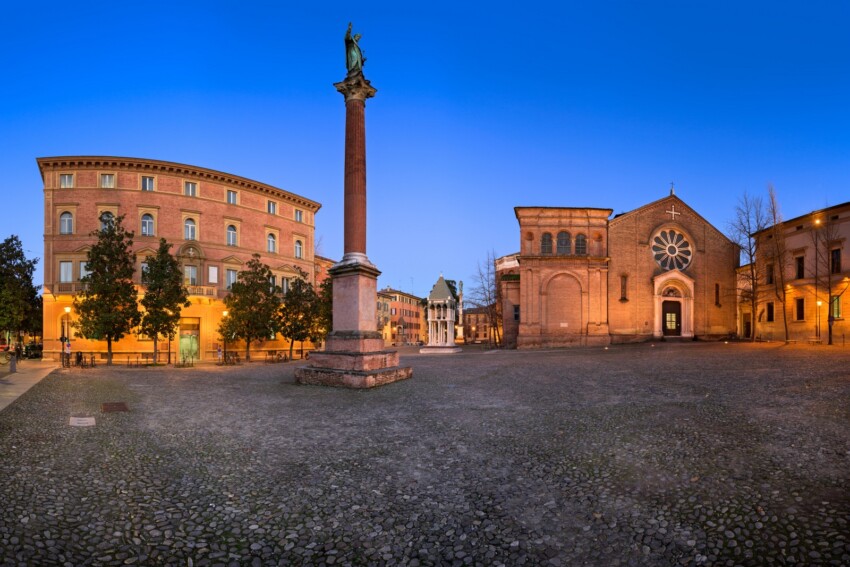
The Basilica of San Domenico in Bologna is a destination few know about, yet it is in fact a very ancient church of considerable charm, particularly on the inside thanks to its hosting of artworks and decorations of great value created by artists such as Guercino, Filippino Lippi and Ludovico Carracci. This is the shrine that holds the remains of Saint Dominic of Guzmán, founder of the Order of Preachers, the Dominican friars, who died in this area on 6 August 1221. Construction of the church began in 1228 by the Dominican Friars but it was subsequently altered and enlarged many times, with the addition of lateral chapels and the bell tower in 1313.
The façade is gabled with a single portal topped by a large rose window, whilst the interior has three naves, various lateral chapels, a transept and a choir. The main chapel is that of San Domenico on the right nave of the Basilica and houses the Saint’s tomb, known as the Arca of San Domenico, created by Nicola Pisano in collaboration with Niccolò dell’Arca, Michelangelo Buonarroti and Jean-Baptiste Boudard. The adjoining Convent of San Domenico now houses a large Library that holds almost 90,000 volumes on theology, philosophy, history and spirituality.
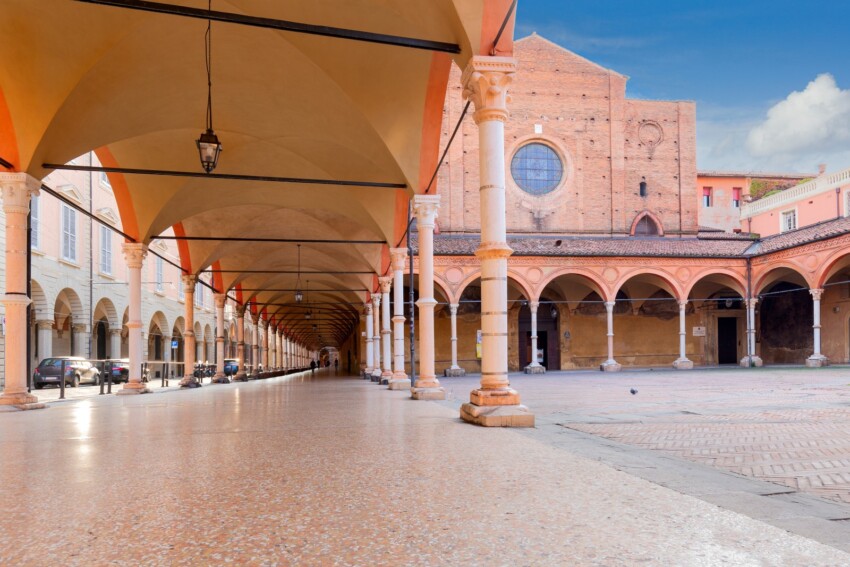
Since the mid-13th century, it is documented that a small Church of Santa Maria dei Servi stood here, designed by architect Antonio di Vincenzo. The building was subsequently restructured and embellished many times, also thanks to numerous donations and bequests from wealthy families and benefactors, so that by the mid-15th century the bell tower was built, whilst in the 17th century a sacristy dedicated to Saint John the Evangelist was created.
After serving as a barracks for some time during the Napoleonic period, the Church of Santa Maria dei Servi was returned to the Order of Servants of Mary, who restored it to its former splendour. The exterior now presents a simple brick façade whilst the interior has a basilical layout with three naves, cross vaults and chapels housing fine decorations and frescoes.
Bologna’s city walls were built to defend the city from enemy attacks as early as the 3rd century AD, but they were subsequently enlarged repeatedly until the 20th century, when parts of the walls were demolished to make way for ring roads. In fact, over time two further concentric circles were added to the 3rd-century circuit: the second, known as the “Torresotti” or “Mille” walls, dates to the 12th century, whilst the third and most extensive dates to the 13th and 14th centuries. Of this last circuit, unfortunately, only small stretches and ten of the original twelve city gates remain standing.
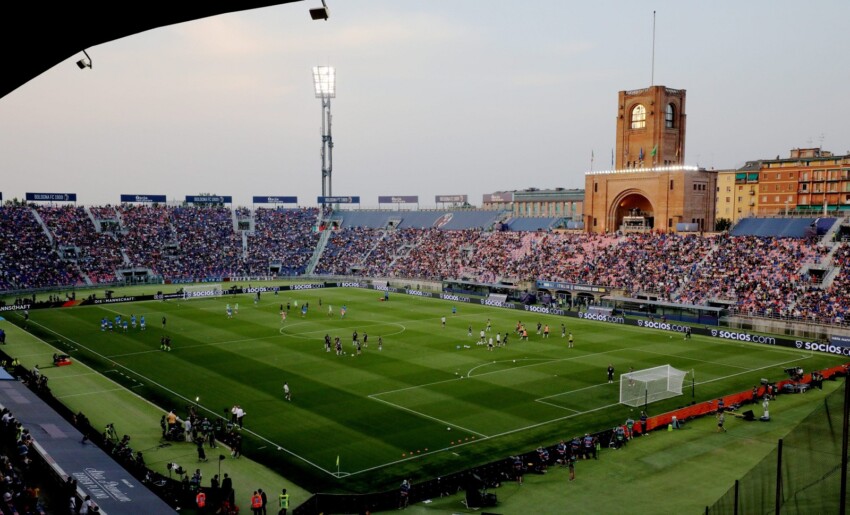
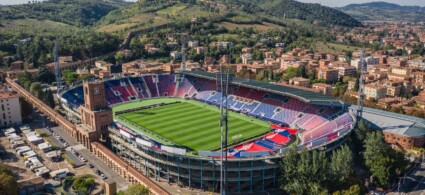
The Renato Dall’Ara Stadium, a jewel of Italian rationalist architecture, is an unmissable destination for sports and history enthusiasts. The iconic Marathon Tower, 42 metres high, dominates the complex, offering a unique photographic spectacle. Located in a scenic area at the foot of the Bologna hills, it is easily accessible from the city centre by bus.
Guided tours allow you to discover the historic changing rooms, press room and the Bologna FC museum, brimming with memorabilia and trophies. The surrounding neighbourhood, with the evocative Certosa Monumental Cemetery, offers the opportunity for a pleasant cultural walk, rounding off your visit with typical restaurants and historic cafés.
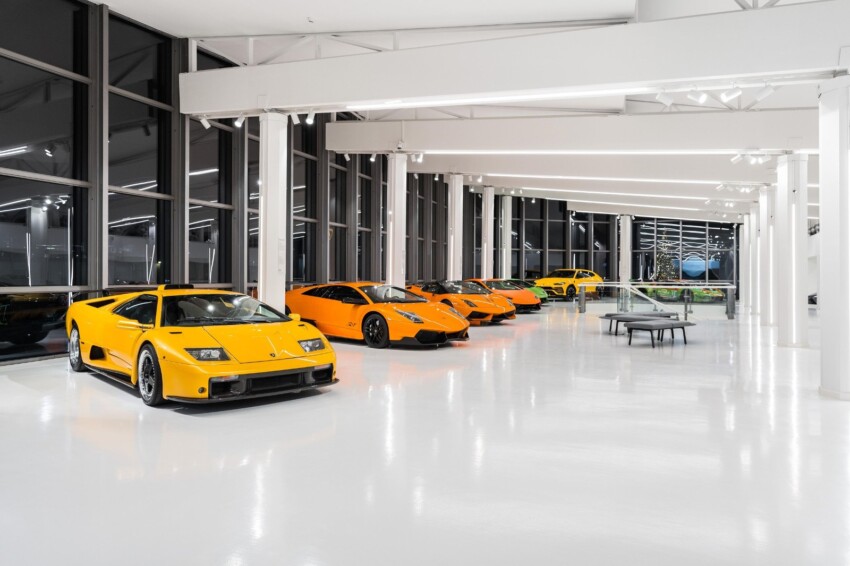
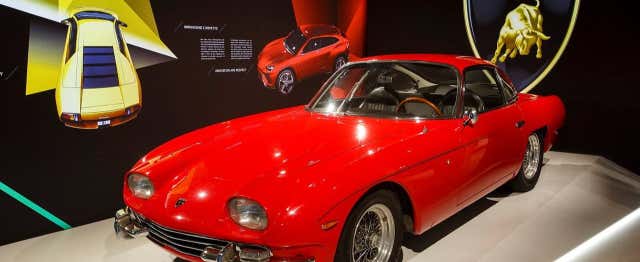
The Lamborghini Museum in Sant’Agata Bolognese offers a unique experience in the world of luxury automotive. Spread over two floors, it showcases the most iconic models, from the historic 350 GT to the cutting-edge super sports cars such as the Aventador and Huracán.
Visitors can admire the elegant lines of the Miura, considered the first supercar in history, and discover current production through a panoramic glass window overlooking the assembly line. The museum also offers an immersive multimedia experience, driving simulators and a rich collection of engines and technical components.
The museum guided tour can be enhanced with an exclusive factory tour, where you can watch the production of super sports cars live. It is advisable to book in advance, especially for complete tours that include both museum and factory. An unforgettable experience for motor enthusiasts and beyond, telling the story of Italian excellence through one of its most prestigious icons.
In the following map you can see the location of the main places of interest mentioned in this article.

 Hotel
Hotel  Budget accommodations
  Apartments
  Family Hotel
  Luxury Hotel
  Resorts