NEW IPOINT HOTEL
San Giovanni in Persiceto - Via Maestri del Lavoro 3
Book now
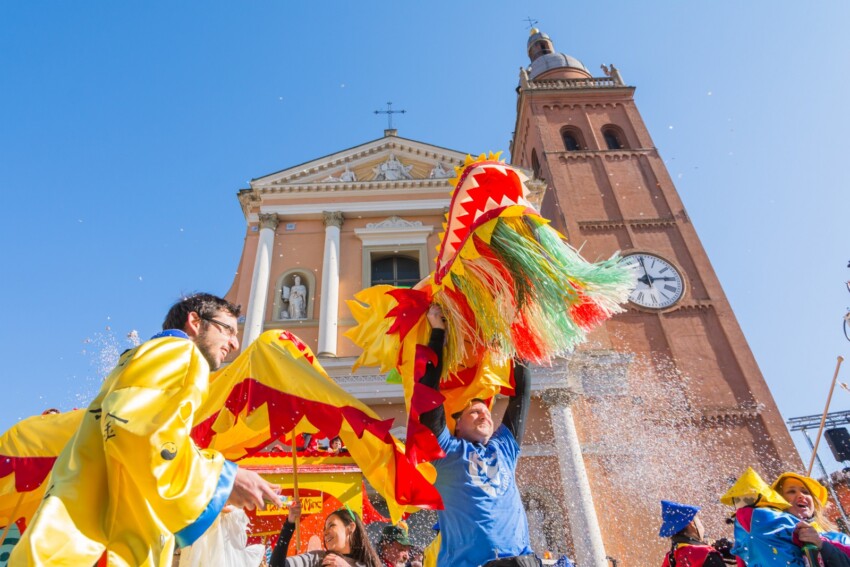
A welcoming town with a rich cultural heritage, San Giovanni in Persiceto is the ideal destination for those seeking an authentic and immersive experience of Emilia-Romagna’s culture. Located approximately 30 kilometres north of Bologna, San Giovanni in Persiceto is characterised by a typically Emilian landscape of green countryside, vineyards and fruit groves. Although archaeological findings suggest the territory was inhabited from the Iron Age, it was actually the Romans who established the first permanent settlements in this area. The town itself began to take shape before the 10th century as the church of San Giovanni Battista, which later gave its name to the village. The name “Persiceto” most likely derives from “Persicum”, meaning “peach” in reference to the numerous peach cultivations that were once abundant in the area.
The town has always been closely tied to Bologna, sharing its fortunes throughout much of its history. For this reason, it was ruled by various noble families such as the Pepoli, Visconti and Bentivoglio, and was also controlled by the Papal State. Between the 13th and 14th centuries, the original church known as the Borgo Rotondo underwent significant expansion and saw the construction of a second circle of small villages and settlements. Its strategic position on the plain and the fertility of the land made it one of the most active and productive locations in the territory. Over the centuries, San Giovanni in Persiceto has maintained its commercial importance and has also become a centre of culture and art.
Today, San Giovanni in Persiceto is renowned for its rich historical, architectural, cultural and gastronomic heritage. This is where Giulio Cesare Croce, a mid-16th-century Italian writer, was born. He famously recounted “the stories of Bertoldo” in his works, a character who lived at various courts of the era. Bertoldo later became the protagonist of the local Carnival, one of Italy’s most famous, which has been celebrated annually in the city since 1874. San Giovanni also offers numerous local products including IGP-protected Melons, watermelons and DOP-protected Bologna Potatoes. Furthermore, the town is home to the Ciclovia del Sole, a cycling route included in the EuroVelo 7 itinerary that runs across Europe from the North Cape to Malta.
San Giovanni in Persiceto boasts a medieval historic centre known as Borgo Rotondo with a concentric layout centred on Piazza del Popolo, home to the town’s main monuments of interest. Not to be missed are the Collegiata di San Giovanni Battista, the 15th-century Palazzo Comunale and the Theatre. The city also houses numerous museums ranging from the Museo del Cielo e della Terra to the Museo Archeologico Ambientale and the Sacred Art Museum.
Consecrated in the 18th century, the Collegiata di San Giovanni Battista is one of the main places of worship in San Giovanni in Persiceto and is dedicated to the town’s patron saint. A small church in Lombard style dedicated to San Giovanni already stood here before the 11th century, but the building was later rebuilt and modified several times. It now features an imposing neoclassical façade created in the 19th century, whilst the interior, with a Latin cross plan, is rich in works of art.
Among the most remarkable painted decorations are works by Guercino, Ubaldo Gandolfi, Francesco Albani and other artists of the Bolognese school. The church is also home to the burial of Francesco Gonzaga (1593-1643), son of Ferrante II Gonzaga, who was Duke of Guastalla from around 1620 to 1630.
Also in Piazza del Popolo stands the Palazzo Comunale of San Giovanni in Persiceto, a historic building that has been considered the political and administrative heart of the city for centuries. Its origins date back to 1498 when Giovanni II Bentivoglio commissioned the construction of a grand building as a political seat and residence. What we can admire today, however, is a palace that resulted from the union of two buildings (the Bishop’s Palace and the Podestà’s Palace) and various other renovations carried out between the 17th and 19th centuries. The palace features an elegant façade and an interior richly decorated with frescoes, with works partly created in the 20th century.
Already in the 18th century the city was known to have a civic theatre which hosted distinguished guests such as Charles de Brosses and Giacomo III Stuart. The building we can admire today, however, was constructed in 1790 according to a design by Giuseppe Tubertini and decorated in the mid-19th century by Andrea Pesci and Gaetano Lodi, artists who also worked on Bologna’s civic theatre. The theatre features four tiers of boxes and a beautiful proscenium arch composed of two tall Corinthian columns.
Piazzetta Betlemme was once a neglected and abandoned area of San Giovanni but has been transformed into a place of art and creativity thanks to the work and ingenuity of the renowned set designer and painter Gino Pellegrini. Pellegrini is an artist who collaborated with major directors such as Stanley Kubrick and Alfred Hitchcock and worked on various musicals including West Side Story and Mary Poppins. Since 1982, he has been called upon numerous times to carry out artistic interventions in Piazzetta Betlemme, and it was in San Giovanni in Persiceto that he died on 20 December 2014.
Pellegrini painted the stories of the local inhabitants and some of his ideas on the walls of the buildings in the piazzetta, all executed using the trompe-l’oeil technique, which creates the illusion of viewing real, three-dimensional objects. For this reason, Piazzetta Betlemme is also known as “Piazza dell’Inganno” (Square of Deception) because the paintings here trick observers.
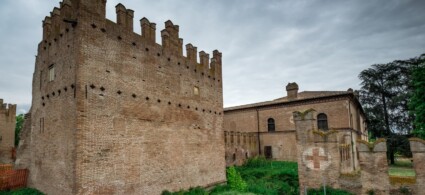
Near the hamlet of San Matteo della Decima Villa stands the Villa della Giovannina, also called Castello because of its crenellated towers that recall those of medieval fortresses.
The Villa or Castello della Giovannina is named in honour of Giovanni II Bentivoglio, Lord of Bologna, who commissioned its construction in 1490. The work was completed only in 1504, but the current appearance of the complex is the result of restorations carried out between 1897 and 1902 by architect Giuseppe Ceri.
Inside the villa are numerous decorated rooms with frescoes executed between 1617 and 1632, attributed to Guercino and his pupils, depicting famous poems such as Orlando Furioso, Jerusalem Delivered and the Aeneid.
The Museo del Cielo e della Terra in San Giovanni in Persiceto is a distributed museum with several sections and locations throughout the territory. Specifically, the museum currently features four different poles covering different topics and activities.
The first is the astronomical section, considered one of the most important in Italy, followed by the “Ulisse Aldrovandi” botanical garden, which hosts more than 300 botanical species; to these are added the insect laboratory and the “FisicLab” laboratory for the history and study of Physics.
The Museo Archeologico Ambientale in San Giovanni in Persiceto takes visitors on a journey through archaeological and archaeobotanical artefacts and remains found in the area, ranging from the Roman era to the Renaissance period. In addition to viewing significant finds, visitors can discover how people lived in the area in the past through reconstructions of ancient huts, objects and activities that tell the story of life in San Giovanni over the centuries.
In the following map you can see the location of the main places of interest mentioned in this article.
San Giovanni in Persiceto is a small town perfectly suited for exploring on foot, making staying in the historic centre near Piazza del Popolo an excellent choice. As the town offers limited accommodation options, another possibility would be to stay in Bologna and visit San Giovanni as a day trip.
Located less than 30 km from Bologna, San Giovanni in Persiceto is the ideal destination for those seeking an authentic and immersive experience of Emilia-Romagna’s culture and history. This area is perfect for those wanting a peaceful holiday steeped in history and traditions without sacrificing comfort, as the town mostly offers charming bed and breakfasts and small boutique hotels.
Furthermore, the Ciclovia del Sole, a cycling route included in the EuroVelo 7 itinerary connecting the North Cape to Malta, passes through here. Finally, its strategic location makes it a perfect starting point for exploring other attractions in the region, such as the art cities of Modena, 25 km away, and Ferrara, 50 km away, or charming destinations like Carpi.
Given its location, San Giovanni in Persiceto is easily accessible by car and public transport from the main towns in the region. Those travelling by car from the south can take the A1 motorway in the direction of Milan, exit at Bologna-Casalecchio and then take the state road 568 to San Giovanni. From Modena, you can follow state road 255 in the direction of Nonantola to reach San Giovanni in approximately 40 minutes. From Ferrara, take the A13 motorway in the direction of Bologna and then the A1 until the Bologna-Interporto exit; from there you can travel along provincial road 3 (Trasversale di Pianura) towards Sala Bolognese and San Giovanni.
San Giovanni in Persiceto also has a railway station on the main Bologna-Verona line, served by trains on the Bologna-Brennero, Bologna-Verona and Bologna-Poggio Rusco lines. There are also several bus services connecting San Giovanni in Persiceto to nearby cities such as Bologna and Modena, offering an economical option for reaching the town. Finally, the closest airport to San Giovanni in Persiceto is Bologna Guglielmo Marconi Airport, located approximately 20 km from the city.
What's the weather at San Giovanni in Persiceto? Below are the temperatures and the weather forecast at San Giovanni in Persiceto for the next few days.
Located at the heart of the Plain northwest of Bologna, San Giovanni in Persiceto is a lively town in Emilia-Romagna. San Giovanni, in particular, lies just under 30 km from Modena, 55 km from Ferrara and 100 km from Ravenna.
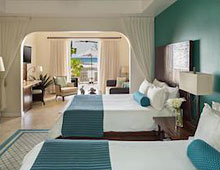 Hotel
Hotel 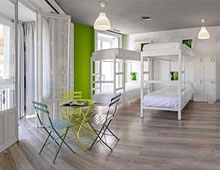 Budget accommodations
 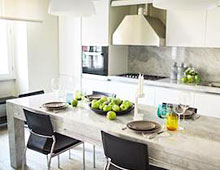 Apartments
  Family Hotel
 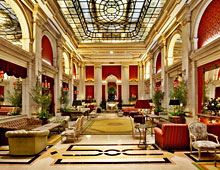 Luxury Hotel
  Resorts