Euro Hotel
Imola - Via Ugo La Malfa 7
Book now
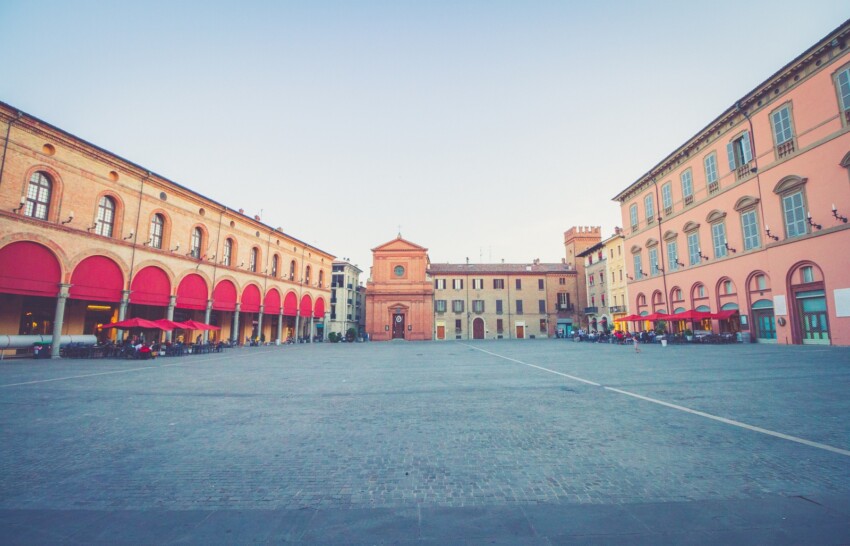
Positioned along the Via Emilia, between Bologna and the Adriatic coast, Imola is a charming town boasting a thousand-year history that attracts visitors passionate about art, architecture and motors. Imola is one of seven cities that together form the so-called “Seven Sisters” – along with Cesena, Faenza, Forlì, Lugo, Ravenna and Rimini – the principal cities of Romagna in the south-eastern part of the region. The town’s origins date back to Roman times, as it was founded by the Roman dictator Lucius Cornelius Sulla around 82 BC, from whom it took the name Forum Cornelii.
Its position along the Via Emilia, an important Roman consular road, made it a crucial centre for agriculture and commerce. Over the centuries, the town came under the rule of various powers, from the Longobards to the Papacy, and its history intertwines with that of great Renaissance families, such as the Visconti, the Sforza and the Borgia, who left an indelible mark on the city’s architecture.
Today, the town is renowned not only for its historical and artistic heritage but also for being home to the famous Autodromo Enzo e Dino Ferrari, which has hosted numerous Formula 1 races and continues to be a landmark for motorsport enthusiasts worldwide. Imola is also known for its gastronomic traditions, which include local specialities such as piadina romagnola, strozzapreti and tortellini, as well as its wines, given its location along the Strada dei Vini e dei Sapori dei Colli wine route.
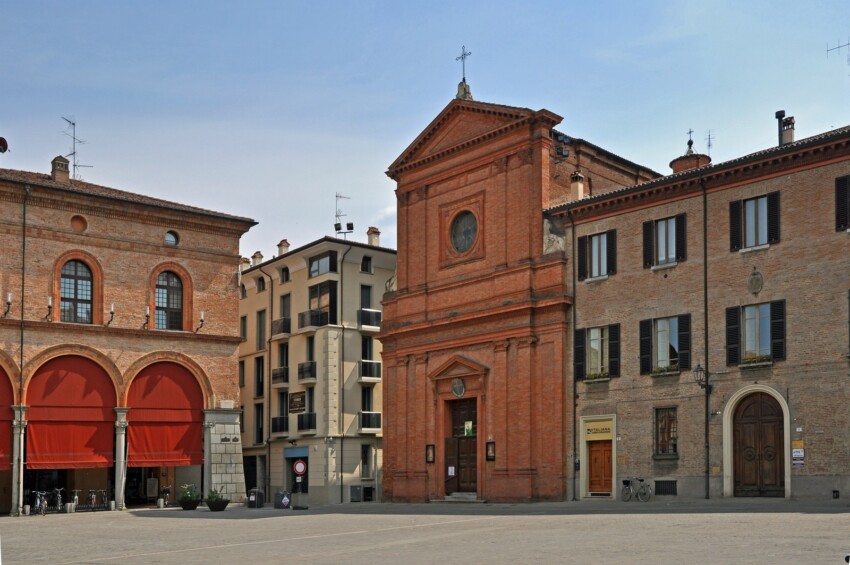
Imola offers visitors a wide range of attractions ranging from historical monuments to museums, from motorsport experiences to food and wine offerings. The city centre is formed by the central Piazza Matteotti, completely redesigned in the 15th century by Girolamo Riario, Lord of Imola and husband of Caterina Sforza.
Here you’ll find the Palazzo della Signoria (now Palazzo Sersanti), considered among the most beautiful Renaissance buildings in the area, and the Palazzo Comunale. Around this square are Piazza Caduti della Libertà and Piazza Gramsci, which together have formed the commercial, political and social heart of the city for centuries.
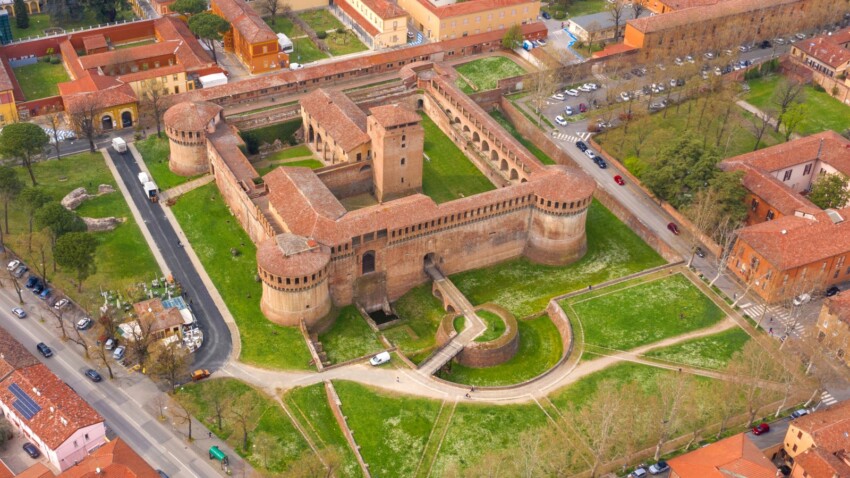
An imposing fortress built in the 13th century, the Rocca Sforzesca is undoubtedly one of Imola’s most iconic symbols and now houses the Museum of the City’s History. Little remains of the original structure as the complex underwent numerous modifications and extensions over the centuries, particularly during the rule of the Riario-Sforza family in the 15th century.
Visiting this fortress today means following a journey through Imola’s history via a rich collection of archaeological finds, ancient weapons, objects and historical documents. Don’t miss a stroll along the fortress’s rampart walkway, from where you can enjoy a spectacular view of the city and surrounding territories, stretching from the plain to the Apennines.
Originally from Lucca in Tuscany, the Tozzoni family moved to Imola in the 15th century and eventually became major players in the town’s political and social life. In the 18th century, the family felt the need for a noble residence worthy of their status, so Duke Francesco Tozzoni commissioned the construction of this luxurious palace. Today it has become a house-museum, donated to the municipality by the last descendants of the Tozzoni family in the 1970s, complete with furnishings, paintings and everyday objects.
This magnificent example of an 18th-century noble residence boasts a façade with an impressive entrance portal, while inside an elegant staircase decorated by the Ticinese artist Giovan Battista Verda leads to the main floor. The aristocratic Tozzoni family increased its importance over the years through marriages with powerful families from Modena, Rome and Florence, which is evident from the numerous coats of arms displayed on the walls. The main floor features rooms elegantly decorated with artworks and paintings by important artists such as Passerotti, Fontana, Cesi, Donnini and Beccadelli, while the cellars house an interesting collection of rural implements.
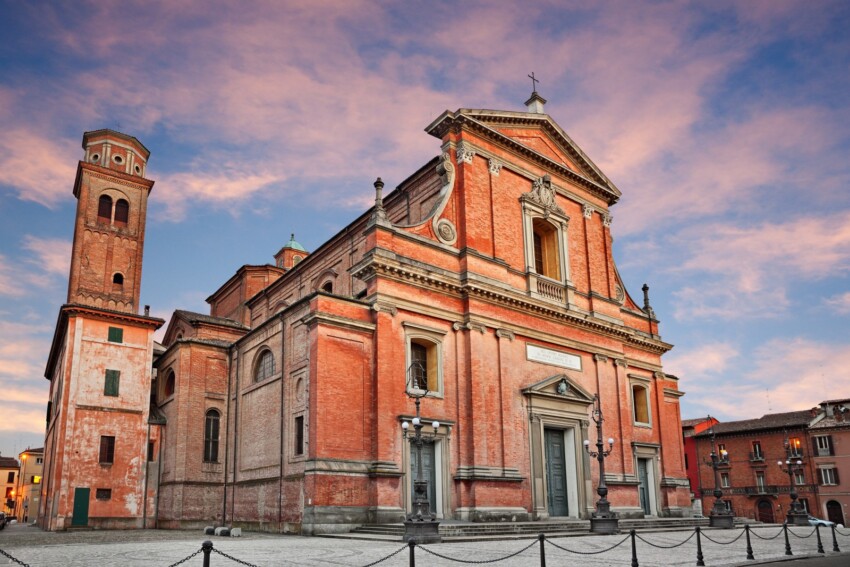
The Cathedral of San Cassiano is Imola’s principal place of worship and houses the remains of Cassiano, the city’s patron saint, along with three other Imola saints: Pier Crisologo, Proietto and Maurelio. Construction of the religious building began in 1187 on the remains of a previous church, but over the centuries it underwent various alterations. The different works carried out over time have made the Cathedral a fascinating blend of architectural styles.
Inside, the church has three naves, with the central one very large whilst the two smaller lateral ones house chapels finely frescoed in Renaissance and Baroque style by various artists including Jacopo Bertucci, Angelo Gottarelli and Giacomo Zampa. In the crypt are housed the urns of the four Imola saints, created in the 17th century by Giuseppe Maria Mazza and beautifully decorated.
The Teatro Comunale Ebe Stignani, named after the famous opera singer, is a jewel of 19th-century theatrical architecture that has hosted illustrious performers over the years. Inaugurated in 1812 but modified several times, the theatre has retained its original charm, with a horseshoe-shaped auditorium, four tiers of boxes and a gallery.
Over time the interior has been elegantly decorated on multiple occasions by renowned artists including Canepa and Girolamo Bellani, Antonio Xella and Gaetano Gabrielli. Beyond being an important venue hosting a rich season of performances, the theatre offers guided tours that reveal the secrets and history of this splendid building.
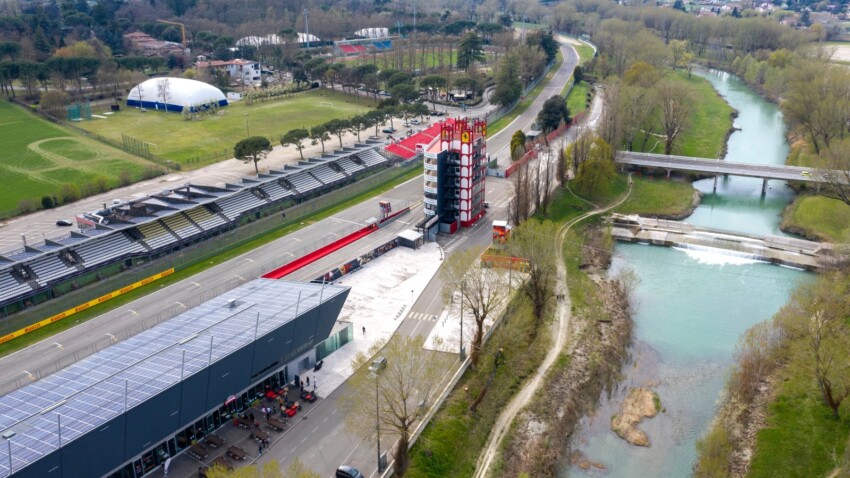
Built in the 1950s, the Autodromo Enzo e Dino Ferrari is undoubtedly one of Imola’s most famous attractions, drawing numerous visitors from abroad. The site is named after Enzo, founder of the Ferrari company, and his son Dino, both instrumental in Italian automotive history. The circuit was built outside the historic centre and is surrounded by Romagna’s hills but is easily accessible by public transport.
Numerous events related to motorsport and motorcycling are held here, including Formula 1 races and Superbike championships. For motorsport enthusiasts, a visit to the circuit is an unmissable experience that lets you immerse yourself in the unique atmosphere of the racing world. Even when there are no events, it’s possible to join guided tours of the track and the circuit’s museum, named after “Checco Costa”, where temporary exhibitions are regularly organised.
The Pharmacy of the Santa Maria della Scaletta Hospital is a true hidden gem of Imola that offers a fascinating glimpse into the history of pharmacology and medicine. Opened in 1794, this ancient pharmacy has preserved its original wooden furnishings intact along with a vast collection of utensils and majolica vessels used to store medicines and preparations.
Thanks to its excellent state of preservation, both the building and interiors, a visit to the Pharmacy is a genuine journey back in time exploring the city’s scientific heritage. Inside the Hospital Pharmacy are elegant painted ceiling decorations created by Angelo Gottarelli and Alessandro Della Nave, celebrating the virtues of Medicine and the forces of nature.
The Museo di San Domenico, housed in the former Dominican convent, is part of Imola’s civic museums and offers visitors interesting pathways through both the city’s art collection and natural history. The building was constructed in the 13th century but underwent various alterations over the years, and during the Napoleonic period it was seized by the State along with other Church property.
The art collection on display features over 600 pieces including paintings, sculptures, drawings and coins that trace Imola’s history from the Middle Ages to the 20th century. A second interesting section is dedicated to Giuseppe Scarabelli, an Imola scientist, who along with colleagues in the mid-19th century collected over 25,000 specimens relating to geology, archaeology and natural history.
The Parco delle Acque Minerali is a green oasis in the heart of Imola, ideal for a relaxing break during your city visit or for sports activities. The park takes its name from four mineral water springs discovered in the area in 1830 by physician Gioacchino Cerchiari.
Today, besides offering pleasant walking and jogging trails, the park hosts various sports facilities and a children’s play area; furthermore, during spring and summer days, the park hosts outdoor events, concerts and cultural activities.
The current Municipal Library of Imola was originally the library of the Franciscan friars’ convent of San Francesco, which opened in Imola in the 14th century. At the beginning of the 19th century, with the arrival of French rule, the library’s management was confiscated from the friars and transferred to the municipality, and this location also received collections of books and manuscripts seized from other religious libraries in the area.
Over time the library was enriched through donations and bequests from private individuals, among which stand out for their great generosity those of Giovanni Codronchi Argeli (1843) and Andrea Ponti (1957). The building underwent various changes over the years, but the areas that stand out most today are the entrance staircase of the first floor and the elegant Main Hall, frescoed with decorations, stucco work and imitation marble. The Library currently boasts a rich collection of approximately 450,000 volumes, of which almost 80,000 are rare books.
In the following map you can see the location of the main places of interest mentioned in this article.
Imola is not a large town and can be explored comfortably on foot, which is why the best area to stay during a visit is undoubtedly the historic centre; from here you can reach on foot most sites of interest as well as shops, bars and restaurants. In particular, the areas around Piazza Matteotti, Piazza Caduti della Libertà and Piazza Gramsci offer a wide variety of accommodation options to suit the needs and budget of all types of travellers.
For a more relaxing experience, the hills surrounding Imola host numerous farm stays and small facilities with a welcoming, family-like atmosphere. These accommodations often offer not only lodging but also the chance to enjoy local products, regional wines and to discover more about the territory’s food and wine culture and traditions.
Here’s an extra tip for those thinking of a weekend in Imola during events at the Autodromo Enzo e Dino Ferrari: book well in advance. Motorsport enthusiasts can find various accommodation options in the immediate vicinity of the circuit, but these often need to be reserved many months ahead.

Imola is well connected to major Italian cities thanks to its strategic position and efficient transport network. Those travelling by car can reach the town via the A14 Bologna-Taranto motorway, exiting at Imola, whilst from Milan you must first travel along the A1 to Bologna and then take the A14 towards Ancona. The Strada Emilia also passes through Imola, connecting Piacenza to Rimini and touching various other towns in the region.
Imola has a railway station located on the Bologna-Ancona line, with regional trains providing frequent connections to various towns in the area. Alternatively, there are long-distance coach services connecting Imola with coastal towns. The nearest airports are Bologna and Forlì, both less than 50 km away, whilst Rimini airport is approximately 90 km from Imola.
What's the weather at Imola? Below are the temperatures and the weather forecast at Imola for the next few days.
Imola sits in a strategic location between the Po Valley plain and the foothills of the Apennines, making it an ideal base for exploring both art cities such as Bologna and Ravenna as well as the seaside resorts of the Romagna Riviera. The city is approximately 40 km from Bologna, 85 km from Ferrara and 90 km from Rimini.
 Hotel
Hotel  Budget accommodations
  Apartments
  Family Hotel
  Luxury Hotel
  Resorts