Boutique Hotel Calzavecchio
Casalecchio di Reno - Via Calzavecchio 1
Book now
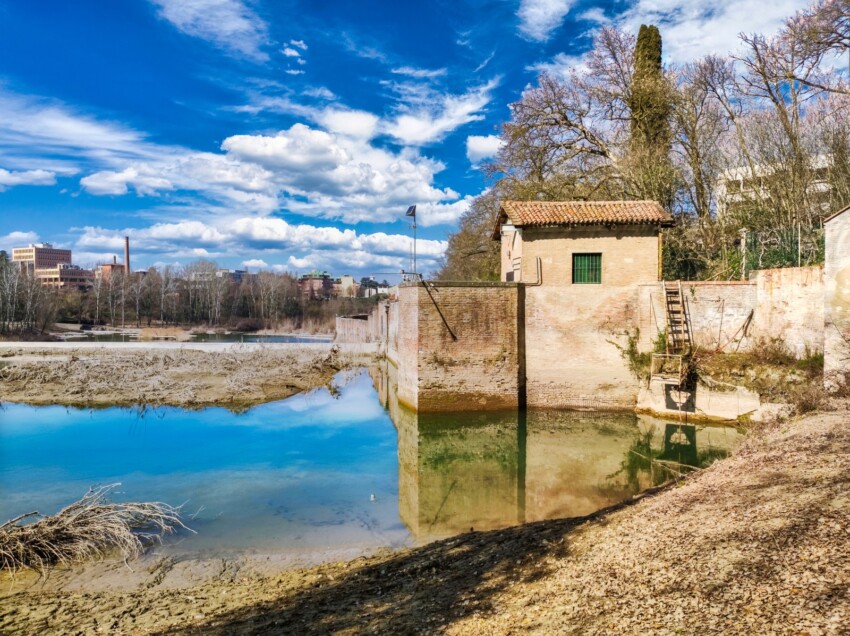
Casalecchio di Reno is a picturesque town situated along the River Reno that boasts a rich natural and cultural heritage, making it ideal for a stay focused on nature, culture and relaxation. Thanks to the discovery of remains testifying to ancient settlements, it is known that the history of this territory dates back to the Paleolithic period. The area was then heavily frequented during Roman times, when it was crossed by the Via Emilia, one of the principal thoroughfares of the Empire.
It was during the Middle Ages, however, that the town began to develop thanks to the construction of the Casalecchio Weir, one of the oldest hydraulic structures in Europe and still in operation today. The name Casalecchio appears to derive from Casaliculum, which in medieval Latin means “small cluster of houses”. Over the centuries, Casalecchio di Reno maintained its strategic importance, particularly due to its position along the River Reno and for a period the town also became a holiday retreat for noble Bolognese families who built elegant villas and summer residences here.
Today Casalecchio is known for its ancient hydraulic system (the Casalecchio Weir) still in use, for its beautiful parks and historic residences that make it the perfect destination for a Sunday outing or a relaxing weekend. Casalecchio di Reno, in fact, manages to combine the tranquillity of a small town with proximity to the vibrant attractions of Bologna.
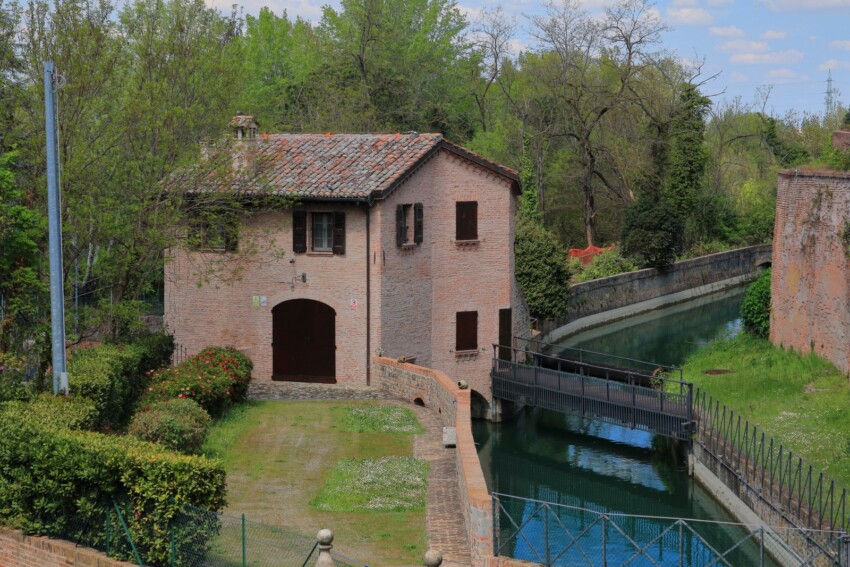
Small, welcoming and human in scale, Casalecchio di Reno is a town that holds many places of historical, cultural and above all natural interest that have grown up around the famous weir. Crossed by the River Reno, the town also sits just a few kilometres from Bologna, to which it is connected by a cycle path immersed in greenery.
Casalecchio’s parish church was founded in the seventeenth century by the Martiniani Friars and is dedicated to San Martino da Tours, the town’s patron saint celebrated each year on 11 November. Over the centuries, the original complex that included the church and a monastery underwent various upheavals until the monastery was destroyed and the church rebuilt.
The religious building we can admire today is the result of work carried out in the early twentieth century by Bologna architect Edoardo Collamarini, whilst the spired bell tower was built between 1937 and 1938 to a design by Luigi Saccenti. The interior of the church, with three naves, houses several works of great artistic value, including a large altar panel and a canvas depicting the Blessed Virgin with Saint Lucy and Saint Agatha created by Dioniso Calvart.
Built in 1360, the Casalecchio Weir is without doubt the symbol of the town but is also one of Europe’s oldest and most important weirs still in operation, so much so that it was declared a UNESCO World Heritage Site. This imposing hydraulic structure was fundamental to the agricultural and industrial development of the area, as it allowed the waters of the River Reno to be channelled towards Bologna and prevented flooding. The River Reno was not only used for the transport of goods but also powered workshops, businesses and numerous mills along its course.
Surrounded by splendid natural landscape, the Weir is a place of great fascination that offers the opportunity to walk along the river and admire the complex system of canals and weirs. The Casalecchio Weir and Reno Canal Consortium that manages the site has created a visitor route that allows not only a close view of the imposing structure and how it works but also the discovery of centuries of history of this territory.
The Parco della Chiusa, also known as Talon Park, is a green area of extraordinary beauty situated in the vicinity of the Casalecchio Weir and also at the foot of Colle della Guardia where the Sanctuary of Madonna di San Luca stands. This park, together with its respective villa, was created in the eighteenth century at the behest of the Marchesi Sampieri family and over time became a cultural centre that hosted musicians such as Donizzetti and Rossini, and writers like Stendhal.
The last heiress of the Sampieri family, Carolina, married French Count Denis Talon and so the villa took the name of Villa Sampieri Talon, becoming one of the most prestigious noble residences in the area which is now used for events and cultural occasions. All around the villa was a hunting wood, a lemon house now converted into a museum and a beautiful Italian-style garden.
The Hermitage of Tizzano is another place of great interest situated on a hilltop 243 metres high from where you can enjoy a splendid view over the town and surrounding territory. Construction of the hermitage began between the eighteenth and nineteenth centuries at the behest of Camaldolese monks with a plan that included a small monastery and church.
Currently in the garden only the remains of two of the cells that housed the hermit monks are visible, whilst the church has managed to preserve much of its appearance. The exterior features a simple and elegant façade in Bolognese Baroque style flanked by a bell tower built in 1724. The interior has a single nave surrounded by six lateral chapels connected by narrow passages and decorated with fine pictorial works.
The historic path of the Brégoli is a route that runs from Colle della Guardia where the Bolognese Sanctuary of San Luca stands all the way to the Church of San Martino in the centre of Casalecchio. This relatively undemanding route was (and often still is) followed by pilgrims who wished to reach the Marian sanctuary through moments of prayer and spirituality.
The itinerary, less than 2 km long, allows you to admire a rich floral heritage, splendid panoramas but also historic sites such as a Second World War air raid shelter. Moreover, the path is part of the more famous Via degli Dei, a 130 km walk connecting Bologna with Florence, crossing the Tosco-Emiliano Apennines.
Casalecchio di Reno is a welcoming town but small in size, so its historic centre boasts a limited number of structures. Staying in the historic centre allows you to explore the town on foot, enjoying proximity to the main points of interest, such as the Weir, Parco della Chiusa and the Church of San Martino da Tours.
For those seeking a more relaxing experience, the Bologna hills surrounding Casalecchio offer various accommodation options in farmhouses and also in historic residences. Another alternative is to stay in Bologna and reach Casalecchio di Reno for the day on foot, by car or by public transport.
Thanks to its strategic position near Bologna and well-developed transport network, Casalecchio di Reno is easily accessible by car and public transport. Those travelling by car can reach Casalecchio di Reno via the A1 Motorway to the Bologna Casalecchio exit or via the A14 Motorway which connects Bologna to the Adriatic coast. Alternatively, from Bologna you can take the northern ring road which allows you to reach Casalecchio di Reno in approximately 15 minutes.
Casalecchio di Reno has a railway station located very close to the town centre and served by the Bologna-Porretta Terme railway line which allows you to reach Bologna in less than 10 minutes. The nearest airport to Casalecchio di Reno is Bologna’s Guglielmo Marconi Airport situated approximately 10 kilometres away. Casalecchio di Reno is also well connected to Bologna and surrounding towns via a bus network managed by TPER (Emilia-Romagna Passenger Transport).
What's the weather at Casalecchio di Reno? Below are the temperatures and the weather forecast at Casalecchio di Reno for the next few days.

 Hotel
Hotel  Budget accommodations
  Apartments
  Family Hotel
  Luxury Hotel
  Resorts